Security | Threat Detection | Cyberattacks | DevSecOps | Compliance

Styra And Okta Collaborate On New Okta Identity Integration For Enhanced Policy-as-Code Authorization

As organizations rapidly transform the way they build and deploy applications in pursuit of greater business agility and increased speed to market, they face significant challenges implementing effective authorization controls throughout microservices environments and the infrastructure they run on. For Identity and Access Management (IAM) teams, stitching together different data sources and transforming them for authorization purposes is complex and time-consuming.

PyPi Malware Stealing Discord and Roblox Payment Info

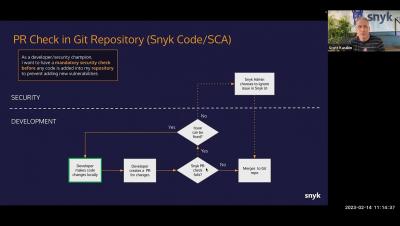
In this livestream we dive into the latest set of malicious packages discovered by the Snyk security research team. We are joined by senior security researcher at Snyk Raul Onitza-Klugman as we also discuss how these findings came to be, what they mean for open source security, and some hypotheses about the future of supply chain security. Didn't catch the live stream? Ask all of your Snyk questions and we’ll do our very best to answer them in the comment section.

Stranger Danger: Your JavaScript Attack Surface Just Got Bigger

Building JavaScript applications today means that we take a step further from writing code. We use open-source dependencies, create a Dockerfile to deploy containers to the cloud, and orchestrate this infrastructure with Kubernetes. Welcome - you're a cloud native application developer! As developers, our responsibility has broadened, and more software means more software security concerns for us to address.

SAST - All About Static Application Security Testing

Static Application Security Testing (SAST) has been a central part of application security efforts for more than 15 years. Forrester’s State Of Application Security Report, 2022 found that lacking application security remains a leading cause of external security breaches, so it’s safe to say that SAST will be in use for the foreseeable future. Contents hide 1 What Is SAST? 2 Why do we need SAST? 3 What problems does SAST address? 4 How does SAST work?

SAST - All About Static Application Security Testing

Static Application Security Testing (SAST) has been a central part of application security efforts for more than 15 years. Forrester’s State Of Application Security Report, 2022 found that lacking application security remains a leading cause of external security breaches, so it’s safe to say that SAST will be in use for the foreseeable future.

How to Deploy the Kubernetes Dashboard

Kubernetes clusters consist of multiple resources and API objects interacting dynamically—which typically makes cluster management via the CLI overwhelming. Kubernetes Dashboard was built to simplify cluster operations by providing a unified, human-friendly interface. The web-based dashboard enables cluster operators to deploy applications, access running workloads, and correlate logs with cluster events. This article demonstrates how to install and use Kubernetes Dashboard.
Featured Post

Bridging the DevSecOps Application Connectivity Disconnect via IaC

Anat Kleinmann, AlgoSec's Sr. Product Manager and IaC expert, discusses how incorporating Infrastructure-as-Code into DevSecOps can allow teams to take a preventive approach to secure application connectivity.

Make Cloud Defense a Team Sport by Turning DevOps into a Force Multiplier

Enterprises are embracing cloud-native applications in the name of business agility. These applications enable developers to take advantage of the cloud’s scalability and flexibility, allow customers and developers to benefit from the increased velocity of DevOps processes and help businesses quickly react to customer needs and potentially lower their cost of deployment.

How to take DevSecOps to the next level: A conversation with SecOps and DevOps leaders from NielsenIQ, ARA Security and Techstrong Group

When delivering customer experiences from the cloud, defending the app includes the data it houses and the business it represents. The DevSecOps mindset, “You build it, you run it, you secure it” helps, but only when all teams are empowered with the info they need to see a threat, regardless of where it is.