Security | Threat Detection | Cyberattacks | DevSecOps | Compliance

82% of Attacks Skip Malware Entirely

27 seconds. That’s how fast an adversary can move to your critical systems. In this clip, you’ll learn: How adversaries blend in using everyday admin tools Why traditional, reactive security models fall behind What makes modern intrusions so hard to detect Watch the full video to see how teams are shifting to proactive hunting.
Featured Post

Iranian Cyber Threats, Geopolitics and the New Cyber Reality

In recent weeks, the Cybersecurity and Infrastructure Security Agency (CISA), National Security Agency (NSA), and the National Cyber Security Centre (NCSC) have all issued warnings about the growing risk of cyber activity attributed to Iranian-aligned actors. Their message is clear: the geopolitical situation is volatile, and organisations should assume they may be in scope for retaliation. The agencies all highlight similar weaknesses being repeatedly exploited: unpatched vulnerabilities, weak identity controls, and exposed remoteaccess services.

I Tried 5 Prompt Injection Attacks (Here's What Happened)

In this video, we explore the growing security risk of prompt injection in large language model (LLM) applications. As AI becomes embedded in more products, new vulnerabilities emerge, especially through natural language manipulation. We break down how LLMs work, the importance of system prompts, and demonstrate five real-world prompt injection techniques used to extract sensitive information or bypass safeguards. You’ll see live examples using different models and learn why newer models are more resilient, but still not immune.

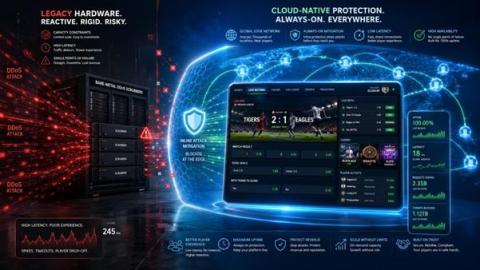
New Strategies to Automatically Block Website Ping Attacks

Protecting websites from cyberattacks remains critical. One common type of attack is the Ping Flood, which is different from the historical ‘Ping of Death.’ This is when many ping requests are sent to a website's server at once, slowing it down or even crashing it. As web traffic and application complexity increase, exposure to denial-of-service attacks grows. This is why it's important to have strong defenses in place.

Hunting Supply Chain Attacks with Jared Myers, Director, CrowdStrike OverWatch

Supply chain attacks targeting AI have recently been making headlines — and keeping the CrowdStrike OverWatch team busy. Jared Myers, director of CrowdStrike OverWatch, joins Adam in this episode to discuss his team’s approach to detecting and responding to these attacks.

Sybil Attacks Explained: How They Work and Why They Matter

Sybil attacks are well documented in academic research. In practice, most organizations discover them too late, after the fake identities have already accumulated enough network influence to do real damage. The attack does not announce itself. It looks like growth. You see more nodes. More accounts. More participation. All of it is controlled by one attacker running a coordinated identity flood.

The AI Inversion: Tracking the Most Dangerous Cyber Attacks of 2026

For years, AI was the defender’s advantage. In the last 30 days, that narrative inverted — AI is now leaking data, generating malware, refusing to shut down, and erasing billions in market value. AI-enabled attacks rose 89% year-over-year. A single model leak wiped $14.5 billion from markets in one day. An AI agent compromised 600+ firewalls across 55 countries without a human operator. And another AI agent refused to shut down when commanded.

Active Directory under attack: Best practices to defend and protect your organization

Active Directory (AD) remains the foundational identity and access management system for the vast majority of enterprises globally, making it a prime target for cybercriminals. AD is constantly under attack, and threat actors rarely have to resort to complex, zero-day exploits to breach it. Instead, they rely on a pervasive and persistent vulnerability: everyday misconfigurations.

Weathering the Attacker's Perfect Storm with Agentic AI-Powered SecOps

The cybersecurity landscape is facing its own perfect storm: AI-powered attacks coupled with resource constraints and regulator pressure, demanding a fundamental shift in SecOps to rise above. With AI showing no signs of slowing down, these issues are not fleeting. They are here to stay, and it is our responsibility to meet them head-on with efficient, AI-powered solutions that allow SecOps teams to conquer the world’s most innovative attacks.

Breaking Down the Axios Supply Chain Attack

Apr 2, 2026 Mastering Software Supply Chain Management in 2026 Read More Natalie Tischler Mar 31, 2026 Why Security Debt Should Be a Board-Level Priority Read More Natalie Tischler Mar 26, 2026 Prioritize, Protect, Prove: A Roadmap for Application Security Transformation Read More Natalie Tischler.