The CrowdStrike Falcon Complete™ managed detection and response (MDR) team recently uncovered a creative and opportunistic interpretation of a watering hole attack that leverages GitHub to gain access to victim organizations. In the observed cases, there were no phishing emails, no exploitation of public-facing vulnerabilities, no malvertising and no compromised credentials.
Ransomware has traditionally revolved around the encryption of victims’ files. But even if encryption remains ransomware groups’ most common approach, it isn’t really their priority–extortion is. Financially-motivated cybercriminals care more about extracting payment from their victims than they do about the particular methods used to achieve that goal.
In today’s business environment, the risk of a ransomware attack is high and continues to grow. Threat actors are well financed, motivated, and very organized. While securing your environment and infrastructure is critically important, preparation to respond to an actual ransomware attack is essential. With an incalculable number of potential vulnerabilities and attack vectors, you have to be prepared to effectively respond to and recover from an attack.
Ransomware is the fast-growing category of cybercrime. It’s estimated that over 4,000 ransomware attacks occur daily. Given the sheer volume of these attacks and the deep attack surface connections between organizations and their vendors, there’s a high likelihood that some of your employee credentials have already been compromised in a ransomware attack, which means the keys to your corporate network could currently be published on a ransomware gang’s data leak site.
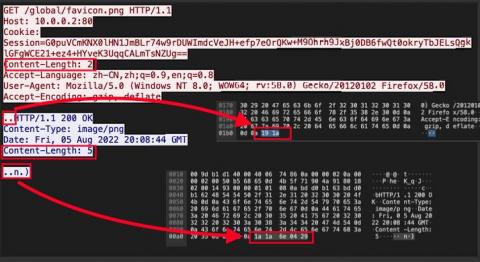
Security practitioners may know about common command-and-control (C2) frameworks, such as Cobalt Strike and Sliver, but fewer have likely heard of the so-called Chinese sibling framework “Manjusaka” (described by Talos in an excellent writeup). Like other C2 frameworks, we studied the Manjusaka implant/server network communications in our lab environment, and here we document some of the detection methods available. We have also open-sourced the content we describe.
The Mirai botnet is infamous for the impact and the everlasting effect it has had on the world. Since the inception and discovery of this malware in 2016, to present day and all the permutations that have spawned as a result, cybersecurity professionals have been keeping a keen eye on this form of Command and Control (C2 or CnC) malware and associated addresses.
2022 began with successful ransomware attacks against global IT and digital transformation providers, no thanks to the notorious LAPSUS$ ransomware gang. Often, any discussion about ransomware impact has mostly centered on affected organizations. Rightly so, as victimized organizations usually suffer significant disruption to their operations. In 2021, the US Federal Bureau of Investigation received 3,729 complaints identified as ransomware.
LockBit (a.k.a. ABCD) emerged in September 2019 and became one of the most relevant RaaS (Ransomware-as-a-Service) groups among others like REvil, BlackMatter, Night Sky, Maze, Conti and Netwalker. The group targets many organizations around the world with a double-extortion scheme, where the attackers steal sensitive data and threaten to leak everything if the ransom is not paid.
The NSO Group, the vendor behind Pegasus, is struggling financially, and to solve their money problems, the company is now considering selling their surveillanceware to governments with poor human rights records.
People have become the primary attack vector for cyber attackers around the world. As the Verizon Data Breach Investigations Report 2022 indicates, it is humans rather than technology that now represent the greatest risk to organizations. According to the SANS 2022 Security Awareness Report, the top three security risks that security professionals are concerned about are phishing, business email compromise (BEC) and ransomware, all closely related to human behavior.
The State of Ransomware in Government 2021 report finds that government agencies are facing a ransomware “national emergency.” Local governments in particular face higher rates of encryption during cyber attacks due to constrained budgets and organizational pressure to divert funds away from cybersecurity, leaving gaps in their data protection.
Meet Shathak – a threat group tied to malware used in the Russian-speaking underground targeting enterprises across different sectors in the Americas, Europe and Asia
Ransomware and other malicious threats have become commonplace around the globe. But the reality is, whether it be encrypted records, stolen email credentials, or exfiltrated financial statements, these incidents generally involve a limited number of individuals or groups. Before your feathers are completely ruffled, understand that by no means am I minimizing the impact cybercriminals can have on a business. But have you considered attacks of greater scale? Perhaps those that affect the populus?
TeamTNT is a prevalent threat actor who has been targeting cloud and virtual environments such as Kubernetes and Docker since at least late 2019. This threat actor is financially motivated, focusing their efforts on stealing credentials and cryptomining. In 2020, we analyzed their use of Weave Scope on an unsecured Docker API endpoint exposed to the internet. In December 2021, we attributed an attack to TeamTNT in which they targeted a vulnerable WordPress pod to steal AWS credentials.
Anyone who has watched the Lockpicking Lawyer realizes that certain locks promoted as the latest-and-greatest aren’t necessarily the most reliable devices for securing physical assets. Like many other security professionals, he seeks to educate consumers and manufacturers on defects in devices and how to improve their security. It reminds me of a quote by Deviant Ollam (security auditor and penetration testing consultant): "Security is achieved through openness.
Lampion is a banking trojan with a particular predisposition to targeting Portuguese-speaking users (and exploiting cloud services). First documented in December 2019, the malware has gone through multiple releases, characterized by a number of different mechanisms to deliver the initial VBS (Visual Basic Script Loader). All the different variants have an element in common, the malware is distributed abusing legitimate cloud services throughout different stages of the attack chain.
Throughout the first half of 2022, Vedere Labs published analyses of prominent ransomware families, such as Conti, Night Sky and ALPHV. We also examined well-known ransomware incidents such as the attacks on the NFL’s SF 49ers by the BlackByte group; on a UK water utility, where the Clop gang managed to access their SCADA system; and on an NHSsoftware provider, where an unknown group managed to disrupt healthcare services in the UK for weeks.
In our companion blog post, Vedere Labs analyzed the main ransomware trends we observed in the first half of 2022, including state-sponsored ransomware, new mainstream targets and evolving extortion techniques. Ransomware is the main threat targeting most organizations nowadays. However, three other notable cyberthreat trends also evolved during this period: Below we analyze each of these trends in more detail.
Modern organizations are built on data. It enables collaboration and helps us engage with customers. But that same helpful data is also sprawled across countless apps, making it difficult to secure. Ransomware attacks are on the rise — 57% of security leaders expect ransomware to compromise their organization within the next year — which makes data protection more essential than ever.
A ransomware gang that has been increasingly disproportionately targeting the education sector is the subject of a joint warning issued by the FBI, CISA, and MS-ISAC. The Vice Society ransomware group has been breaking into schools and colleges, exfiltrating sensitive data, and demanding ransom payments. The threat? If the extortionists aren’t paid, you may not be able to unlock your encrypted files, and the attackers may leak the information they have stolen from your servers online.
It is hard to believe, but ransomware is more than three decades old. While many would think that the ransomware mayhem started with the WannaCry attack of 2017, that is simply the most publicized example. Since then, dozens of ransomware strains have been utilized in a variety of cyberattacks.
AT&T Alien Labs has discovered a new malware targeting endpoints and IoT devices that are running Linux operating systems. Shikitega is delivered in a multistage infection chain where each module responds to a part of the payload and downloads and executes the next one. An attacker can gain full control of the system, in addition to the cryptocurrency miner that will be executed and set to persist.
The BlackCat/ALPHV ransomware is a complex threat written in Rust that appeared in November 2021. In this post, we describe a real engagement that we recently handled by giving details about the tools, techniques, and procedures (TTPs) used by this threat actor. Firstly, the attacker targeted an unpatched Microsoft Exchange server and successfully dropped webshells on the machine.
Chris Krebs, former Director of the Cybersecurity and Infrastructure Security Administration (CISA) and the new Chair of Rubrik’s CISO Advisory Board, joined us at FORWARD to discuss ransomware, cyber resilience, and all things data security with co-founder and CTO, Arvind (Nitro) Nithrakashyap. His vast experience working with executives, government officials, and IT experts across the country has given him a unique insight into cybersecurity, which he shared, only at FORWARD.
Attackers have begun using new malware to gain an initial foothold onto compromised networks and systems in recent campaigns. What started as a Trojan malware called Qbot in 2007 has now evolved into Qakbot with new tricks. Qakbot has been active since it was first discovered and continues to threaten financial institutions and individual bank customers. This multi-purpose Trojan malware is designed to steal banking credentials such as login information and passwords.
Coming in with very limited domain knowledge, it was a huge challenge for me to dive in and design product features for highly specialized use cases in the data security space. Chances are, there are a lot of you in UX and Product Designer roles who go through similar experiences when designing enterprise software in niche industries. Over the past several years I've discovered a few strategies that have helped ground me in my work.
Read also: Nitrokod cryptomining campaign infected thousands of PCs in 11 countries, Italian oil giant hit with a cyberattack, and more.