Security | Threat Detection | Cyberattacks | DevSecOps | Compliance

Securing Websites Against XSS Attacks: Must-Know for Developers and Site Owners

Cross Site Scripting (XSS) is a very serious kind of security issue saying that they target websites as well as the users who are using them. To put it simply, XSS attacks means that a hacker was able to inject malicious scripts into a website. These scripts would then run in the user's browser, many a time without the user knowing about it. Most commonly, these attacks are aimed at stealing some sensitive information, impersonating the user, or just playing around with how the website looks or behaves.

Raising the Security Bar: Essential Measures to Combat Emerging Cyber Threats

Cyber threats are evolving all the time, and the pace of advancement is increasing. From malware and ransomware attacks to increasingly sophisticated phishing techniques and zero-day exploits, threat actors are constantly working to find new ways to breach our defenses, so we need to take proactive steps to raise security standards and keep our organizations on the front foot in the fight against cybercrime. In this piece, we'll discuss some essential measures you can take to do this, highlighting best practices and security technologies that can enable you to build a more threat-resilient organization.

2025 Cyber Resilience Research Discovers Speed of AI Advancing Emerging Attack Types

It is no secret that AI is advancing at a blistering pace for everyone – including cyber adversaries. The mainstream unveiling of generative AI in 2024 brought about the biggest disruption in computing since the microprocessor. AI solutions promise the world unprecedented levels of efficiency, speed, and automation. However, this seemingly utopian and disruptive technology is evolving more quickly than governance and regulations can keep pace and implement guard rails for use and adoption.

Targeted by 20.5 million DDoS attacks, up 358% year-over-year: Cloudflare's 2025 Q1 DDoS Threat Report

Welcome to the 21st edition of the Cloudflare DDoS Threat Report. Published quarterly, this report offers a comprehensive analysis of the evolving threat landscape of Distributed Denial of Service (DDoS) attacks based on data from the Cloudflare network. In this edition, we focus on the first quarter of 2025.

Threat Replay Testing: Turning Attackers into Pen Testers

API security is no longer just a concern; it’s a critical priority for businesses. With APIs serving as the backbone of modern applications, they’ve become a primary target for attackers. While automated security testing tools help detect vulnerabilities, their limitations leave organizations exposed to evolving threats. Here’s where Threat Replay Testing (TRT) comes into play.

What Is A Dictionary Attack and How To Prevent It

Have you ever wondered how hackers breach your accounts even if they don’t know your password? It’s not just luck or guesswork; a dictionary attack is one of many methods cybercriminals use to crack passwords and break into your online accounts. Throughout this article, we will break down what a dictionary attack is, how it works, and the steps you can take to prevent threat actors from cracking your passwords and stealing your personal information.

ARMO CADR Uncovers Multiple Crypto Miner Attack Operations

The best way to understand real-world attacks is to observe them in the wild. Following this principle, our research team set up a decoy Kubernetes workload designed to attract malicious actors – a honeypot in a Kubernetes cluster we named the “Honey-pod.” Inside this pod, we deployed Apache Druid, a popular open-source analytics database known for its scalability and, unfortunately, for a history of exploitable vulnerabilities.

XRP supply chain attack: Official NPM package infected with crypto stealing backdoor

At 21 Apr, 20:53 GMT+0, our system, Aikido Intel started to alert us to five new package version of the xrpl package. It is the official SDK for the XRP Ledger, with more than 140.000 weekly downloads. We quickly confirmed the official XPRL (Ripple) NPM package was compromised by sophisticated attackers who put in a backdoor to steal cryptocurrency private keys and gain access to cryptocurrency wallets.

How to Break the Cyber Attack Lifecycle: A Step-by-Step Defense Guide

The numbers are startling – organizations typically need 197 days to spot a cyber attack and another 69 days to contain it. This leaves systems vulnerable for more than eight months. The financial impact keeps growing. A typical cyber attack now costs organizations $4.45 million in damages – a 15% increase in the last three years. But there’s good news: cybersecurity works like asymmetric warfare. Defenders can stop an entire attack by breaking just one link in the attack chain.

Initial Access Brokers: The Hard Facts

Initial Access Brokers (IABs) are threat actors who infiltrate networks, systems, or organizations and sell this unauthorized access to other malicious actors. Instead of executing the entire cyber attack, IABs focus on the initial breach and monetize it by selling access to compromised systems. They assist ransomware operations, particularly RaaS schemes, by streamlining attacks and reducing workload at the start.

Homograph attacks: How hackers exploit look-alike domains

Several years ago, a security researcher discovered a vulnerability in Google Chrome that allowed fake domains to bypass the browser’s security measures. The researcher registered a domain that appeared as “xn--80ak6aa92e.com” but displayed as “apple.com” in the browser, demonstrating how easy it was to deceive users. This is just one example of what’s known as a homograph attack, or sometimes a ‘look-a-like domain’.

Energy Under Siege: How the Industry is Fighting Against Cyber Attacks

The energy sector has become a prime target for cyberattacks, with successful breaches posing severe risks to national security, economic stability, and public safety. Luckily, the industry is standing up and taking notice, with two-thirds of energy professionals (65%) now saying their leadership now sees cybersecurity as the greatest risk to their business.

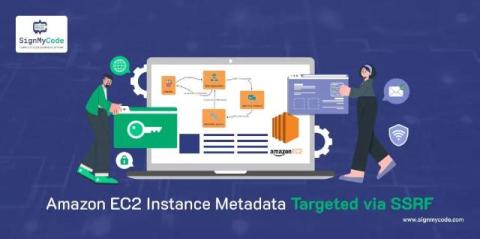
Amazon EC2 Instance Metadata Targeted via Server-Side Request Forgery (SSRF)

CVE Trends, Vulnerabilities of SSRF On March 25, 2024, the National Security Agency (NSA) and the Cybersecurity and Infrastructure Security Agency (CISA) issued a joint cybersecurity advisory about an increasing yet commonly overlooked web application vulnerability, Server-Side Request Forgery (SSRF).

Pixel-Perfect Trap: The Surge of SVG-Borne Phishing Attacks

Ever thought an image file could be part of a cyber threat? The Trustwave SpiderLabs Email Security team has identified a major spike in SVG image-based attacks, where harmless-looking graphics are being used to hide dangerous links. This blog post analyzes the various techniques cybercriminals are using to cleverly weaponize these image files in phishing attacks and what your organization can do to prevent these pixel-perfect tricks.

United Nations Urges Global Action as Cyberattacks Threaten Healthcare Systems

The threat facing healthcare organizations worldwide is being recognized at the highest level, with the United Nations calling for international cooperation to combat the issue. The international organization has asked its members to support fellow member nations by providing technical assistance and guidelines to bolster the resilience of health infrastructure against attack.

Gcore Super Transit Brings Advanced DDoS Protection and Acceleration for Superior Enterprise Security and Speed

Gcore, the global edge AI, cloud, network, and security solutions provider, has launched Super Transit, a cutting-edge DDoS protection and acceleration feature, designed to safeguard enterprise infrastructure while delivering lightning-fast connectivity.

Data Weaponization: How Cyber Attacks Impact the Vulnerable

Welcome to the Data Security Decoded podcast by Rubrik Zero Labs. In this episode, our host Caleb Tolin speaks with Pavlina Pavlova, a researcher and cybersecurity advocate focusing on data weaponization and its disproportionate impact on vulnerable populations. Pavlina defines data weaponization as using data to manipulate, deceive, coerce, or attack someone to inflict harm. Her research investigates why cyber attacks and their impacts often have gendered dimensions, with certain populations experiencing more severe consequences.


AI-powered attacks are getting more sophisticated.

AI-powered attacks are getting more sophisticated. However, AI-powered defense is evolving even faster. At Cloudflare, AI is already detecting and stopping threats faster than human researchers ever could. How? Machine learning models analyze millions of attack patterns in real-time, identifying anomalies and blocking threats before they spread. AI detects novel attack patterns before they even make headlines AI reduces false positives, helping security teams focus on real risks AI learns from past incidents, adapting faster than traditional security tools.

Upgraded Phishing-as-a-Service Platform Drives a Wave of Smishing Attacks

A phishing-as-a-service (PhaaS) platform dubbed ‘Lucid’ is driving a surge in SMS phishing (smishing) attacks, according to researchers at Prodaft. The platform is operated by Chinese cybercriminals who offer access to the service under a subscription model. A Lucid subscription allows crooks to easily craft sophisticated, targeted phishing campaigns.

Detecting Fast Flux with Sysdig Secure and VirusTotal

On April 3, 2025, the National Security Agency and other partner agencies released a critical advisory about DNS and Fast Flux. They even called it a national security threat due to the potential dangers involved. In this article, we’ll go over what Fast Flux is and how Sysdig Secure detects this attack technique. We’ll also cover gathering potential Fast Flux domain names from VirusTotal.

Phishing Attacks Are Evolving - Is Your Email Security Keeping Up?

A strong email security posture is as much about culture as it is about technology. In the 2022-23 financial year, 78% of Australian businesses offered annual cybersecurity training to their entire workforce; however, only 39% of these businesses provided specialized training for privileged users who are authorized to perform security-relevant functions that ordinary users are not.

An Update on QuickShell: Sharing Is Caring about an RCE Attack Chain on Quick Share

Authors: Or Yair, Security Research Team Lead Last August, I shared a blog on my most recent research project with Shmuel Cohen called QuickShell: Sharing Is Caring about an RCE Attack Chain on Quick Share, which we initially presented at DEF CON 32 (2024). In it, we explained how we discovered 10 unique vulnerabilities in Google’s Quick Share data transfer utility, some of which we were able to assemble into an innovative remote code execution (RCE) attack chain against the Windows version.

API Attacks Up 150% - Here's Why You Should Care Now #APISecurity #APIAttacks #AIVulnerabilities

Even worse, 98.9% of AI vulnerabilities are tied to insecure APIs.. APIs are being discovered in under 30 seconds, according to Wallarm’s honeypot research. Weak authentication, broken access controls, and missing rate limits are opening the door. Now’s the time to take API security seriously. Learn how to protect your systems before it’s too late.

How Safe and Attack-Proof Are Encrypted Apps?

In today’s digital landscape, encrypted messaging apps are widely regarded as essential tools for secure communication. Businesses and individuals alike turn to platforms like Signal, WhatsApp, and Telegram to protect sensitive conversations from prying eyes. But how secure are these apps really? Are they truly attack-proof, or do they provide a false sense of security?

Top 7 Account Takeover Solutions

Due to compromised accounts, financial institutions lose billions annually in unauthorized transactions and account-related fraud. Airlines suffer millions in fraudulent ticket purchases, and retailers face widespread loyalty fraud and resold gift cards. Automated, bot-driven takeovers further amplify the issue, driving costly credential-stuffing attacks that inflate operational costs and burn through budgets. The list goes on, and the problem is only getting worse.

CrushFTP auth bypass vulnerability: Disclosure mess leads to attacks

Outpost24 analysts recently discovered a critical authentication bypass vulnerability in CrushFTP, identified as CVE-2025-31161. The vulnerability has a CVSSv3.1 score of CVSS:3.1/AV:N/AC:L/PR:N/UI:N/S:U/C:H/I:H/A:H (9.8). We reached out to MITRE for a CVE on 13th March 2025 and were within an agreed 90-day non-disclosure period with CrushFTP. The plan was to give users plenty of time to patch before attackers were alerted to the vulnerability and able to exploit it.

How to Strengthen Your Network Security with LDAP Injection Defense

As organizations continue to rely on directories to store critical information such as user credentials, access permissions, and organizational data, the security of these directories becomes even more vital. LDAP (Lightweight Directory Access Protocol) is widely used for storing and managing this information. However, this reliance also makes LDAP directories a prime target for malicious attacks, with one of the most dangerous being LDAP injection attacks.

Deep-Dive Analysis of Multifactor Authentication Fatigue Attacks

There are many tactics cybercriminals use to defeat MFA security measures, but one successful method is a tactic known as MFA Fatigue. In this white paper, we cover what MFA Fatigue is and how it functions, share examples of attacks, and provide guidance for detection and mitigation.

Supply Chain Attacks: What You Should Know

Supply-chain attacks may not grab the headlines in the same way as ransomware or data breaches, but these horrific, sneaky cyberattacks are just as dangerous for your business. Here are five things you need to know about supply chain attacks, including what they are, why they happen, and how to prevent them.

Top 5 Cyber Threats CultureAI Detected in Q1 2025

Cyber security threats continue to evolve, but one factor remains consistent: human error is still the greatest risk to modern businesses worldwide. Employees make mistakes, bypass security measures, and fall victim to sophisticated social engineering attacks, leading to devastating data breaches. Despite extensive security awareness training, the reality is that investing more time and money in training isn’t solving the problem.

Insight beyond annual risk using attack chain mapping

Thriving organizations maximally allocate resources. With seemingly infinite cybersecurity threats and finite resources, everyone needs to know the size of the threat to determine priority, and where to invest to maximize ROI. Elastic takes a quantified approach to cybersecurity risk management using FAIR to break threat scenarios into (A) likelihood and (B) losses to calculate risk per year, AKA annualized loss expectancy, or in FAIR terms, simply “risk”.

What are Zero-Day Attacks?

A Zero-Day Attack occurs when hackers exploit a previously unknown vulnerability in software or hardware before the developer has a chance to fix it. These attacks are particularly dangerous because there is no defense in place when they occur. In this video, we explain how Zero-Day attacks work and how you can protect your systems from these hidden threats.