Mailchimp
Not subscribed to OpsMatters Newsletter


In this blog in the “IT security under attack” series, we wanted to shed some light on an unfamiliar and seldom discussed topic in IT security: the default, out-of-the-box configurations in IT environments that may be putting your network and users at risk. Default settings, and why the initial configuration is not the most secure
Although a business appears to make every effort to protect its assets, there is still no security guarantee. Hackers being fully aware of this uncertainty, tend to take complete advantage by tricking users or bypassing restrictions of the technology products in use, allowing them to acquire complete access. Such perils have given rise to the necessity of having a proactive approach towards cyber security to identify, prepare and respond to events.
Software supply chain attacks are back in the news. Last week, security researcher Alex Birsan executed a novel attack against Microsoft, Apple, PayPal, Shopify, Netflix, Tesla, Yelp, and Uber by leveraging a design flaw in automated build and installation tools. Along with the recent SolarWinds breach, this most recent attack is renewing attention on software supply chain security.
As we look forward to restarting our normal lives in the ‘new-normal’ post the pandemic, we are looking to digital channels and devices to bridge the gap between what was done ‘in-person’ and what we can do safely from home. This is necessary for the financial services industry where consumers and businesses alike must move most of their operations online.
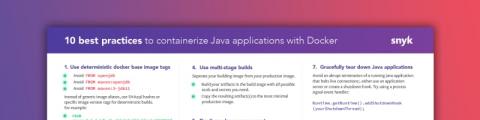
So, you want to build a Java application and run it inside a Docker image? Wouldn’t it be awesome if you knew what best practices to follow when building a Java container with Docker? Let me help you out with this one! In the following cheatsheet, I will provide you with best practices to build a production-grade Java container. In the Java container example, I build using these guidelines, I will focus on creating an optimized secure Java container for your application.