Mailchimp
Not subscribed to OpsMatters Newsletter


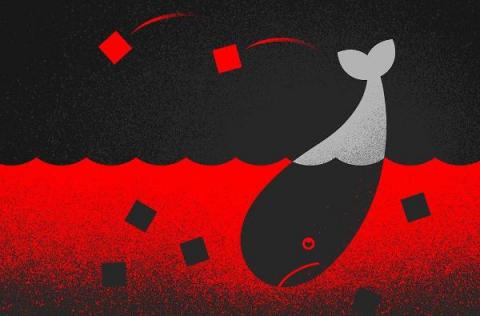
Between February 27 and March 1, 2022, Docker Engine honeypots were observed to have been compromised in order to execute two different Docker images targeting Russian and Belarusian websites in a denial-of-service (DoS) attack. Both Docker images’ target lists overlap with domains reportedly shared by the Ukraine government-backed Ukraine IT Army (UIA). The UIA previously called its members to perform distributed denial-of-service (DDoS) attacks against Russian targets.
When I joined nCircle as a security researcher in 2006, ASPL 117 had just been released. I missed the ASPL-100 release celebration, which included custom sweatshirts, but there was still one unclaimed shirt in the office and I brought it home, my first piece of company swag. That shirt still hangs in my closet all these years later.
You might think of Star Wars as a movie reserved for geeks, but what if I told you that there are deep life lessons that can be applied to developer security practices? Get your lightsaber ready and prepare to dive into JavaScript security! Star Wars is an epic space-based film series written and directed by George Lucas that often needs no introduction. I’m a fan myself, and personally relate to many of the quotes shared by Jedi Knights in the movie series.
New York DFS is working with SecurityScorecard to further support the department’s first-in-the-nation cybersecurity efforts to modernize its supervision process. The New York Department of Financial Services (DFS) is now working with SecurityScorecard to modernize its approach toward regulatory oversight.
The Center for Internet Security (CIS) provides Critical Security Controls to help organizations improve cybersecurity. Control 7 addresses continuous vulnerability management (this topic was previously covered under CIS Control 3). Continuous vulnerability management is the process of identifying, prioritizing, documenting and remediating weak points in an IT environment.
The Center for Internet Security (CIS) publishes Critical Security Controls that help organization improve cybersecurity. In version 8, Control 6 addresses access control management (in previous versions, this topic was covered by a combination of Control 4 and Control 14).