Mailchimp
Not subscribed to OpsMatters Newsletter


Gartner’s introduction of the Security Service Edge (SSE) Magic Quadrant in February of 2022 has been an impetus for organizations to reassess their cloud access security broker (CASB) solutions. CASB is one of the three core components of SSE and the piece of the puzzle that handles cloud security for SaaS and IaaS applications.
Containers are used for packaging software and all its dependencies before deployment. Before the era of containers, software developers had to deal with compatibility issues during deployment. These could occur when software functions properly during the development phase but fails to function due to dependency issues in the production environment. With containers, however, all the software dependencies used for development can be shipped and used in the production environment.
When a leading financial technology provider began posting record success and rapid customer growth, it needed a holistic security strategy to protect its customer data and comply with regulations such as the Payment Card Industry Data Security Standard (PCI DSS) and the California Consumer Privacy Act (CCPA).
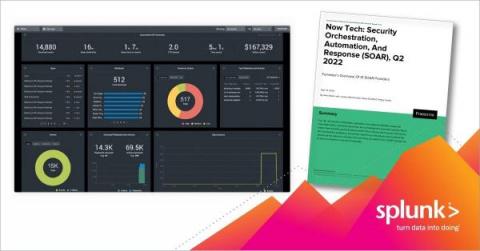
The Splunk SOAR team is excited to be recognized within Forrester’s report Now Tech: Security Orchestration, Automation, And Response (SOAR), Q2 2022. Splunk SOAR is categorized within the Security Analytics Portfolio functionality segment and in the “Large” vendor market presence segment. The following post will share more on our views of the report, our position in this dynamic market landscape, and a look at what’s ahead.
Have you ever deployed Docker containers and hoped they delivered safe software? Would you like to get peace of mind that the contents of your containers are secure and clear of vulnerabilities? With JFrog Xray’s new integration with Docker Desktop Extensions, you will be able to do just that. By scanning for vulnerabilities locally before pushing to your remote repositories, your deployed software will inherently be more secure.
The JFrog Security research team constantly monitors the npm and PyPI ecosystems for malicious packages that may lead to widespread software supply chain attacks. Last month, we shared a widespread npm attack that targeted users of Azure npm packages. Over the past three weeks, our automated scanners have detected several malicious packages in the npm registry, all using the same payload.
In our new threat briefing report, Forescout’s Vedere Labs analyzes an Emotet sample, presents a list of IoCs extracted from the analysis and discusses mitigation. Emotet is the name of both a cybercrime group and a malware loader it distributes. The group is also known as MUMMY SPIDER, while the malware is also known as Geodo or Heodo.
Yes, even basic technology like SIM cards poses the risk of getting hacked. Today, cell phones have almost become tiny supercomputers, so users must learn how to secure their mobile phones. From social engineering scams to SIM hijacking, sensitive data can easily become compromised without adequate cybersecurity awareness. Learn more about why SIM card hacking is on the rise and how you can prevent it from happening.