Security | Threat Detection | Cyberattacks | DevSecOps | Compliance

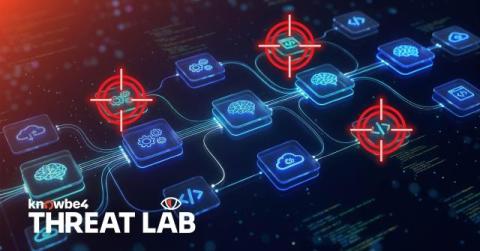
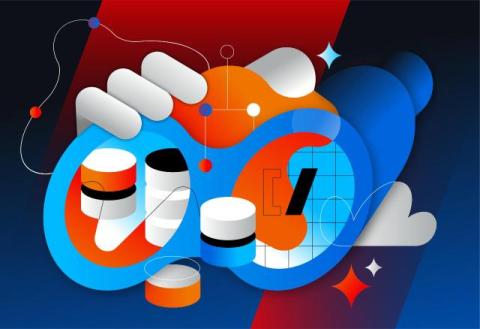
Benchmarking 13 AI models on rediscovering known CVEs

TL;DR Every frontier model launch now comes with the same cybersecurity claim: it finds vulnerabilities. But does it work on a real bug in a real repository, or just on a curated example? Of the dozen models you could pick, which is worth trusting with code review? And since the strongest models cost ten times or more per run than the cheapest, what does that extra spend actually buy you in bugs found?

The Cybersecurity Homework You Can't Skip

Summer might mean slightly fewer meetings, lighter inboxes, and the illusion of breathing room (in a perfect world), but we all know that attackers don’t take vacations, so neither should the fundamentals that keep your organization secure. If anything, now is the perfect time to tackle the “homework” that often gets pushed aside during busier quarters. Recent incident patterns continue to reinforce a straightforward reality: breaches are rarely the result of a single control failure.

Vulnerability Exploitability: Is That Critical CVE Reachable?

A high CVSS score tells you how bad a vulnerability could be in theory, and EPSS tells you how likely it’s being exploited somewhere in the world, but neither knows anything about your environment. True vulnerability exploitability depends on reachability: whether the vulnerable code is actually loaded and called at runtime, whether it’s exposed on the network, and whether existing controls already block the path.

AI in risk management: Practical applications and considerations

Accelerating security solutions for small businesses‍ Tagore offers strategic services to small businesses. A partnership that can scale‍ Tagore prioritized finding a managed compliance partner with an established product, dedicated support team, and rapid release rate. Standing out from competitors‍ Tagore's partnership with Vanta enhances its strategic focus and deepens client value, creating differentiation in a competitive market.

Your Visual Identity Matters - Can AI Get It Right?

First impressions in professional settings have always mattered, but the digital layer has changed the stakes entirely. Your profile picture is now the first handshake, the initial eye contact, the silent introduction that happens before a single word is exchanged. And yet, for most professionals, this critical piece of visual identity remains an afterthought-a cropped wedding photo, a five-year-old conference badge image, or a smartphone selfie taken in less-than-ideal lighting.

Building a Layered Security Strategy for Business Aircraft

Security in aviation tends to be discussed in terms of the threats most people are familiar with - access control, passenger screening, the physical security measures that commercial airports have made visible over decades. Business aviation operates in a different environment, one where the formal infrastructure of commercial security doesn't apply in the same way, where the value and profile of the aircraft and its occupants creates specific risks, and where the operator carries responsibility for security decisions that are largely delegated to specialized agencies in commercial contexts.

Data Flow Diagrams in Threat Modeling: From Whiteboard Sketch to Living Security Artifact

Most threat modeling sessions that fail do so before anyone has said the word "threat." They fail because the team is arguing about how the system actually works. One engineer thinks authentication happens at the gateway; another is certain it happens in the service. Nobody can point to a shared picture, so the conversation drifts into architecture archaeology and the security questions never get asked.

7 OCR Solutions with Intelligent Document Processing (IDP) and Agentic AI Systems - 2026 Review

The seven OCR-plus-IDP solutions worth evaluating in 2026 are ABBYY Vantage, Unstract, Hyperscience, Rossum, Nanonets, Google Document AI, and Docsumo. Each pairs optical character recognition with intelligent document processing, increasingly with agentic AI that reasons over document context, and each carries a different security, compliance, and deployment profile for teams handling sensitive data.