Security | Threat Detection | Cyberattacks | DevSecOps | Compliance

Cyber Risk Register vs. Vulnerability Register

The two registers hold different objects, run on different clocks and answer to different people. Where they are treated as one list at different levels of detail, items get counted twice and others fall between them. ‍ A vulnerability register holds findings on assets and numbers in the thousands. A cyber risk register holds loss scenarios and numbers in the tens. Neither is a summary of the other. ‍

The Best AI Governance Platforms for Financial Services in 2026

Most governance platform comparisons written for financial services lead with the EU AI Act high-risk regime. For a bank deploying credit scoring today, that is the obligation furthest from biting, and the ones already in force get less attention than they deserve. ‍ The criteria below follow the provisions rather than the subject areas, with dates attached, because the sequence they arrive in decides what a platform has to do first. ‍

Free Helpline for Victims of Online Crime Pilots in South Africa

South Africans who fall victim to cybercrime now have more support available. MiDO Academy, The Cyber Helpline (UK) and Amazon Web Services (AWS) launched the pilot of The Cyber Helpline in South Africa, a free, confidential service providing practical guidance and compassionate support to individuals affected by online fraud, investment and employment scams, hacked accounts, phishing and smishing, social media fake profiles, sextortion, online harassment, identity theft, malware and ransomware incidents.

Keeper Security and Tenable Integrate to Streamline Cloud Risk Detection, Remediation and Vulnerability Assessment

Keeper Security, the leading zero-trust and zero-knowledge identity security platform, today announces native integrations with Tenable that eliminate the costly delay between identifying cloud security risks and remediating them while centralizing credential management for comprehensive vulnerability assessment. These integrations allow cloud security teams to move from detection to remediation in a single workflow, without managing manual tickets or switching between tools.

Bitsight AI Mode: AI-Powered Cyber Risk Intelligence & Agentic Workflows

Meet Bitsight AI Mode, a new way to investigate cyber risk, prioritize critical exposures, and accelerate security decisions using AI-powered intelligence and agentic workflows. Built directly into the Bitsight platform, AI Mode combines conversational AI with automated, multi-step analysis to help security and risk teams turn complex cyber risk data into actionable insights. With Bitsight AI Mode, you can.

BRONZE SANDCASTLE deploys modified Meterpreter shells

The China-based threat group uses DLL sideloading in these attacks Counter Threat Unit (CTU) and SophosLabs researchers investigated a cluster of incidents attributed to the BRONZE SANDCASTLE threat group. The most distinctive technical marker for BRONZE SANDCASTLE is its consistent use of Sandboxie DLL sideloading.

Why Incident Response Demand Will Grow Faster than Expected

This article is part of an ongoing series from Sophos frontline security operations specialists, sharing the expertise they use to strengthen our industry-leading Managed Detection and Response (MDR) service and defend customers against evolving AI-era threats. A 20% growth forecast for cybersecurity talent sounds significant. I believe it understates what we are going to see in Incident Response. The U.S.

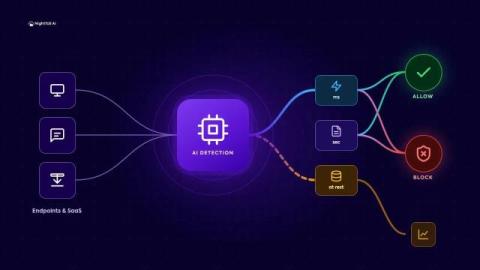
How Nightfall Blocks Data Exfiltration in Milliseconds

Blocking an exfiltration means deciding, in the moment, whether the data leaving a device is sensitive. That turns a detection platform built for accuracy and scale into one that must also answer in milliseconds. Nightfall pioneered the AI-first approach to DLP. Instead of leaning on regular expressions and pattern matching alone, we use language-aware machine learning models that understand the context sensitive data appears in.

SaaS access governance: Does access end when employees leave?

Cybersecurity Awareness Month encourages organizations to examine the controls behind everyday security habits. Training helps employees spot phishing and use strong authentication but does not resolve gaps in systems that govern access. Many organizations manage employee access through an identity provider (IdP) and single sign-on (SSO). However, not every AI or SaaS application connects to those systems.