Fleet operations today revolve around data. Telematics systems, connected cars, and similar IoT systems provide fleet managers with a wealth of information, but this connectivity also raises security concerns. As data breach costs reach their highest point in decades, accounting for vulnerabilities in organizations’ data becomes increasingly crucial. Data-rich and notoriously difficult-to-secure fleets are no exception.
On September 14, the White House released Executive Order M-21-30, emphasizing and reminding us that there are NIST guidelines for securing any software being sold to the US Government. According to the Executive Order (EO), self-attestation is a requirement for software vendors or agencies and acts as a “conformance statement” outlined by the NIST Guidance.
MDR (Managed Detection and Response) is a type of cybersecurity service that combines advanced threat detection technologies with human expertise to provide continuous monitoring and rapid response to cyber threats. These services involve a team of cybersecurity experts who monitor an organization’s network and endpoints in real-time using advanced security tools, such as threat intelligence, machine learning, and behavioral analytics.
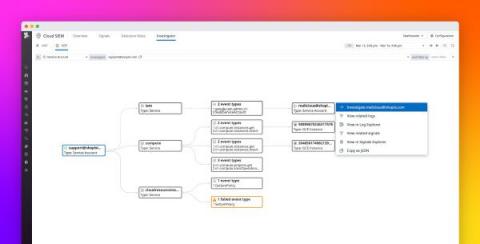
You’ve got a problem to solve and turned to Google Cloud Platform and follow GCP security best practices to build and host your solution. You create your account and are all set to brew some coffee and sit down at your workstation to architect, code, build, and deploy. Except… you aren’t. There are many knobs you must tweak and practices to put into action if you want your solution to be operative, secure, reliable, performant, and cost effective.