Clickbait: Think Before You Click
A night at home for Artie turns into a series of terrifying phishing attempts. Will the Awarewolf avoid these spooky scams? And who is the ghostly figure haunting the hallways? Find out, if you dare...


This is the second of a six-part blog series that highlights findings from a new Mend white paper, Five Principles of Modern Application Security Programs. Be sure to look out for our upcoming blogs on each of the five principles. It’s no exaggeration to say that IT and application security teams from all organizations are facing a perfect storm.
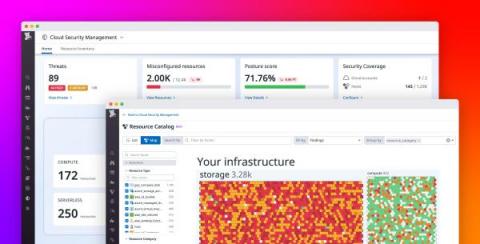
Organizations are rapidly migrating their infrastructure to the cloud, enabling them to modernize their applications and deliver more value to their customers. But this transition creates significant security risks that they may be unable to keep pace with. For example, cyber attacks on cloud resources are becoming more sophisticated and prevalent. Additionally, organizations often rely on legacy, disjointed security tools that don’t integrate well with cloud-native infrastructure.
IT pros are well aware that Active Directory has two types of groups: security groups, which are used to assign permissions to shared resources, and distribution groups, which are used to create email distribution lists. But not everyone understands that each of these Active Directory groups has a scope — and understanding how scope works is vital to security and business continuity. This blog post dives into what group scope is and exactly why it’s important.
Becoming and staying PCI compliant both take a lot of work. Developers are often already swamped with an endless list of tasks, and adding PCI compliance can be overwhelming. Security awareness is one thing, but a set of requirements is entirely different. It means you have less freedom in how you wish to implement security in your application, and you must understand the requirements demanded by your organization.
The impact of ransomware attacks on healthcare is as alarming as it is under-addressed. The United States healthcare system alone faces an annual burden of nearly $21 billion due to these attacks. It pays well over $100 million in ransoms, and is beginning to acknowledge the tragic realities of impacted patient care, including higher patient mortality rates. For every headline related to cyberattacks, there are likely hundreds more that go unreported.
The term Anti Money Laundering is abbreviated as AML. It is mostly used in the financial, legal, and compliance sectors to define the standard procedures that firms and organisations must implement in order to detect, identify, and report suspicious money laundering behaviour that may occur while carrying out their activity. AML compliance standards focus on anti-money laundering processes that deter and prohibit potential violators from participating in money laundering fraud or crime.