Coverage-guided fuzzers, like Jazzer, maximize the amount of executed code during fuzzing. This has proven to produce interesting findings deep inside the codebase. Only checking validation rules on the first application layer isn’t providing great benefits, whereas verifying logic in and interactions of deeply embedded components is. To extend the amount of covered code, the fuzzer tries to mutate its input in such a way that it passes existing checks and reaches yet unknown code paths.
APIs are a crucial tool in today’s business environment. Allowing applications to interact and exchange data and services means that companies can provide an ever-greater range of features and functionalities to their clients quickly and easily. So, it is no wonder that a quarter of businesses report that APIs account for at least 10% of their total revenue - a number that will only increase in coming years.
CVE-2022-23648, reported by Google’s Project Zero in November 2021, is a Kubernetes runtime vulnerability found in Containerd, a popular Kubernetes runtime. It lies in Containerd’s CRI plugin that handles OCI image specs containing “Volumes.” The attacker can add Volume containing path traversal to the image and use it to copy arbitrary files from the host to container mounted path. The vulnerability was reported by Felix Wilhelm on Nov.
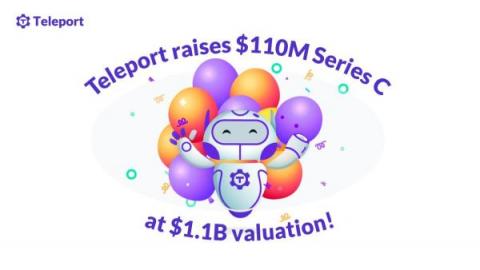
I have news to share. Teleport has just secured $110M in Series C funding to keep growing the business that I started with my co-founders Sasha Klizhentas and Taylor Wakefield in 2015. This is exciting for founders and employees, but I think it is also excellent news for all software engineers who are crying out for a better way to manage secure access to their mission-critical cloud infrastructure. More on that below.