Security | Threat Detection | Cyberattacks | DevSecOps | Compliance

GDPR Incident Response for Websites: What to Do When Tracking Violations Are Found

So your team just uncovered a GDPR tracking violation, a consent anomaly that, after a deeper look, turns out to be a pixel firing regardless of consent state.” From the looks of it, it’s definitely an ePrivacy violation. But the harder question, the one you now have to race against time to answer, is whether this is also a notifiable breach under GDPR. For that determination, you now have 72 hours. One gets fixed with a tag manager update and a stern email to marketing.

CCPA Incident Response: Responding to Website Tracking Violations

Most websites host tracking systems that change continuously, tag by tag, pixel by pixel, version to version, often without anyone in privacy touching a line of code. Marketing adds a session replay script through the tag manager. Vendors quietly push updates to the tags. By the time it’s noticed in the next periodic review, the damage is done. Drift in tag behaviour leads to consent violations. And tracking scripts load and process data despite GCP signals.

How incident.io and Apono Enable Just-in-Time Access for Incident Response

Picture this: it’s 2am, your pager goes off, and you’re staring at a production database that’s on fire. You know exactly what’s wrong. You know exactly how to fix it. But you can’t touch anything because you’re waiting on someone to approve your access request. Meanwhile, your customers are down, your SLAs are bleeding out, and you’re refreshing Slack, and every minute you spend waiting is another minute of damage you could’ve prevented.

Why Your Security Stack Is Blocking AI (And How to Fix It)

Sr. Technical Content Strategist Hockey has a saying that describes the problem security organizations face when trying to integrate AI:"You have to skate to where the puck is going, not where it has been". Think of the modern security stack. It's a fragmented architecture built layer by layer over decades. Tools are siloed, some overlapping, some operating in black boxes, and others that no one remembers installing.

How One-Time Share Works in Keeper

Teams, friends and family members often need to share access to accounts, but traditional methods like email, text messages or screenshots expose sensitive information and create lasting risk. Keeper’s One-Time Share works by creating a secure, device-bound link that allows temporary access to a record while keeping credentials encrypted and fully protected. This approach enables fast, secure sharing without requiring the recipient to create a Keeper account or gain ongoing access to your vault.

The Howler Episode 27 - Charlie Smith, SVP Global Acquisition Sales Engineering

This month, we sit down with Charlie Smith, SVP of Global Acquisition Sales Engineering, as she shares leadership advice he wished he'd learned earlier in his career, why he thinks sales engineering is a "hidden gem," and so much more!

Internet Exposure as a Critical Layer of Context in Vulnerability Management

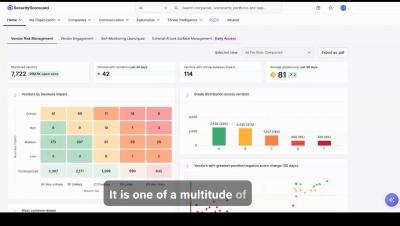
During a recent video interview, we spent time unpacking a deceptively simple question: what actually makes a vulnerability critical? Severity scores, exploitability, and asset importance all factor into the answer. But one layer of context consistently changes the urgency of a finding more than most teams expect: internet exposure. The difference between a vulnerability that exists and one that matters often comes down to whether an attacker can reach it.

Best Deployment Service for Kubernetes Security in 2026

Why do most Kubernetes security tools fail teams in practice? Because they treat deployment and security as separate problems. A true Kubernetes security deployment service embeds scanning, policy enforcement, and runtime monitoring directly into the deployment flow — so risky workloads never reach production in the first place. Why isn’t shift-left security enough on its own?

The new AI access problem: Why machine identities now drive trust in banking

In my experience working inside banks, identity security can be like plumbing: when it’s working, no one wants to talk about it. When there’s an incident, an audit, or a regulator—suddenly everyone wants to understand how it works. Artificial intelligence (AI) brings the same “no one cares until everyone does” energy, but with face-melting velocity. Today, AI is embedded across large parts of the financial services industry, and it has been around for more than 25 years.