Security | Threat Detection | Cyberattacks | DevSecOps | Compliance

3 CalypsoAI Alternatives Analyzed: Pricing, Key Capabilities, USP, Pros, & Cons

Over the past few years, enterprises have rapidly integrated GenAI into an increasing number of workflows and use cases. Amidst the rush and excitement to adopt a free tool that significantly boosts productivity, business leaders de-prioritized privacy, till it became a compliance issue. As privacy tools offering a quick patch quickly flooded the market, businesses ran into a new problem – which is the best tool?

Hunting Malware with MSHTA and CyberChef: A Deep Dive into Obfuscation in Malicious Scripts and Credential Theft

Recently, our team came across an alert involving mshta.exe, a native Windows tool that attackers commonly exploit for malicious purposes. MSHTA (Microsoft HTML Application Host) is a well-known LOLBin (Living-Off-The-Land Binary). This means it is a legitimate system tool that can be abused and can blend in with normal activity. MSHTA can execute remote HTML applications or JavaScript content directly from a URL.

EASM top features: 7 capabilities your solution needs

External attack surfaces have never been more sprawling, or more vulnerable. As organizations increasingly rely on dynamic, cloud-based infrastructures, and third-party services, digital footprints are only going to carry on growing. So, it’s no surprise many are turning towards External Attack Surface Management (EASM) tools for more visibility into both known and unknown assets. But what should you be looking for in a solution?


Security Testing for Single-Page Applications (SPAs)

When developing a web application, dev teams can choose from two fundamental design patterns: Single-Page Applications (SPAs) or traditional Multi-Page Applications (MPAs). Deciding which one to use can depend on multiple factors, but more and more companies are developing SPAs since they can provide a smoother user experience (UX), which, in turn, might just result in better user adoption.

Storm-0558 and the Dangers of Cross-Tenant Token Forgery

Modern cloud ecosystems often place a single identity provider in charge of handling logins and tokens for a wide range of customers. This approach certainly streamlines single sign-on (SSO) for end users, but it also places enormous trust in a single set of signing keys. If those private keys are compromised, attackers can create tokens that appear valid to any service that relies on them.

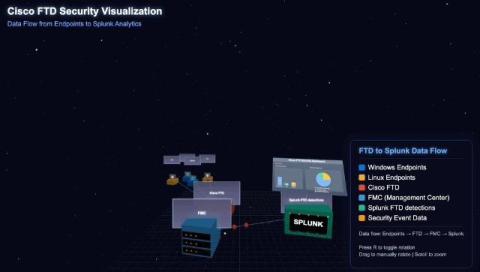
Securing the Network Edge: Cisco Secure Firewall Threat Defense Detections for Splunk

By integrating Cisco’s Firepower Threat Defense (FTD) with Splunk’s analytics platform, your security team immediately gains comprehensive, organization-wide visibility into network threats far beyond what any single firewall can detect alone. Yet, despite the critical need to bridge network and security data, many organizations still deploy perimeter defenses like Cisco's FTD but struggle to convert its rich telemetry into actionable insights useful to a SOC.

How VRM Determines Runtime Security Flaws

Modern application environments are increasingly complex, combining containers, microservices, CI/CD pipelines, and ephemeral compute. While Static Application Security Testing (SAST) and Software Composition Analysis (SCA) can uncover vulnerabilities during build time, they often leave a critical gap: runtime security flaw detection and determining whether a detected flaw is actually exploitable and running in production.

Mapping the Future of AI Security

AI security is one of the most pressing challenges facing the world today. Artificial intelligence is extraordinarily powerful, and, especially considering the advent of Agentic AI, growing more so by the day. But it is for this reason that securing it is so important. AI handles massive amounts of data and plays an increasingly important role in operations; should cybercriminals abuse it, the consequences can be dire.

Old Data: Are You Keeping Too Much? Incident Response Risks! #appsec #cybersecurity

Mend.io, formerly known as Whitesource, has over a decade of experience helping global organizations build world-class AppSec programs that reduce risk and accelerate development -– using tools built into the technologies that software and security teams already love. Our automated technology protects organizations from supply chain and malicious package attacks, vulnerabilities in open source and custom code, and open-source license risks.