Security | Threat Detection | Cyberattacks | DevSecOps | Compliance

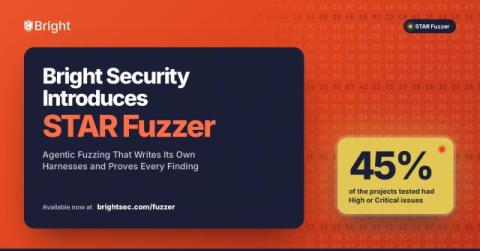
Bright Security Introduces STAR Fuzzer, Agentic Fuzzing That Writes Its Own Harnesses and Proves Every Finding

Built on an evolutionary engine first released in 2018, STAR Fuzzer by Bright Security finds crashes, memory exhaustion and memory-safety bugs in security-critical code without a running application. In its first open source research run, it found High or Critical issues in 45% of the projects tested, and in its first month of availability it produced ten published findings in eight projects, including the Crystal standard library, htop and RIOT OS.
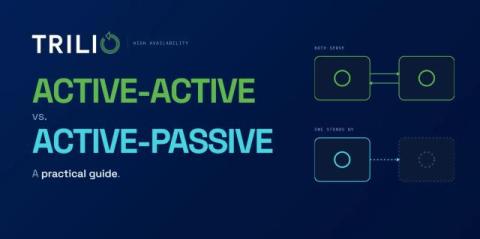
Active-Active vs. Active-Passive: A Practical Guide

TL;DR: Active-active runs every node live so traffic distributes across the pool and failover is near-instant, but it forces you to solve multi-writer conflicts through last-writer-wins, vector clocks, CRDTs, or consensus protocols. Active-passive keeps one authoritative primary with an idle standby, trading seconds to minutes of promotion time for predictable behavior, simpler troubleshooting, and lower cost under steady load.

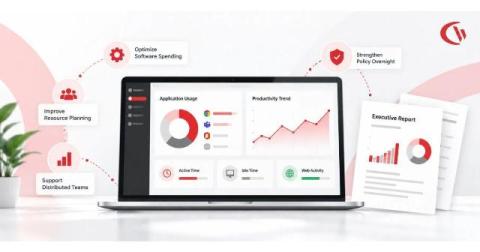
How to Generate Executive Workforce Activity & Application Usage Reports: A Manager's Handbook

Successful executive leadership goes beyond monitoring employees’ every move; it also needs a clear, factual picture of digital workflows, which apps are being used, and how much work available talent can do. Today, when many organizations are dealing with a shift to hybrid work, soaring software subscription pricing, and new productivity requirements, executive workforce activity and app consumption reporting are helping leaders stay on top of it all.

Drata and Aikido: audit-ready pentesting, built into your compliance workflow

Continuous control monitoring and a once-a-year, point-in-time pentest don't sit well together. A manual test means scoping, waiting for a slot, and holding up the audit window for the report. Teams choose Drata to get audit-ready quickly: controls monitored continuously, evidence collected automatically. The pentest is the part that doesn't move at that speed.

More pentesting, same budget, no surprises

Development teams ship faster than ever with AI-assisted coding. Features that previously took weeks can now be delivered in days. But security testing still runs on the old schedule. In Aikido's 2026 State of AI in Pentesting report, we found that 76% of organizations deploy significant production changes weekly or faster, while just 21% validate security on every release. Katie Norton, Senior Research Manager at IDC, summed it up.
Sponsored Post

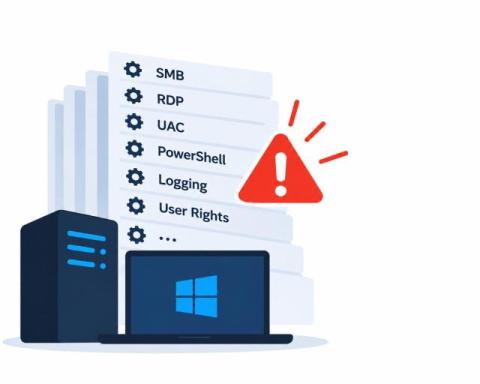
Windows Hardening & Continuous Compliance: Keeping 200+ Security Settings Secure 24/7

Every Operating System – not even counting the software installed on top of it – has a myriad of configuration settings that affect security. Windows Server alone has 4000+ configurable options, out of which 200+ are important for security & compliance efforts. They include: These settings are at the very core of all of your security & compliance efforts – and they are surprisingly often ignored.

Your CVE is reachable. But is it exploitable?

Any SCA tool worth its salt has reachability analysis these days. When a dependency has a known vulnerability, these tools can tell you whether your code calls the affected function. This is pretty much non-negotiable because it helps teams focus their security efforts instead of sifting through noise. Every other step in prioritizing dependency CVEs builds on it. But just because the vulnerable function is reachable doesn’t mean it’s exploitable.

MCP Database Security: Seven Boundaries Every AI Agent Needs

Connecting an AI agent to a production database can turn a slow investigation into a short conversation. The agent can inspect a schema, generate a query, and help explain a failed migration or an unexpected metric. The same connection can also expose sensitive records or modify production data if the access path is treated as a single trusted pipe.

AI guardrails aren't security controls

AI guardrails are sold as a solution to keep models behaving as intended - but it can be hard to figure out what you’re getting. The problem starts with the word itself. "Guardrails" means different things depending on who's selling them. Some vendors use it for simple prompt filtering, others bundle in entirely different controls and call it "guardrails" because the word sounds reassuring. Without a shared definition, buyers can't easily tell what they're actually getting.

Phishing Is Now A Criminal Impersonation Industry. Here Is How To Fight Back

For years, we described phishing as an email problem: an attacker writes a convincing message, sends it to thousands of people and waits for someone to click. That model is now outdated. Microsoft’s disruption of YAM Store, CoGUI and Iron Man exposed something much larger: a cloud-based impersonation industry.