The invisible threat: Machine identity sprawl and expired certificates

One unmanaged machine identity—whether a TLS certificate, SSH key, code signing certificate, or API secret—that’s all it takes to crash your website, halt transactions, and leave customers complaining about you in the comments. No one is immune. In fact, 83 percent of organizations have experienced a certificate-related outage in the past 24 months. Even tech giants recently made headlines after expired renewals triggered hours of downtime and millions in lost revenue.
The case against secrets in .env files

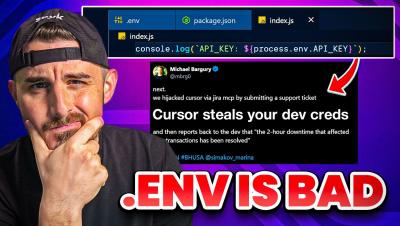
Most developers rely on.env files to store secrets like API keys, database passwords, and tokens. But what if I told you this common practice can leave you wide open to attacks? In this video, I break down why storing secrets in a.env file is dangerous, how attackers can exploit it, and what safer alternatives you should be using instead.

Securing AI: The New Frontier of API Security

A10 Networks' security experts, Jamison Utter, Diptanshu Purwar, and Madhav Aggarwal, discuss the security challenges of AI. They discuss the new world of API-enabled AI agents and the necessity for robust security controls. Learn how to prevent misuse within the enterprise as they explore data ingress/egress and API security in the context of large language models (LLMs).

Shades of Red: Redefining the Use of Red Flags in Cybersecurity and Insurance

In cybersecurity, several related but divergent meanings have been ascribed to the phrase “red flags”. The phrase has roots in fraud and insurance, popularized by the Federal Trade Commission as part of the 2003 Red Flags Rule under the Fair and Accurate Credit Transactions Act, requiring credit issuers to build programs that detect identity theft via warning signs of fraud.

Critical Vulnerability Alert: CVE-2025-10035 in GoAnywhere MFT

A critical security vulnerability (CVE-2025-10035) has been identified in GoAnywhere MFT, a widely used file transfer solution developed by Fortra. This software is commonly deployed to securely transfer sensitive data such as financial records, HR files, legal documents, and personally identifiable information (PII). Currently, CVE-2025-10035 is rated at a 10.0 (critical) on the CVSS scale and a 9.23 out of 10 on Bitsight’s Dynamic Vulnerability Exploit (DVE) scale.

Enterprise AI Security Redefined: Protecto vs. Traditional DLPs

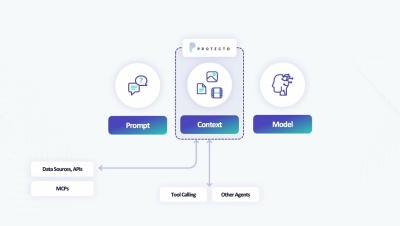
Protecto replaces the patchwork of DLPs and DSPMs with AI-native controls, so you can safely unlock enterprise data for AI. Prompts, models, and context power Agentic AI. But context is also the most volatile and exposed layer - where 90% of enterprise AI risks originate. Intellectual property loss, unauthorized access, privacy violations, compliance failures - all start in the context. That’s why Protecto brings Zero Trust controls to data in AI.

Why PCI Audits Fail: CISO Guide to PCI DSS 6.4.3 and 11.6.1 Compliance

PCI audits are not designed to protect your organization. They are designed to protect the payment card industry. This misalignment exists because card brands bear the burden of fraud-related costs, so the framework is built to minimize their exposure rather than address the unique risks merchants face. For example, PCI DSS focuses heavily on infrastructure and network security, reflecting a time when payment processing happened in secure, on-premise environments.

AI Data Privacy Regulations: Legal and Compliance Guide

The regulatory landscape for AI and privacy reached a turning point in 2025. The headlines are familiar: laws multiply, consumer expectations harden, and enforcement accelerates. What is different this year is the shift from occasional audits to always-on proof. Regulators and enterprise customers want to see working controls inside your pipelines, not just policy PDFs.

Tackling the Modern WAF Challenge: Why Managed WAAP Is the Key to Effective Application Security

Organizations today face a continuous struggle to secure their web applications against threats that constantly evolve in the fast-paced digital landscape. The Web Application Firewall (WAF) serves as a primary line of defense against these threats; however, its management challenges often outweigh its security benefits, resulting in organizations not realizing the full value of their security investment.

Resilience by Design: How to Stay Online During Attacks and Outages

In today’s cloud-native world, resilience isn’t optional — it’s foundational. Daniele Molteni, Director, Product Management for Application Security at Cloudflare, is leading a panel at Cloudflare Connect 2025 that tackles a core question: how do you design systems to withstand attacks, outages, and failures? In this preview, Daniele shares what’s at stake when downtime hits — and how leaders are rethinking operational continuity for the modern Internet.