Beyond Agent-Washing: How Torq Delivers True Agentic Automation for Security

Eldad Livni is the Co-Founder and Chief Innovation Officer at Torq. Prior to founding Torq, Eldad co-founded and served as CPO of Luminate Security, a pioneer in Zero Trust/SASE. Following Luminate’s acquisition by Symantec, he went on to act as CPO of Symantec’s Zero Trust/Secure Access Cloud offering. The security industry has a new buzzword problem.


SpiderLabs Ransomware Tracker Update September 2025: Qilin, Akira Top Ransomware Attackers

The threat groups Qilin and Akira together conducted about one-quarter of the 402 ransomware attacks tracked by Trustwave SpiderLabs in September, with the manufacturing and technology sectors receiving the brunt of these efforts. This information was derived from a new SpiderLabs ransomware tracking tool that gathers information from a variety of open intelligence sources and our own proprietary research.

How Falcon ASPM Secures GenAI Applications and Lessons from Dogfooding

The widespread availability of large language models (LLMs) has driven the rapid development of generative and agentic AI applications for business use cases. These systems can reason, plan, and act autonomously, creating security risks that traditional security tools weren’t built to handle. Their popularity has widened the attack surface, both for organizations using external LLMs and those building their own GenAI applications.

The Changing role of IAM Managed Services

In this short webinar clip, presented by David Cox, VP Identity Services at Xalient - Mike Shishman, VP of Alliances and Partners, Sean Harris, MSP Sales at SailPoint, discuss the changes we've seen in role managed services an play in helping organizations build, support, and mature their Identity Security programs. Topics include: How the MSP market has matured (it's not just ticketing) The things you should know (but they don't tell you) How to get the most out of a MSP Client examples (SailPoint MSP and beyond)

PCI DSS 6.4.3 Script Management: What CISOs Actually Need to Know

Tell me if you’ve heard this one before: a company audits its checkout page and discovers 47 scripts running. Only 12 were approved. The other 35? A mystery, and a risk. Nobody knows who added them or whether they’ve been compromised. That’s what we’re here to talk about today.

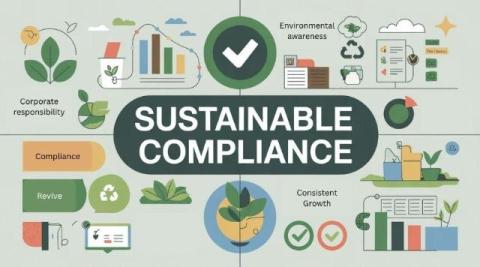
Sustainable compliance made easy: Incorporating environmental responsibility into GRC strategies

As we speak about changing the regulatory and environmental landscape, organizations are shifting toward more responsible, sustainable practices not only to abide by regulations but also to build resilience, trust, and competitive advantage. Governance, risk, and compliance (GRC) strategies are evolving by incorporating environmental responsibility, ensuring that compliance is not merely a checkbox activity but a core part of an organization’s overall sustainability practices.

How to choose compliance audit software: A buyer's guide

With regulatory complexity rising across all industries, managing multiple frameworks and amended regulations simultaneously has become the new security standard. Regular audits and continuous improvement have also become essential, both to ensure ongoing compliance and to strengthen customer trust. ‍ However, manual compliance audits are time- and resource-intensive. Their complexity grows with each new framework, significantly raising the risk of human error and compliance fatigue.

Faked Out: How a Fraud IRS Website Fueled a Sophisticated Remote Access Campaign

The BlueVoyant Security Operations Team (SOC) and Threat Fusion Cell (TFC) researchers recently analyzed a sophisticated phishing incident where a user was lured into visiting a fake IRS website to verify a “tax refund”. The scheme was initiated via a phishing email, leading the user to the fraudulent site.

Six workflows every financial services security team should be automating

Security teams in financial services and insurance (FSI) companies have their work cut out for them. These organizations safeguard some of the most important data in the world—making them prime targets for attackers and among the most heavily regulated industries to operate in. Breach costs in finance remain among the highest of any sector, averaging $6.08M per incident in 2024. At the same time, many teams juggle dozens of disconnected systems and legacy platforms.