CERT-In SBOM Guidelines 2025: What Fintech Companies Must Know

UPI fraud spiked 85% in FY 2024, reaching ₹1,087 crore. Most of it traced back to vulnerabilities in third-party APIs and unpatched components that fintechs didn’t know they were running. As such, in July 2025, CERT-In released SBOM Guidelines 2.0, making Software Bills of Materials mandatory for all government, public, and essential services orgs, while encouraging others to adopt it as best practice. For CTOs and CISOs, the message is direct.


OpenAI Data Privacy Compared: OpenAI, Claude, Perplexity AI, and Otter

AI assistants and search tools are woven into daily work. But not all providers handle your prompts, files, or transcripts the same way. Small policy details determine whether your data trains future models, how long it’s kept, and what an auditor will see. If you use these tools in regulated environments, the safest choice to ensure OpenAI data privacy often depends on your specific channel: consumer app, enterprise account, or API.

[Cybersecurity Awareness Month]: Keeping Enkryptor at Bay: How We All Can Help Beat Back Ransomware

Ransomware is the gift that keeps on giving… and taking. I’ve been tracking ransomware for almost nine years now, and I’ve seen it progress from simple and annoying malware to an organization-ending threat for many. I’m not big on pushing FUD (Fear, Uncertainty and Doubt), so when I say that it is one of the biggest cyberthreats to organizations in the small and medium-sized business space, I am not exaggerating.

CrowdStrike 2025 APJ eCrime Landscape Report: A New Era of Threats Emerges

The eCrime threat landscape in the Asia Pacific and Japan (APJ) region is quickly evolving, driven by a mix of regional and global adversaries. From Chinese-language underground marketplaces facilitating the sale of stolen data and illicit services, to a rise in AI-developed ransomware campaigns, threat actors across the region are seeking new ways to scale and accelerate their operations.

Half of Young People in the UK Cite Non-Consensual Deepfakes as a Top Fear

A new survey found that 50% of UK residents aged 16 to 34 cite deepfake nudes as their top worry related to AI technology, SecurityBrief reports. The survey, published by VerifyLabs, found that 35% of Brits across all age groups said sexualized deepfakes of themselves or their children were their top concern. “The study indicated that more than one in three respondents (36%) are also worried about the impact deepfakes could have on their family and friends,” SecurityBrief writes.

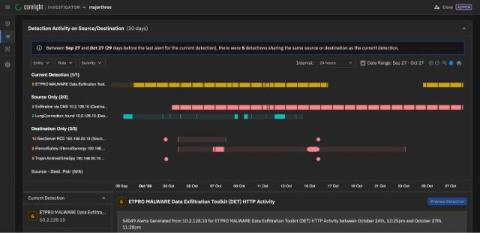
Are you blind to the next big firewall exploit? Warning signs and lessons learned from the recent Cisco exploit

It feels like the security world is caught in a recurring cycle. We see a spike in strange scanning activity, file it away as internet background noise, and then weeks later, a major zero-day exploit drops, targeting the very technology that was being scanned. The recent Cisco ASA vulnerabilities were a textbook example of this pattern. A September 4, 2025, report from GreyNoise highlighted a massive surge in scanning, with over 25,000 unique IPs probing Cisco ASA devices.

Penetration testing vs red teaming: What's the difference?

In cyber security, two terms are often used interchangeably but mean very different things: penetration testing and red teaming. Both involve authorised simulations of cyber attacks designed to uncover weaknesses, yet they differ in scope, intent, and the insights they provide. A penetration test reveals where defences can be strengthened, while a red team exercise demonstrates how those defences perform under pressure.

Jira Issue Security Schemes

Issue Security Schemes are one of the key features enabling your company to manage projects and tasks visibility. Very often, there are situations when the visibility of Issues within one Jira project should be limited to roles forming groups. To do it, just use the solution described in this article. It’s an additional feature that makes it easier to work in bigger teams and helps to avoid costly mistakes.