Silence of the Daemons: Why Evasion Isn't About Location and NDR's Role in the Cloud

In this talk, David Burkett, Cloud Security Researcher at Corelight, highlights how timeless evasion tactics create critical blind spots in cloud workloads, and illustrates the role of Network Detection and Response (NDR) as a resilient countermeasure. Presented on October 30, 2025 for Datadog Detect.
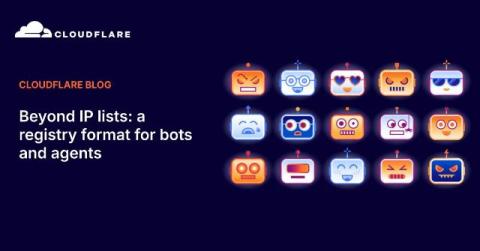

Beyond IP lists: a registry format for bots and agents

As bots and agents start cryptographically signing their requests, there is a growing need for website operators to learn public keys as they are setting up their service. I might be able to find the public key material for well-known fetchers and crawlers, but what about the next 1,000 or next 1,000,000? And how do I find their public key material in order to verify that they are who they say they are? This problem is called discovery.

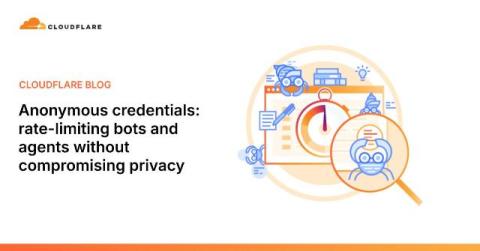
Anonymous credentials: rate-limiting bots and agents without compromising privacy

The way we interact with the Internet is changing. Not long ago, ordering a pizza meant visiting a website, clicking through menus, and entering your payment details. Soon, you might just ask your phone to order a pizza that matches your preferences. A program on your device or on a remote server, which we call an AI agent, would visit the website and orchestrate the necessary steps on your behalf.

UNC6384 Weaponizes ZDI-CAN-25373 Vulnerability to Deploy PlugX Against Hungarian and Belgian Diplomatic Entities

Threat Actor Name: UNC6384 Targeted Industries: Government, Diplomatic Services Geographic Focus: Hungary, Belgium, Serbia, Italy, Netherlands (broader European diplomatic community)

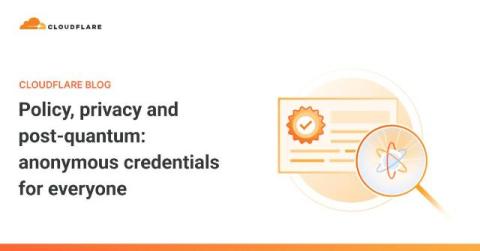
Policy, privacy and post-quantum: anonymous credentials for everyone

The Internet is in the midst of one of the most complex transitions in its history: the migration to post-quantum (PQ) cryptography. Making a system safe against quantum attackers isn't just a matter of replacing elliptic curves and RSA with PQ alternatives, such as ML-KEM and ML-DSA. These algorithms have higher costs than their classical counterparts, making them unsuitable as drop-in replacements in many situations.

Calico Whisker in Action: Reading and Understanding Policy Traces

Kubernetes adoption is growing, and managing secure and efficient network communication is becoming increasingly complex. With this growth, organizations need to enforce network policies with greater precision and care. However, implementing these policies without disrupting operations can be challenging. That’s where Calico Whisker comes in. It helps teams implement network policies that follow the principle of least privilege, ensuring workloads communicate only as intended.

How Tines helps organizations align with the EU Artificial Intelligence Act

The EU Artificial Intelligence Act (AI Act) introduces the world’s first comprehensive regulatory framework for artificial intelligence. It defines clear rules for how AI systems are built, deployed, and monitored, focusing on risk management, data governance, transparency, and accountability. Any organization offering AI-powered products or services to EU users (or processing EU data) must comply.

Kubernetes Tricks & Treats: Security and Scale without the Scary Stuff

Kubernetes is powerful — but let’s be honest, managing access and identities across users, clusters, kubectl sessions, RBAC rules, CI/CD pipelines, and AI agents can feel like wandering through a corn maze in the dark. Static kubeconfigs, sprawling IAM roles, and long-lived credentials are the cobwebs and skeletons cluttering your path to secure, scalable infrastructure.