Ransomware attacks on the perimeter
As companies shift more focus to combatting the recent epidemic in ransomware attacks, they are faced with choices on how to best deploy defenses to counter new attacker tactics and stay ahead of the threat.

As companies shift more focus to combatting the recent epidemic in ransomware attacks, they are faced with choices on how to best deploy defenses to counter new attacker tactics and stay ahead of the threat.
A misconfiguration is exactly what it sounds like; something that is wrongly configured. From a security perspective this can be either fairly harmless, or in the worst case devastating. We have written about misconfigurations before, both here and here. Misconfigurations may derive from many different reasons, such as: Hackers often exploit misconfigurations, since this can have a huge security impact.
I’ve worked in the IT field for over 30 years. 20 of those years have been spent in the network security field, employed by some of the largest names in the industry. But to my family, I’m still just the guy who “works with computers”. Many of my family are not computer savvy, which is a nice way of saying I had to teach them where the power button is. However, “Power Button Locator” is just one of my jobs. Windows won’t boot up?
Software development and delivery is an ever-changing landscape. Writing software was once an art form all its own, where you could write and deploy machine code with singleness of purpose and no concern for things like connecting to other computers. But as the world and the variety of systems that software supports became more complex, so did the ecosystem supporting software development.
This is a major Teleport release with a focus on new features, functionality, and bug fixes. It’s a substantial release and users can review 4.3 closed issues on Github for details of all items. We would love your feedback - please pick a time slot for a remote UX feedback session if you’re interested. Teleport 4.3 includes a completely redesigned Web UI.
In Part 1 of this blog series, we took a look at how we could use Elastic Stack machine learning to train a supervised classification model to detect malicious domains. In this second part, we will see how we can use the model we trained to enrich network data with classifications at ingest time. This will be useful for anyone who wants to detect potential DGA activity in their packetbeat data.
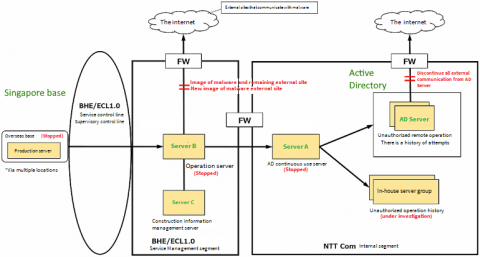
We’ve always been vocal about the imminent threat of breaches and propagated the message that irrespective of the size of your business, the industry you’re in, or your geography, you can be subject to a security breach. And unfortunately, history repeats itself often. On May 11, 2020, Nippon Telegraph & Telephone (NTT), a large telecommunications company, revealed that attackers may have stolen data from its internal systems, affecting over 600 customers.
As our personal and business lives move into the digital sphere, implementing robust cybersecurity practices has quickly become a necessity. Much like brushing your teeth twice a day or making sure you get eight hours of sleep each night, it’s important to regularly protect and clean our data. Indeed, with 70% of Americans conducting their banking primarily online, it’s easy to see that a lapse in judgment or ignorance of how to stay safe could have serious consequences for many.
Being a sysadmin basically means being a superhero. Fighting bad guys (aka hackers), helping ordinary people (aka users), saving your home (aka IT environment) from various disasters — it all sounds very heroic, but it’s just an average day in a sysadmin’s life. But superheroes can feel pain as well. Five years ago, we asked brave sysadmins to blow off some steam and complain about their suffering by letting us know what they really hate about their work.