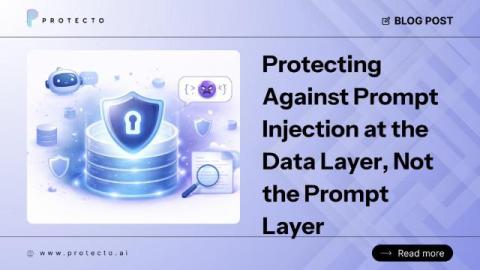
Protecting Against Prompt Injection at the Data Layer, Not the Prompt Layer

Most teams try to fix prompt injection in the prompt itself. They add guardrails. They rewrite system messages. They stack more instructions on top of instructions. It feels productive. It is also fragile. Prompt injection is not just a prompt problem. It is a data problem. And if you treat it like a wording problem instead of a data control problem, you will keep playing defense. Let’s unpack why.

What Is a Deauth Attack? How Thieves Disable Security Cameras

Wi-Fi doorbells such as Ring and Nest have become a staple in home security. They promise peace of mind, showing you live footage of your doorway to deter thieves. Up until now this has been an effective security method, but doorbell footage has started going missing, and deauth devices are responsible.

Inside the Threat Landscape: Biannual Cybersecurity Briefing

Join WatchGuard CSO Corey Nachreiner and Director of Security Operations Marc Laliberte as they discuss key findings from the WatchGuard Threat Lab’s H2 2025 Internet Security Report, the first of our biannual release version of the report. During Inside the Threat Landscape: Biannual Cybersecurity Briefing, they’ll cover the latest malware and network attack trends targeting small and midsize enterprises, along with defensive tips you can take back to your organization to stay ahead of modern threat actor tactics.

AI Data Governance Framework: A Step-by-Step Implementation Guide

AI data governance is the structured framework that ensures sensitive data remains protected when artificial intelligence systems are used. Traditional data governance focuses on data at rest. It manages databases, access controls, storage policies, and compliance documentation. AI fundamentally changes the environment, and hence, understanding AI data and privacy is crucial. When organizations use large language models, AI agents, or retrieval-based systems, data flows dynamically.

How 1Password secures agent architectures

Since 1Password began, we have built security into the places where work actually happens. Security is not treated as an overlay or a separate workflow, we build directly into the browser, command lines, developer tools, and IDEs, where decisions are made and actions take place. We believe that if you want to improve security outcomes, you build where the work happens, making the secure path the simplest one.

Why Most Companies Don't Catch Internal Threats Until It's Too Late

Every year, businesses lose billions to threats that don't come from hackers on the other side of the world. They come from inside the building. Whether it's financial misconduct, data theft, or simple policy violations that snowball into costly incidents, internal threats are consistently one of the hardest risks to detect and manage.

The Surprising Automotive Roots of Modern Combine Harvester Technology

Where do combine harvesters get their brains from? It feels like combine technology has always been developed in-house by the various manufacturers we see today. But the truth is...many of the critical systems that run your combine harvester actually come from the automotive industry. GPS guidance systems, hydraulic components, electronic sensors...the list goes on. Plus the artificial intelligence that drives the insane automation you see in some of the newer models. Automotive technology paved the way for today's high-tech ag machinery.