Cybersecurity Asset Management: Know What's on Your Network

Guessing how many marbles are in a jar is either a fun carnival game (pick the average based on the wisdom of the crowd) or a math problem involving orb volume, cylinder volume and the estimated space between marbles. You can also just count the marbles. Unfortunately, when it comes to identifying the number of devices connected to your network, none of these approaches works – although quasi-manual counting remains all too common.


Critical Vulnerability in the SAP Internet Communication Manager Component Could Lead to Full System Takeover, Patch Available

On Tuesday, February 8, 2022, SAP patched a critical memory corruption vulnerability (CVE-2022-22536) in the SAP Internet Communication Manager (ICM) component that could lead to full system takeover without authentication or user interaction. The ICM component is present in most SAP products and is an important component in SAP NetWeaver application servers.

DevSecOps code process

In the first article in this series we covered the basics. In the second article about the planning process, we covered how developers incorporate security at the beginning of their project. This article explores DevSecOps during the Continuous Integration (CI) phase of the coding process and how to protect the code from supply chain attacks, license issues, and theft. Developers are advised during planning to use secure coding best-practices during the coding process.

How to improve user experience without compromising security

In a fiercely competitive industry, user experience (UX) is one area where retailers can differentiate themselves and win customer loyalty. UX design is a means to reducing friction between users and what they want to do (or more accurately, what the business wants them to do). UX is thus vital to influencing metrics like conversion rate, time on site, page views and basket size.

Tripwire Change Analyzer Quick Start Video

Tripwire Change Analyzer automates the verification and promotion of “known good” and business as usual changes that are the result of software updates, upgrades, and patches, saving IT organizations time, reducing human error, and increasing efficiency. Tripwire Change Analyzer also works in concert with Tripwire Enterprise to deliver alert notifications and granular details needed for rapid response when unexpected, unauthorized, or high-risk changes are detected. Check out this quick start tutorial video on how to get started with using Tripwire Change Analyzer.

Visibly invisible malicious Node.js packages: When configuration niche meets invisible characters

We’ve seen a massive increase in the number of open source packages created and used in the wild during the past few years. These days every ecosystem has its package manager, and almost every package manager has its hidden gems and configurations. That said, as developers continuously install an ever-expanding number of packages, attackers gain interest in the packages’ attack surfaces. Then, the journey to craft the perfectly hidden malicious package begins.

How Does a Secure Web Gateway (SWG) Work? | Lookout

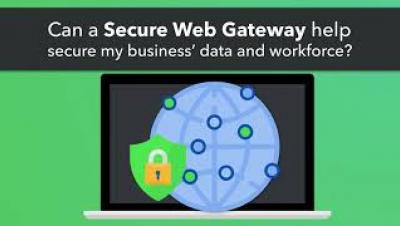
Can a Secure Web Gateway help secure my business’ data and workforce? Secure Web Gateway (SWG) protects web surfing users by filtering malware. With a SWG, remote users send their traffic directly to the cloud where traffic processing and security policy enforcement occurs. Remote users access virtual gateways in the cloud which is then responsible for connecting the user to the desired website. Discover all the key benefits SWG can offer your business and remote employees with Lookout.

Log4j: Separating the exploits from the noise

Attackers have already found thousands of potential ways to obfuscate their log4j attacks, which are sweeping the Internet at breakneck speed. SOCs protecting still-vulnerable assets have a duty to chase down every alert for it that pops up - which are coming in at a rate of tens or hundreds of thousands of times a day for larger enterprises. This webcast will covers how a data-driven strategy can automate that insurmountable task into a process that quickly reveals systems that actually responded to the attack - letting teams focus on the alerts that matter the most.