Is Your AI Fast Enough?

Artificial intelligence has arguably overstayed its welcome as a buzzword in the technology realm, leading to debates around the efficacy of the tool and definition of the term for the better part of two decades. But in the world of cybersecurity, businesses are just beginning to reap the benefits of advanced machine learning models that can actually keep up with ever-changing threats from cybercriminals with nothing but time on their hands to break algorithm-based defenses.


The New Frontiers of Cybersecurity - Exponential Increase in Complexity

The New Frontiers of Cybersecurity is a three-part thought-leadership series investigating the big-picture problems within the cybersecurity industry. In the first post, we explored the reasons malicious actors have been able to enhance their ability to execute and profit from attacks. In the second post, we discussed how the massive increase in endpoints and systems online has dramatically increased the attack surface.

Pen Testing: Passion or Profit?

In this video, we sit down with Jonathan Care, a renowned cybersecurity expert, to explore the question of whether or not money should be the primary motivation for pursuing a career in pen testing. Jonathan shares his insights on the importance of passion and the potential drawbacks of focusing solely on financial gain. Join us for a thought-provoking discussion on the role of money in the world of pen testing, and whether it should be a driving factor in your career decisions.

TrustCloud Replaces Manual Risk Registers with Programmatic and Predictive Risk Tracking to Reduce Business Liability

New TrustRegister™ application introduces programmatic risk assessments, empowering companies to proactively surface risks and remediation plans, map to customer contracts, and understand potential business impact.

Deobfuscating the Recent Emotet Epoch 4 Macro

In early March, one of the notorious botnets, Emotet, resumed its spamming activities after a 3-month period of inactivity. Recently, Trustwave SpiderLabs saw Emotet switch focus to using OneNote attachments, which is a tactic also adopted by other malware groups in recent months. This analysis is intended to help the cybersecurity community better understand the wider obfuscation and padding tricks Emotet is using.

Building Efficient SecOps Pipelines with AWS Security Lake and Torq

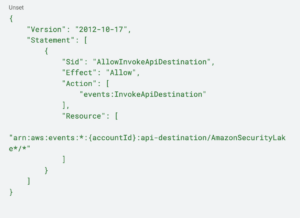
Amazon Security Lake automatically centralizes an organization’s security data from cloud, on-premises, and custom sources it into a purpose-built data lake stored in a customer’s AWS account. Amazon Security Lake reduces the complexity and costs for customers to make their security solutions data accessible to address a variety of security use cases such as threat detection, investigation, and incident response.

Banks are leveraging modern cloud security tools to mitigate human error

The efficiency, security, and scalability of cloud operations are driving financial institutions’ adoption of the technology faster than ever before. The ability to meet customers where they want to transact, personalize solutions, and leverage new data and analytics solutions (including AI) on-demand is driving this growth. In fact, according to Accenture, the banking industry's workloads in the cloud more than doubled from 2021 to 2022.

Cybersecurity middleware: abstraction layer for cybersecurity

Almost eight years ago, Christof Jungo, who was at the time head of security architecture and engineering at Swisscom, proposed the idea of cybersecurity middleware. Christof’s idea was that although it is easy to collect all security telemetry in one place, it is difficult to operationalize it for fast and efficient incident response. He proposed a concept of interchangeable and interoperable parts that can act as a middleware, a higher-level abstraction layer for security.

Rilide: A New Malicious Browser Extension for Stealing Cryptocurrencies

Trustwave SpiderLabs uncovered a new strain of malware that it dubbed Rilide, which targets Chromium-based browsers such as Google Chrome, Microsoft Edge, Brave, and Opera. Rilide malware is disguised as a legitimate Google Drive extension and enables threat actors to carry out a broad spectrum of malicious activities, including monitoring browsing history, taking screenshots, and injecting malicious scripts to withdraw funds from various cryptocurrency exchanges.