7 Super Internet Safety Tips for Staying Out of Trouble Online

In today's rapidly advancing digital age, internet security has become an imperative concern for individuals across the globe. With alarming predictions indicating a substantial increase in the global cost of cybercrime, from $8.44 trillion in 2022 to a staggering $23.84 trillion by 2027, it is evident that the threat posed by hackers and malware is rapidly escalating. In light of this ever-growing menace, equipping oneself with the best practices for internet safety has become more critical than ever.
Watershed Moment for Responsible AI or Just Another Conversation Starter?

The Biden Administration’s recent moves to promote “responsible innovation” in artificial intelligence may not fully satiate the appetites of AI enthusiasts or defuse the fears of AI skeptics. But the moves do appear to at least start to form a long-awaited framework for the ongoing development of one of the more controversial technologies impacting people’s daily lives. The May 4 announcement included three pieces of news.

Cloud Security: Turns Out We Needed Another Acronym (CNAPP)

Gartner’s 2023 “Market Guide for Cloud-Native Application Protection Platforms” (CNAPP) caused some security leaders to question whether they need yet another tool to protect the complex beast that is the cloud. Procuring yet another shiny security product is probably not how you earn the envy of your peers, but if your organization relies on shipping secure applications fast, then CNAPP should be on your radar. What exactly is CNAPP?

INETCO's Ali Solehdin Talks EBT Fraud Prevention and AI with The Center Square

Scott McClallen – Staff Reporter – The Center Square (The Center Square) – Nationwide, electronic benefits transfer fraud is estimated to cost taxpayers up to $4.7 billion annually, according to the Government Accountability Office. In 2022, the Supplemental Nutrition Assistance Program distributed over $113.7 billion to nearly 22 million households. The federal government entrusts states to reduce fraud in safety net programs. In March, the U.S.

We're Teaming Up With Snyk to Strengthen Developer Security!

The new partnership enables Snyk and GitGuardian to build, integrate and go to market together to help development and security teams scale their security programs and significantly reduce their applications' attack surface at every stage of the code-to-cloud lifecycle.

SafeBreach Coverage for US-CERT Alert (AA23-136A) - BianLian Ransomware Group

On May 16th, Federal Bureau of Investigation (FBI), Cybersecurity and Infrastructure Security Agency (CISA), and Australian Cyber Security Centre (ACSC) released an advisory highlighting the various malicious indicators of compromise (IOCs) and tactics, techniques, and procedures (TTPs) being leveraged by the BianLian ransomware group.

Model-Assisted Threat Hunting (M-ATH) with the PEAK Framework

Welcome to the third entry in our introduction to the PEAK Threat Hunting Framework! Taking our detective theme to the next level, imagine a tough case where you need to call in a specialized investigator (even Sherlock depended on Watson from time to time!). For these unique cases, we can use algorithmically-driven approaches called Model-Assisted Threat Hunting (M-ATH). In this post, we’ll look at M-ATH in detail.

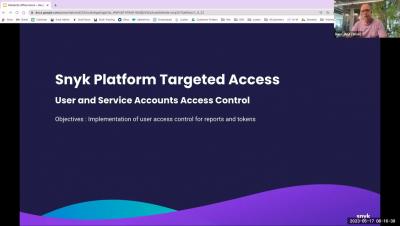
Snyk Hierarchy Best Practices - More than Groups and Orgs

What can startups and large enterprises have in common? Different organizational structures that cause friction when bringing in and rolling out a new tool. If you are familiar with Snyk, you’ll know that Groups can hold many organizations, and Organizations contain Projects. But that does not stop there… Each node in the organizational layer has different reporting, access control as well as security and license policy settings.

Trust Unearned? Evaluating CA Trustworthiness Across 5 Billion Certificates

In the complex world of Internet security, TLS encryption reigns. The powers behind the throne are the Certificate Authorities (CAs) that play a crucial role in verifying websites' identities and regulating the trust we place in those sites. However, understanding the trustworthiness of the CAs themselves can be challenging.