PHISHING GOT 10X FASTER WITH AI #apisecurity #phishing #aisecurity #DevSecOps #applicationsecurity

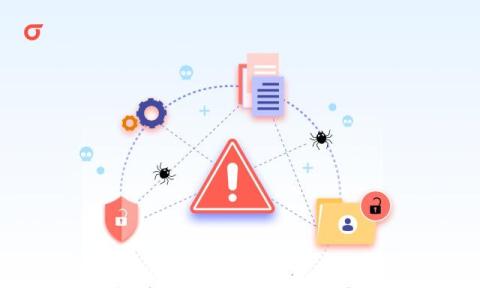
PHISHING GOT 10X FASTER Phishing attacks sped up 10x thanks to AI what took weeks is now compressed to hours. Vulnerabilities are discovered continuously and scaled instantly Attacks became adaptive and contextual for 2025 cybersecurity In this short clip from our webinar, we break down why this is the new reality.

Introducing Aikido Expansion Packs: Safer defaults inside the IDE

Developers work in a few core loops: writing code, committing changes, installing dependencies, and increasingly working alongside AI in the editor. Aikido Expansion Packs are built around those moments. They let you add focused security capabilities to Aikido that run locally, inside your IDE, and fit naturally into how developers already work. Each pack addresses a specific part of the workflow and does not require new tools, new pipelines, or new processes.

Making Student and Staff Logins Easy on WordPress with LDAP

Managing student and staff logins across different school systems can be messy and unmanageable, especially when every portal requires its own account and password. For WordPress-based education sites, it often means IT teams are stuck creating user accounts manually, resetting passwords, or dealing with duplicate profiles.

A January Snapshot: Real-World AI Usage

AI is no longer a fringe productivity experiment inside organisations, it is embedded, habitual, and increasingly invisible. This snapshot from CultureAI’s January usage data highlights how AI is actually being used across everyday workflows, and where risk is forming as a result. Rather than focusing on hypothetical threats or model-level concerns, the findings below surface behavioural signals from real interactions: prompts, file uploads, and context accumulation.

How to Improve Cyber Security and Phishing Protection with a Fractional Executive

Many organisations today turn to fractional executives - such as a fractional CEO or fractional CFO - to gain fast access to reliable external expertise that improves operations without committing to a full-time hire. Similar solutions exist for specialised cyber security leadership: a fractional CISO can provide strategic oversight, governance, and risk-based decision-making on a flexible basis. For organisations facing ever-more sophisticated threats and limited internal resources, engaging an expert on a fractional basiscan mean the difference between reactive firefighting and proactive cyber resilience.

Managing Audio Distractions in Hybrid Work

Hybrid work environments expose employees to continuous acoustic variability, where unmanaged microphones and delayed use of the mute button frequently cause unintended audio interruptions. These disruptions break concentration cycles, increase cognitive load, and reduce meeting efficiency across distributed teams. Effective sound control has therefore become a measurable productivity factor rather than a subjective comfort issue.

How to Prevent Prompt Injection in AI Agents

In agentic architectures, model behavior is guided by a combination of system prompts, retrieved context, and tool-related inputs rather than a single instruction source. When signals conflict or include untrusted instructions, models must infer which inputs to follow. This ambiguity exposes an opening for prompt injection attacks.

Managed EDR: How It Works, Where It Delivers Value, and Where It Falls Short

Endpoint threats no longer appear with warning signs. They now blend into normal activity, making detection difficult. Once inside, these threats move quietly across systems without being noticed. By the time security teams notice them, damage is already done. This shift has led to the rise of Endpoint Detection and Response. But EDR alone was not sufficient in many cases. This is when Managed EDR was introduced to fill that gap.

Enrich logs with ServiceNow CMDB context before routing to any SIEM or logging tool

Many DevOps and security teams rely on ServiceNow CMDB (Configuration Management Database) as the system of record for metadata about infrastructure assets, application and service ownership, and dependencies. ServiceNow CMDB captures which team owns each service, what business unit the service supports, the environment where it runs, and how assets relate to each other.