Detecting Threats in Multi-Agent Orchestration Systems: LangChain, CrewAI, and AutoGPT

It’s Tuesday morning at a mid-size fintech. A customer-support workflow runs on CrewAI in production: a Triage agent reads tickets, a Records agent pulls customer history, a Remediation agent drafts and sends the reply. A user submits a ticket with a pasted error log containing an indirect prompt injection. Triage summarizes and delegates. Records, interpreting instructions embedded in the summary, pulls 2,400 customer records instead of one.
Securing Hybrid Cloud Environments with Zero Trust Principles

Most security teams did not architect their hybrid cloud environment. It grew. A legacy ERP that finance refused to migrate off-premises, a Kubernetes cluster a product team spun up in GCP without telling IT, three SaaS applications that became mission-critical before anyone ran a security assessment on them, and a VPN that was supposed to be temporary in 2020 and is still running.

Global Campaign Discovered with Modbus PLCs Targeted and China-Geolocated Infrastructure Observed

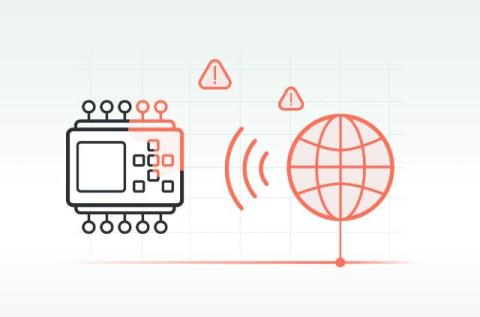
From September – November 2025, Cato Networks threat researchers observed a global campaign involving suspicious Modbus/TCP (transmission control protocol) activity against internet-exposed PLCs (programmable logic controllers). The targeted footprint spanned 70 countries and 14,426 distinct targeted IPs, with the largest share of activity in the United States.

How to Protect Backups from Ransomware with NAKIVO's Malware Scan

Backups have become a primary target for ransomware. Hackers want to ensure that companies pay the ransom by not allowing them to recover their data independently. With NAKIVO Backup & Replication, you get several features (for example, immutable backup targets) to ensure that once created, a backup cannot be infected or corrupted with a new ransomware infection.

JPMorgan Just Published a Cyber To-Do List and Snyk Covers 8 of the 10 Items. How do you stack up?

JPMorganChase's Global Technology Leadership published "Fortifying the enterprise: 10 actions to take now for AI-ready cyber resilience" on April 17, 2026. It's a CISO mandate for every large enterprise. Snyk directly addresses 8 of those 10 actions — out of the box, in the developer workflow, with one platform.

8.5 Billion Executions. 2 Real Bugs. Here's Why.

That is not a failure of fuzzing. It is a failure of interpretation. In a recent AFL++ fuzzing campaign targeting libarchive, we ran approximately 8.5 billion executions across all fuzzing phases, generated over a thousand crash files, and ultimately reduced them to two unique crash sites through structured crash triage and deduplication. This blog is a practical, engineering-first guide to that process: If your fuzzing pipeline stops at crash counts, you are not measuring security.

Hardcoding Security into Every Commit: The Future of Snyk Secrets

In the modern software development lifecycle, the speed of innovation is often at odds with the security of our most sensitive data. As organizations embrace cloud-native development and AI-generated code, they face a phenomenon known as “secret sprawl”, aka, the uncontrolled and widespread distribution of API keys, passwords, and tokens across repositories, CI/CD logs, and developer collaboration tools.

Unexpected hurdles creating U.S. cyber policies

The early days of U.S. cyber policy were defined by agencies that had no common language and no playbook to follow. J. Michael Daniel, President and CEO of Cyber Threat Alliance and former White House cybersecurity coordinator, talks through what it actually took to coordinate cyber policy across the federal government, build public-private partnerships that work, and stand up an intelligence sharing organization that serves the entire cybersecurity industry.