

Measuring AppSec success: Key KPIs that demonstrate value
In the software development industry, proactively securing the software development life cycle (SDLC) from cyber threats must always be a top priority. Taking a shift left approach addresses security early on so your development teams can spend more time innovating and less on dealing with vulnerabilities. But that’s just the beginning.

Scoping Telemetry for Defender Needs with Jonathan Johnson
Jonathan Johnson, Principal Product Researcher at Huntress, joined us for Defender Fridays to discuss Scoping Telemetry for Defender Needs.

Building Powerful CrowdStrike Automations: Insights from Fal.Con 2024
This sentiment expressed by Fiverr’s VP of Business Technologies perfectly reflected the energy at the Fal.Con 2024 Torq booth and struck a chord with security teams using CrowdStrike’s powerful tools. Detection isn’t the problem — CrowdStrike excels at that. The challenge lies in automating what happens next.

How Keeper Protects Your Digital Legacy and Estate With Emergency Access
Keeper protects your digital legacy and estate with its Emergency Access feature. If you suffer an emergency or pass away, your passwords, files and data should still be accessible to your trusted family members or close friends. Although it can be emotionally and logistically challenging to prepare for your loss, it is important to have a plan in place for how you will protect your digital legacy with Emergency Access.

Top 5 Radware WAF Alternatives
Radware’s Cloud WAF provides robust, enterprise-level web application security. It adapts to changing threats and applications automatically, offering full protection against the OWASP Top 10 vulnerabilities.

NIS2 Compliance Advice from Luxembourg's Regulatory Authority
NIS2 is a transformative directive reshaping how organizations across Europe and the globe approach cybersecurity, supply chain management, and operational resilience. A lot has been written about compliance strategies, but what does NIS2 mean in practice? We’ve asked the Institut Luxembourgeois de Régulation (ILR), Luxembourg’s national regulatory authority responsible for overseeing the implementation and enforcement of NIS2 in the country.
Access Management for DevOps: Securing CI/CD Pipelines
Recent studies indicate that more than 80% of organizations have experienced security breaches related to their CI/CD processes, highlighting the critical need for comprehensive access management strategies.
Is Facebook Marketplace Safe?
Yes, Facebook Marketplace is safe. However, it’s important to be cautious of scammers who are active on the platform, just like on any other online marketplace. Facebook Marketplace is a part of Facebook that allows you to buy or sell items from individuals or small businesses.
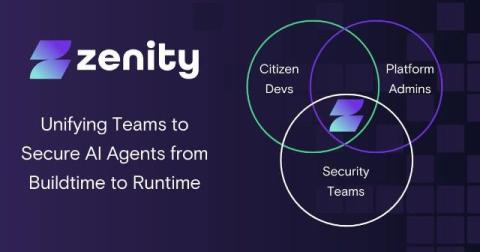
How Zenity Unifies Security, Platform, and Citizen Developer Teams to Enable AI Agents
AI Agents are revolutionizing enterprise efficiency, automating decisions, and enhancing capabilities. But while these agents drive operational improvements, they also introduce unique security challenges. Traditional silos often hinder effective risk management.