European Stablecoin Adoption: Intentional Progress, Strategic Scale

Stablecoins have moved beyond early experimentation, as Fireblocks’ State of Stablecoins 2025 report shows. Based on insights from nearly 300 C-suite executives across banking, fintech, and crypto-native firms, the findings indicate a clear shift from pilot programmes to operational deployment. In Europe, that shift is unfolding with measured intent—driven by regulatory clarity, infrastructure readiness, and a clear focus on competitive positioning.

CrowdStrike Elevates XIoT Security with AI-Powered Insights

As organizations increasingly rely on connected devices to drive efficiency and innovation, the Extended Internet of Things (XIoT) — covering industrial control systems (ICS), operational technology (OT), Internet of Things (IoT), and Internet of Medical Things (IoMT) — has rapidly expanded. This greater connectivity often drives increased vulnerability as critical assets are exposed to sophisticated threats.

PhaaS the Secrets: The Hidden Ties Between Tycoon2FA and Dadsec's Operations

Since September 2023, Trustwave’s Threat Intelligence Team has been tracking a large-scale phishing campaign distributed via email, attributed to "Storm-1575". Storm-1575 is known for developing and distributing a PhaaS platform with adversary-in-the-middle (AiTM) capabilities, known as "Dadsec". The team’s recent investigations have revealed that the infrastructure used by Dadsec is also connected to a new campaign leveraging the "Tycoon2FA" Phishing-as-a-Service (PhaaS) platform.

The Importance of Triage in Incident Response

Gamers of a certain age likely remember the video game Asteroids. You played as a little triangular spacecraft shooting at big space rocks that started traveling towards you slowly at first, then gained speed. As you revolved around trying to protect yourself by shooting them, you inevitably had to make some rapid decisions about which asteroids would harm your ship the most and which ones you could potentially ignore.

What Is a Remote Access Trojan (RAT), and Why Should You Care?

According to our 2025 State of the Underground report—in which we take a look back at cybercrime on the deep and dark web from the past year—384 unique varieties of malware were sold in 2024, an increase from 349 in 2023. To determine this number, our research team examined malware and hacking tools for sale on the top three criminal forums, and as a result, we found that Remote Access Trojans (RATs) were the second most common form of malware in 2024, just behind stealer malware.

Understanding Common Vulnerabilities and Exposures (CVEs) and Their Role in Deceptive Threat Detection

Cyber threats are becoming more advanced, with attackers creating ways to bypass traditional security. That’s why organizations need a stronger, multi-layered approach to protect their systems. To handle cyber threats effectively, security teams need clear, consistent information. That’s where CVEs help—by making it easier to manage hidden risks. And how can organizations enhance their cybersecurity capabilities with CVE data along with deception technology?

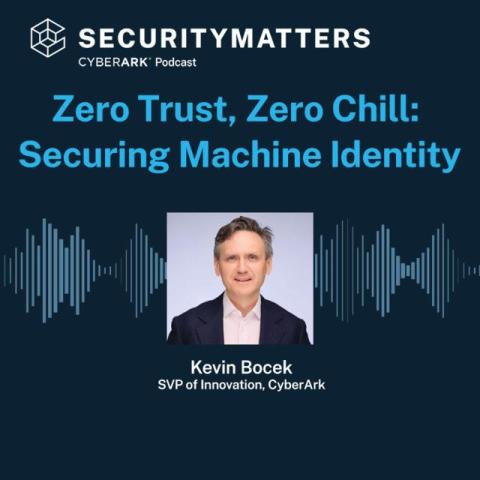
EP 8 - Zero Trust, Zero Chill: Securing Machine Identity

In this episode of Security Matters, host David Puner welcomes Kevin Bocek, CyberArk SVP of Innovation, for an insightful discussion on the critical role of machine identity in modern cybersecurity. As digital environments become increasingly complex, securing machine identities has never been more crucial.

Navigating FedRAMP Compliance: Why It's Crucial for Mobile Security

If your organization handles United States federal government data in cloud environments, it’s often a requirement to use FedRAMP-authorized solutions. The Federal Risk and Authorization Management Program (FedRAMP) provides consistent standards for protecting unclassified data that passes between the federal government and privately owned third parties.

How the MOD can achieve decision superiority against cyber threats

AI as a force multiplier for cyber resilience in defence Military leaders are well-acquainted with the expansion of conventional warfare into digital battlefields. The recent attack and breach of a UK Ministry of Defence (MoD) supplier exposed data of 270,000 service personnel,1 representing not an isolated incident but a pattern in an escalating cyber conflict.