Back Up With Care, But Neglecting Patches can Leave You in Despair!

CVE-2024-7348, which was discovered by Noah Misch, is a race condition vulnerability affecting multiple versions of PostgreSQL when using the `pg_dump` utility. An attacker with sufficient privileges can exploit this vulnerability to execute arbitrary SQL commands with the permission of the user, which is typically a superuser, running the dump.

Introducing Keeper's Bidirectional One-Time Share

Keeper's upgraded One-Time Share solution enables two-way sharing between Keeper users and non-users, providing a secure way of exchanging confidential information and files. This new sharing technology builds upon the functionality of our existing One-Time Share feature. These shares are protected in transit by Keeper's elliptic-curve and AES-256 cryptography and can only be decrypted locally on the recipient's device.

Corelight data and LLMs

Corelight has been an innovator and leader in AI and Large Language Model (LLM) adoption for almost 2 years. We introduced our first use of LLMs in our Open NDR platform Investigator in November of 2023. Since then, we have continued to push the boundaries of the possible by working with AI model builders on cybersecurity-specific training and expanding LLM use within Investigator to include data analysis and summaries.

Why Omdia recommends Extended Access Management to secure agentic AI

Omdia, a global analyst and advisory leader, recently released a report called “How Extended Access Management (XAM) closes the gaps in security.” In it, they describe how existing tools have failed to address the most serious security challenges: application sprawl, device sprawl, and identity sprawl.

Corelight announces industry's first MCP server exposing detailed network data and alerts

Corelight’s GenAI Accelerator Pack features the industry's first Model Context Protocol (MCP) server, specifically designed to facilitate easier access to detailed network data and alerts for cybersecurity AI agents and enhance the analysis of network security information. The announcement comes at a pivotal moment for cybersecurity.

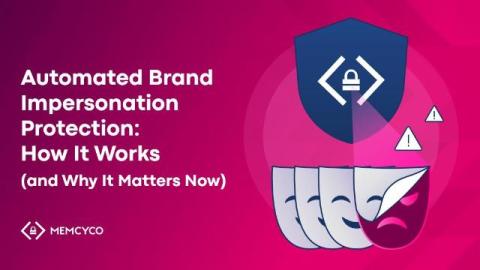
Automated Brand Impersonation Protection: How It Works (and Why It Matters Now)

Automated brand impersonation protection has become a baseline requirement for digital security. As phishing operations scale across web domains, mobile app stores, social platforms, and ad networks, attackers are moving faster and operating more broadly than ever before. Traditional defenses – periodic scans, manual takedowns, post-incident analysis – are too slow and too shallow.