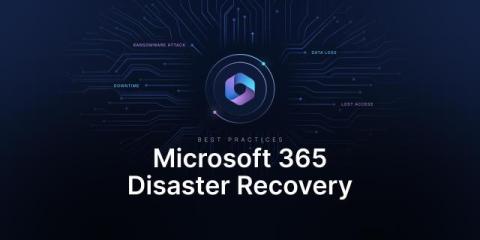
Microsoft 365 Disaster Recovery best practices

We can all agree that Microsoft 365 powers the daily operations of many modern organizations. These often include data critical for business continuity, which simply flows through Teams, OneDrive, and SharePoint; therefore, even a short service outage could negatively impact productivity or regulatory compliance. However, despite its importance, disaster recovery, or DR, for Microsoft Office is often misunderstood or assumed to be fully covered by Microsoft.


From Bots to Autonomous Agents: How State Leaders Can Prepare for the Next Wave of AI Threats

Imagine a tireless, ever-learning army that never sleeps and never makes mistakes—an army of AI agents, not humans. What began as simple bots has evolved into sophisticated, autonomous entities operating in perfect sync at machine speed. This is no longer science fiction: autonomous AI is accelerating fraud, turning slow, manual crimes into rapid, relentless attacks. Agentic AI fraud isn’t coming—it’s here. Most organizations remain unprepared.

What Is a Data Breach and How to Prevent It?

Let’s be honest: few phrases can make your stomach drop faster than “your data has been compromised.” Whether you’re an individual trying to protect your passwords or a business managing millions of customer accounts, the fear of a data breach is real and growing. We live in a time where almost everything is online: our finances, our health records, our identities.

You've Got a SOC. But Are You Safer?

IT leaders tell me the same story repeatedly. They’ve built large, sometimes expensive, security stacks, but they don’t trust them. Dozens of tools are running across the estate: separate agents, standalone scanners, multiple SIEMs, and identity providers layered on top of Microsoft’s native stack. Despite this, gaps remain. When you peel back these stacks, we often find redundant technology performing overlapping functions but not integrating well.

You Bought Microsoft E5. Is it delivering for you?

Microsoft E5 can be an excellent security investment, but without targeted configuration, integration, and continual threat alignment, its value remains untapped. Over the years, building out custom SOC, MDR, and MXDR services has shown us how to move from licenced capability to reduced response times, cleaner telemetry, and security teams who trust the picture in front of them.

Account Takeover Nightmare: Why You're Always Fighting Fires! #appsec #cybersecurity

Mend.io, formerly known as Whitesource, has over a decade of experience helping global organizations build world-class AppSec programs that reduce risk and accelerate development -– using tools built into the technologies that software and security teams already love. Our automated technology protects organizations from supply chain and malicious package attacks, vulnerabilities in open source and custom code, and open-source license risks.

Can ChatGPT Help with a Penetration Test? Real-World Hacking Test vs PentestGPT

Can ChatGPT really assist in a penetration test? In this short clip, security expert Brian Johnson puts it to the test against an Active Directory environment… and let’s just say, the results are less than helpful. Find out why tools like PentestGPT are gaining momentum in ethical hacking in this webinar, "Hack the Hackers: Exploring ChatGPT and PentestGPT in Penetration Testing": netwrix.com/go/exploring-chatgpt-and-pentestgpt-yt.

Japan's Active Cyberdefense Law: A New Era in Cybersecurity Strategy

On May 16th, 2025, the Japanese Parliament enacted a landmark piece of cybersecurity legislation: the Japan Active Cyberdefense Law. It was a historic moment for the country's digital defense, empowering law enforcement and military agencies to conduct pre-emptive cyber operations before they materialize.

How Keeper Reduces NHI Risk With Just Enough Privilege Access Controls

When most people think about Identity and Access Management (IAM), they picture employees logging into systems. But in reality, the majority of access requests today come from non-human identities such as service accounts, automation scripts, containers, bots and APIs. These identities power modern infrastructure. They deploy code, manage resources, sync data and trigger processes. While they are essential, they also contribute to a massive attack surface that continues to grow.