Security | Threat Detection | Cyberattacks | DevSecOps | Compliance

IAM Cost Optimization: How to Reduce Identity Management Spend Without Sacrificing Security

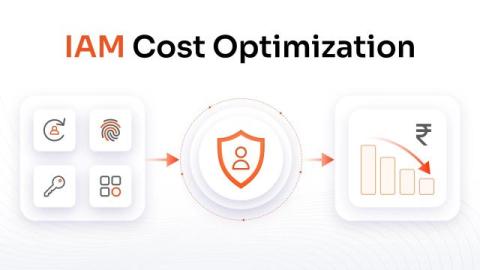
According to Gartner survey data, 56% of CISOs increased their IAM budgets in 2026 compared to 2025 to curb evolving threats, support AI adoption, and manage complex digital ecosystems. The question is: can IAM cost be optimized without reducing security quality? There are instances where organizations keep paying for overlapping tools, manual provisioning workflows, and help desk tickets that a properly automated platform would eliminate outright.

How to Build a Data Security Program for Generative AI

Ask five security leaders what "data security for generative AI" covers and you'll get five different answers. Some may point to an existing DLP rule for ChatGPT, while others would point to an AI acceptable use policy. Some operate under the assumption that their DSPM vendor already handles genAI security. The confusion isn't about effort, as most teams are actively trying to get ahead of GenAI risk.

Sophos CISO Advantage is now generally available

Take control of your security outcomes. Sophos CISO Advantage is now generally available to the market, giving CISOs and security teams without a CISO the solution they need to build, manage, and improve a compliance-driven cybersecurity program. In July, we introduced Sophos CISO Advantage, explaining how it enables organizations and Managed Service Providers (MSPs) to understand cyber risk, prioritize what matters most, and demonstrate measurable improvement over time.

What Is AI Governance? A Practical Framework for Security Teams

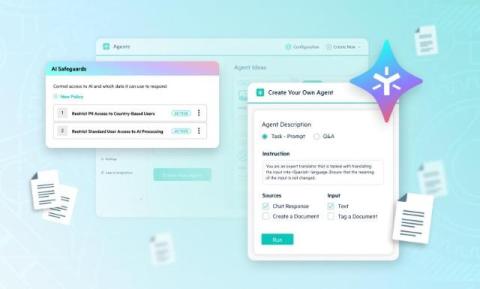
The speed of AI integration is rapidly outpacing corporate governance capabilities. Generative AI is now embedded in development workflows and business applications, while agentic AI can make decisions and take actions with limited human intervention. That governance gap is becoming harder to ignore. Gartner predicts that more than 40% of agentic AI projects will be canceled by the end of 2027 because of escalating costs, unclear business value, or inadequate risk controls.

In AI Pilot Mode? Learn How to Scale AI Securely Without Shadow IT

You’ve seen the demos. You’ve run the pilots. Maybe you even deployed something that works, but is it scaling? Are your users utilizing it on a daily basis, or as intended? Or is it quietly gathering dust next to the last three tools that were supposed to change everything? Scaling AI the way most vendors describe it—connecting more tools and piping more data into more systems—doesn’t lead to progress or productivity. Rather, it results in additional risk.

CrowdStrike Expands Federal SOC Modernization Through CISA-Funded SIEMaaS

CISA has called SIEM-as-a-service (SIEMaaS) “the Rosetta Stone” for visibility for good reason. Federal defenders need to see what is happening across increasingly complex environments, understand what matters, and turn that context into action before an adversary achieves its objective.

Keeper Security Freshservice Workflow App Streamlines Vault and Privileged Access Request Process

Keeper Security, the leading zero-trust and zero-knowledge identity security and Privileged Access Management (PAM) platform, today announces a Freshservice Workflow integration that connects vault and privileged access requests to the ticketing systems IT and security teams already use. The integration lets agents fulfill Keeper vault access and approval requests – including Endpoint Privilege Manager and Cloud SSO device approvals – directly from a Freshservice ticket.

Reconciling an AI Risk Estimate Against What Truly Happened

A model produces a figure, an event happens, and somebody asks whether the figure was right. It is the obvious question and it has almost no published answer, because the comparison is harder than it looks. ‍ A single realized loss cannot falsify a distribution. If a model puts a one percent chance on exceeding a threshold and the threshold is exceeded, the one percent case occurred, which is what the model said would sometimes happen. ‍

The Cyber Risk Inputs That Move the Answer Most

A cyber loss model has dozens of inputs and every one of them can be argued about. Record counts, downtime costs, control effectiveness, secondary loss factors, event likelihoods. ‍ A few of them determine the answer and the rest barely move it. Knowing which is which tells you where estimation effort belongs, and more usefully which disagreements about the model are not worth having. ‍