Security | Threat Detection | Cyberattacks | DevSecOps | Compliance

Best B2B Cross-Border Payment Solutions: Security, Compliance and Global Reach

Every international business payment creates a security surface. Data moves across borders. Sanctions screening must fire in real time. FX execution carries counterparty risk. Correspondent banking chains introduce opacity at every hop. The platforms businesses choose to move money internationally are, in a meaningful sense, a security decision as much as a financial one.

GitProtect Report: DevOps Incidents Rise by 21%, While Impact Hours Double to 9,255

With 607 recorded incidents, DevOps platforms experienced a 21% year-over-year increase, while total disruption time nearly doubled to 9,255 hours in 2025. This marks a clear rise in both the frequency and severity of outages compared to the previous year, according to the latest GitProtect Report.

10 top ITDR tools for identity-centric security in 2026

Identity threat detection and response (ITDR) tools close the visibility gap that EDR and MFA leave open. They surface credential misuse, lateral movement, and Active Directory activity that appears legitimate to endpoint and perimeter defenses. The right fit depends on your identity infrastructure, detection depth, and whether you need real-time blocking or post-event response.

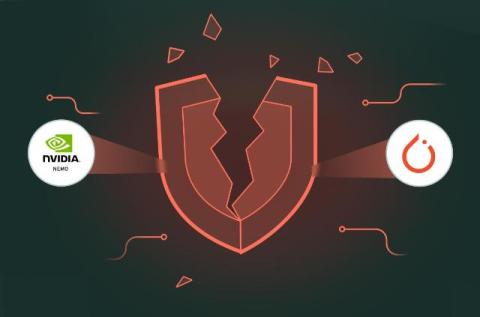
Cato CTRL Threat Research: New Vulnerabilities in NVIDIA NeMo and Meta PyTorch Enable Full System Compromise

Cato CTRL has discovered high-severity vulnerabilities in NVIDIA NeMo (CVE-2025-33236 with a CVSS score of 7.8) and Meta PyTorch that turns AI model files into remote code execution (RCE) vectors. The NeMo vulnerability allows RCE by importing a malicious AI model. The NeMo framework silently executes threat actor-controlled code with no warning.

AI SOC Metrics That Actually Matter: How to Measure Whether AI Is Working in Your SOC

Every security vendor shipping an AI product in 2026 makes the same promises. Faster triage. Shorter response times. Fewer false positives. Reclaimed analyst hours. But, six months after deployment, most security leaders still cannot answer a straightforward question from the board: Is this thing actually working?

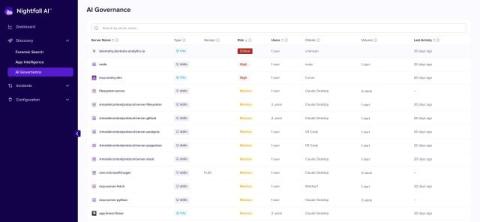
You Can't Secure AI Agents You Haven't Found

Most organizations have a reasonable handle on their sanctioned SaaS apps. Model Context Protocol - hit 10,000 public servers within a year of launch, with 97 million monthly SDK downloads. None of those numbers capture the servers your developers configured locally. Those don't appear in any registry. They were added at the IDE level, one developer at a time, with no approval step and nothing that touches a central system. That's the inventory problem. It comes before any question of enforcement.

Types of AI agents: From simple reflex to autonomous systems

AI agents fall into five foundational categories: simple reflex, model-based reflex, goal-based, utility-based, and learning agents. Each is defined by how much environmental awareness and decision-making complexity the system can handle, from fixed condition-action rules to feedback-driven self-improvement.

Why High DLP False Positive Rates Are a Security Problem, Not Just an Ops Problem

Most security teams treat a high volume of false positives as an analyst problem. Too many alerts, too little time, not enough headcount. So they add analysts, tune a few policies, and move on. That response is understandable, but it misdiagnoses the problem. When data loss prevention (DLP) false positive rates stay high over time, the issue is not a staffing gap. It is a detection accuracy problem, one that sits inside the tool, not the team.