For several years now, adversaries and red teams have increasingly leveraged Living-off-the-Land Binaries (LOLBins) techniques to compromise targeted systems. By exploiting pre-installed, legitimate software, these attackers are able to evade detection tools, seamlessly blending malicious activities with normal system processes. This approach presents a significant challenge for traditional security measures, which often struggle to differentiate between legitimate use and malicious intent.
Organizations face increasingly complex security challenges driven by the convergence of on-premises environments, cloud deployments, and edge computing nodes. The implementation of a hybrid data fabric has emerged as a powerful approach for managing and integrating data across distributed architectures while ensuring robust, integrated security. This article provides a deep dive into the technical and strategic aspects of constructing such a fabric.
Zero-day vulnerabilities are the new normal in cybersecurity. In 2023 alone, more than 100 high-profile zero-day incidents were reported. Despite the early warning signs, major corporations and government agencies, from giants like Google and Cisco to the U.S. Government, continue to be blindsided by zero-day threats into 2025. In December 2024, for example, the U.S.
Neglecting regulatory compliance obligations, whether intentional or not, is not just a procedural error but a direct invitation for significant financial penalties, operational disruption, and, in the case of a healthcare organization, creating a potentially life-threatening situation. These consequences were recently illustrated by the US Department of Health and Human Services (HHS), Office for Civil Rights (OCR).
In today’s threat landscape, the question is no longer “Will we be attacked?” but “How fast can we detect and respond when it happens?” The unfortunate reality is that many organizations struggle to detect threats in time—often because their tools operate in silos, their teams are overloaded with false positives, and they lack the necessary context to act swiftly and accurately.
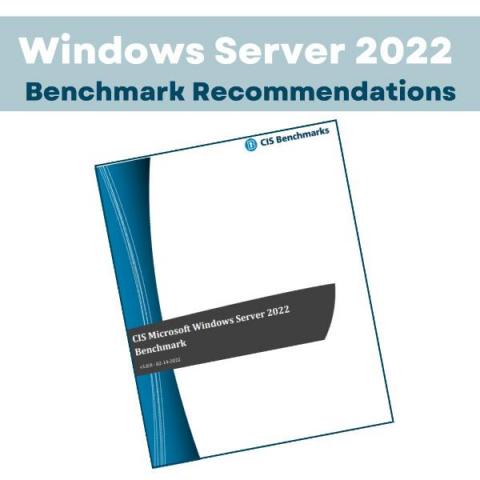
With each new version of Windows Server released, comes new security risks. Whilst each update enhances functionality for users, it can sometimes come at the cost of new vulnerabilities. The Centre for Internet Security (CIS) Benchmarks serve as a security baseline, helping both individuals and companies implement best practices for a secure configuration.
Financial services can’t rely on manual review alone. Discover how unified data and explainable AI are helping firms detect risk, reduce cost, and stay ahead of evolving regulations. Financial services organizations are drowning in data. From emails and Bloomberg chats to WhatsApp messages and calls, the need to review communications data to detect potential misconduct and financial crime by employees and third parties is a mandated regulatory requirement for compliance and risk teams in 2025.
In today’s digitally driven world, cybersecurity is no longer just an IT concern, it’s a business imperative. Enter the Chief Information Security Officer (CISO): the executive responsible for overseeing an organisation’s information and cybersecurity strategy. From managing threats and risks to ensuring compliance and resilience, a CISO is critical in protecting a company’s digital assets and reputation.
Tanium plans to bring the power of autonomous endpoint management with real-time visibility to web browsers providing a stronger front against cyber-attacks.