In the era of digital transformation, businesses increasingly rely on Electronic Quality Management Systems (eQMS) to manage quality and ensure regulatory compliance. But many companies still operate on legacy eQMS platforms that were once effective but now hinder growth and efficiency. These traditional systems are often rigid, siloed, and fail to meet the demands of a fast-paced, data-driven environment.
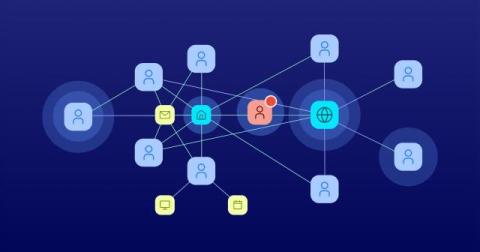
Technical defenses keep evolving but attackers have learned that people are often the weakest link. Social engineering has quietly outpaced many technical intrusions because it reliably targets human behavior rather than firewalls or intrusion detection systems. 2025 Verizon Data Breach Investigations Report highlights that social engineering remains one of the top three breach patterns, with phishing and pretexting consistently leading incident categories.
As Australian government agencies and regulated industries move sensitive workloads to the cloud, they need observability solutions that meet highly stringent data protection standards. To address this need, Datadog has pursued and received an Infosec Registered Assessors Program (IRAP) assessment at the PROTECTED level. This is an advanced classification under the Australian Cyber Security Centre (ACSC) framework for cloud and SaaS security.
When it comes to safeguarding digital assets, institutions require optionality: secure digital assets self-custody for day-to-day control, and access to qualified custody when regulatory or fiduciary obligations demand it. All delivered through integrated, trusted infrastructure.
When you’re moving fast, you can’t waste cycles on noise—you’ve got to focus on what actually matters. Compliance is no different. If you’re trying to lock in SOC 2 so you can close bigger deals, you don’t have time to vet claims in the market or to deep dive into a Reddit rabbit hole. That’s why we pulled together a crew of certified experts—and startup operators who’ve actually been through it—to cut through the myths.
AI is no longer a pilot project. In 2025 it sits inside support desks, developer tools, clinical workflows, loan underwriting, and public services. The regulatory landscape has shifted from paper policies to real-world evidence in production. Buyers, auditors, and regulators want to see controls in place where data flows and models are operational.
The EU Cyber Resilience Act (CRA) and the Digital Operational Resilience Act (DORA) are shaping the regulatory landscape for cybersecurity in Europe and across the globe. While DORA focuses on the financial sector and ICT providers, the upcoming CRA will extend requirements to all digital products and services, emphasizing secure-by-design practices and software resilience.
Standardizing the management and coordination of incident response and resolution activities across different independent agencies is challenging. As part of its mission to help people before, during, and after disasters, the Federal Emergency Management Agency (FEMA) created the Incident Command System (ICS) as one of the components of the National Incident Management System (NIMS).
Earlier in 2025, an AI agent named Claudius made headlines when it insisted it was human, promising to deliver products in “a blue blazer and red tie.” Quirky? Sure. But beneath the strange admission sat a more important truth: today’s AI agents aren’t just chatbots with puppet-like ambitions, whose untruths would be betrayed by a growing nose. They’ve evolved into actors with real credentials, access, and autonomy.