Security | Threat Detection | Cyberattacks | DevSecOps | Compliance

Beyond Passwords: How Biometric and Blockchain Tech Are Merging for Crypto Security

Passwords were used as a security measure for years, long before digital money was ever a thing. They can be useful and help protect access to certain accounts and applications, but they are not entirely suited for use with cryptocurrencies. For years now, the security methods used to protect crypto assets have been evolving, becoming more complex and safer in the process. Biometrics have played a huge role in that development, as they are the safest option available. Biometric data can't be falsified, and it essentially guarantees that only the user can access their account.

How Quantum Computing Will Change Encryption and Data Privacy

Quantum computing is one of the most revolutionary technological frontiers of the 21st century. Built on the principles of quantum mechanics, it has the potential to solve computational problems that are practically impossible for classical computers. While this unlocks tremendous opportunities in science, healthcare, and artificial intelligence, it also poses a significant threat to the cybersecurity systems that protect global data infrastructure. As nations, companies, and cyber-criminals race toward quantum supremacy, the world is forced to reconsider the future of encryption, trust, digital privacy, and secure communication.

Is Extreme Weather Relevant When It Comes To Cybersecurity?

People often don't think about how one simple summer storm can completely cripple an entire operation. We're talking about servers going dark, security cameras stopping working, and even some hardware components getting fried. And suddenly there's a huge panic, and no one knows what to do exactly. The backup generator hasn't been properly maintained and is acting up. You can't get the emergency power online for whatever reason.

Protecting Your Privacy: Tips for Managing Phone Recordings

Your smartphone can capture sound with incredible clarity. Conversations, meetings, even quick reminders-everything can be recorded in seconds. But with this convenience comes a serious question: How safe are your recordings? In today's digital world, privacy protection has become one of the most discussed and crucial topics. Reports show that over 60% of smartphone users have used recording features at least once, often without realizing how much personal data those recordings may contain. Voices, locations, background sounds-all can reveal sensitive information.

Securing Kubernetes Traffic with Calico Ingress Gateway

If you’ve managed traffic in Kubernetes, you’ve likely navigated the world of Ingress controllers. For years, Ingress has been the standard way of getting our HTTP/S services exposed. But let’s be honest, it often felt like a compromise. We wrestled with controller-specific annotations to unlock critical features, blurred the lines between infrastructure and application concerns, and sometimes wished for richer protocol support or a more standardized approach.

RBI Cybersecurity Compliance Checklist for Banks & NBFCs in 2025

Digital payments in India have expanded exponentially, and UPI alone is anticipated to register over 130 billion transactions by the end of 2025. This explosive growth goes beyond convenience, meaning that millions of people in India are fundamentally changing how they pay for things. UPI currently accounts for about 80% of retail payments in India and facilitates over 13.5 billion transactions per month, with year-on-year growth of a massive 35%.

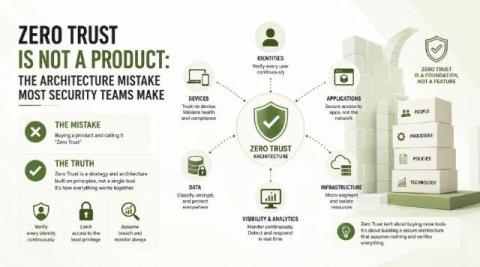
How do Cloud Scanners Handle Zero Trust Security?

The global zero trust security market was valued at USD 19.2 billion in 2024 and is expected to grow at a CAGR of over 17.4% between 2025 and 2034, driven by rising cybersecurity threats. This explosive growth is a direct reflection of the fundamental change in how organizations think about security.

Rethinking the Identity Stack: Why Modern PAM Is Essential

As enterprises scale their infrastructure across on-premises, hybrid and cloud environments, traditional Identity and Access Management (IAM) tools are struggling to keep up. Legacy Privileged Access Management (PAM) platforms were built to support static infrastructures and were not designed for today’s multi-cloud environments. They have been shown to increase complexity, create gaps in security coverage and cause significant budget strain.

GPT5 Pulls Ahead on Secure Code While Rivals Stall

AI coding assistants are evolving quickly. But are the latest models any better at writing secure code? Our October 2025 analysis brings fresh data on how newer large language models (LLMs) stack up against their predecessors, and the results reveal both progress and persistent gaps. This update builds on our July 2025 GenAI Code Security Report, which tested over 100 LLMs across four major programming languages.

How Outpost24 delivers operational resilience for DORA

The EU’s Digital Operational Resilience Act (DORA) has just turned a year old. This regulation represented a fundamental shift in how the financial sector manages ICT risk, moving beyond traditional compliance to demand continuous, demonstrable digital operational resilience. A year on, the focus has changed. Organizations can no longer just avoid cyber incidents. They need to prove they can withstand, respond to, and recover from disruptions quickly and effectively.