Security | Threat Detection | Cyberattacks | DevSecOps | Compliance

What is KeeperDB?

KeeperDB is a secure, multi-protocol database client built on Keeper’s zero-knowledge platform. Available as both a free standalone desktop application and a privileged session component of KeeperPAM, KeeperDB combines a database query engine, vault-managed credentials, real-time performance monitoring and an AI-powered database assistant in a unified interface. Continue reading to learn more about how KeeperDB works, its key features and the benefits of using it to help secure database access.


Why Persona recommends native mobile identity verification flows

Fraudsters are adaptive actors who follow the path of least resistance. The goal of fraud-fighting teams is often to make the cost of fraud high enough that attackers go elsewhere. Leveraging Persona’s Mobile SDK raises fraudsters’ costs by requiring identity verification to happen in signal-rich mobile environments. For years, fraud fighters have layered verification checks and risk signals to detect various types of attacks.

IT Audit: What It Is and How to Prepare for One

Cramming for an exam in school often meant late nights, large quantities of caffeine, and anxiety about potential final grades. Whether studying alone or as part of a group, you probably tried to pull together all your notes and review sheets, so you had the right information at your fingertips during the test. In some cases, these exams could determine whether you passed or failed a course.

Implementing AI Security: Your Enterprise LLM Security Checklist

Security teams are approving large language model (LLM) deployments faster than they can build the controls necessary to govern them and protect vital, sensitive data. Employees paste customer records into ChatGPT, engineering teams connect internal APIs to coding assistants, and business units stand up retrieval systems against production data, often without formal review.

How to Build an AI Asset Inventory

Most organizations that have invested in AI governance have done so without first solving the problem that makes governance possible in the first place: knowing what AI they are actually running. An AI governance program built on an incomplete inventory is governing a partial picture of actual exposure. ‍ The risks concentrated in the AI systems that never made it into the formal catalog are not lower priority because they were not captured. They are simply invisible, which is considerably worse.

CrowdStrike Uncovers New Prompt Injection Techniques

Prompt injection is among the defining security challenges of the AI era. As organizations move from chatbots to AI agents, adversaries are finding more ways to manipulate the language, context, and data these systems trust. With the rise of powerful AI agents that can crawl webpages, access file stores, and even write shell commands, indirect prompt injection has emerged as a critical threat vector.

Bringing Real-World Cyber Events Directly Into the Cyber Risk Register

Kovrr's cyber risk quantification (CRQ) models are built on a continuously updated database of real-world cyber events, drawing on regulatory disclosures, company filings, legal reports, and proprietary insurance claim intelligence to produce financial exposure estimates grounded in how incidents actually unfold. That intelligence foundation has always informed everything the platform produces, from frequency and severity calculations to the event catalogs that drive each organization's quantification.

Safeguard: Using the double-edged sword of AI for good

The concept of AI might trigger both excitement and stress for those who spend all their time either using it for efficiency or fighting it as it tries to breach their systems. A massive force of non-human identities that have been summoned to expose the tiniest cracks in an organization’s security is enough to overwhelm any IT team. However savvy, modern security professionals have begun to raise their own versions of AI armies – designed to stop those sent by malicious actors.

Best AI Governance Platforms for Enterprises: Top 6 in 2026

AI governance platforms provide enterprises with centralized oversight to manage AI risks, ensure regulatory compliance, and automate policy enforcement across the AI lifecycle. Leading solutions include security-oriented tools like Mend.io, HiddenLayer, and Prompt Security, as well as end-to-end governance platforms like IBM watsonx.governance and Microsoft Purview.

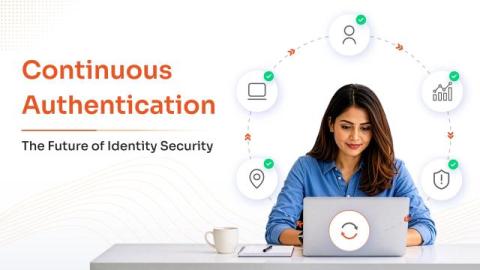
Continuous Authentication: The Future of Identity Security

Every login creates a moment of trust. The problem is that moment rarely lasts, yet most security systems assume it does. Traditional authentication verifies identity once, at the point of login, and then steps back. From that moment until logout, the session is treated as trustworthy. No re-checks. No re-verification. That assumption is increasingly dangerous. Modern threat actors do not always break in. They walk in.