Security | Threat Detection | Cyberattacks | DevSecOps | Compliance

Giving the Vanta Agent a computer

Accelerating security solutions for small businesses‍ Tagore offers strategic services to small businesses. A partnership that can scale‍ Tagore prioritized finding a managed compliance partner with an established product, dedicated support team, and rapid release rate. Standing out from competitors‍ Tagore's partnership with Vanta enhances its strategic focus and deepens client value, creating differentiation in a competitive market.


AWS egress fees and data transfer costs explained for MSPs and cloud providers

AWS has become a default infrastructure platform for many organizations. It offers scale, flexibility and a broad service portfolio. However, for managed service providers (MSPs) and cloud providers, AWS pricing can be difficult to explain, forecast and package profitably. One of the most important cost factors is AWS data transfer cost. Internet egress, or data leaving AWS for the public internet, is the most familiar example.

Protect AWS Strands Agents with Datadog AI Guard

AI agents can reason through tasks, call tools, and adapt their next steps based on intermediate results. That flexibility is useful for building agentic applications, but it also creates security risk at runtime: A prompt injection attempt can change the agent’s instructions, a malicious request can try to exfiltrate sensitive data, and an unsafe tool call can lead to an action that the application owner did not intend.

Secure Access in Slack, Teams, Jira and ServiceNow With Keeper

Security teams are under constant pressure to move faster without giving up control, but in many organizations, access requests, approvals and credential workflows still live outside secure systems. They happen in chat messages, ticket comments or manual processes in tools like Slack, Teams, Jira or ServiceNow, increasing risk, reducing visibility and slowing response times.

Secure AI Workflows: The Identity and Access Management (IAM) Checklist

AI agents and LLMs are already building, analyzing, and deploying code across your software development lifecycle. As software supply chains become increasingly AI-driven, proactive security and access controls are your only path to success. To effectively govern authentication and permissions without sacrificing development speed, you must update your access management strategies.

20 Questions Every Security Leader Should Ask Before Buying an AI SOC

Most “AI SOC” demos out there can look great. The polished dashboard, the confident verdict, the slide that says “autonomous.” A demo is built to show the platform at its best, on clean data, in a controlled environment, answering a question the vendor already knew was coming. The differences only show up after you’ve signed, when the platform meets your real stack, alert volume, and compliance requirements.

What Tools Help Build and Maintain an AI Asset Inventory?

Managing an artificial intelligence (AI) footprint has emerged as one of the most complex challenges for modern enterprise security and risk teams. As shadow AI, autonomous agents, and embedded third-party models infiltrate corporate environments, traditional methods of software tracking have broken down. Organizations are quickly realizing that maintaining an accurate inventory is not just an IT best practice.

Falcon Secure Access Sets the Standard for Zero Trust Browser Security

The browser has become the enterprise workspace. Employees, contractors, partners, and third parties use browsers to access SaaS applications, internal web apps, admin consoles, collaboration tools, and AI services from anywhere, often across a mix of managed, unmanaged, and personally owned devices. As they do, adversaries are increasingly targeting the browser session itself.

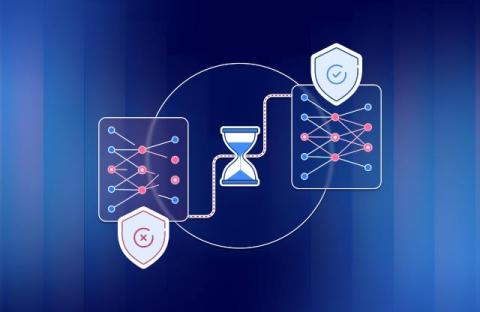
The ECB just gave banks four months to fix AI vulnerability gaps. Most of the work starts in the software supply chain.

On July 7, 2026, the European Central Bank sent a letter to the CEO of every bank it directly supervises with an unambiguous instruction: build a formal action plan against AI-enabled cyberattacks, and submit it to your supervisory team by October 31.

How to Build a Red Team Exercise for AI Workflows

AI agents now retrieve data, generate recommendations, and trigger actions across enterprise systems with little human review in between. That speed is the point, and it is also the problem. A single manipulated prompt or a poisoned data source can push an AI system toward a decision no one signed off on, and most security teams have never tested for it. Building a red team exercise for AI workflows is how you find that gap before an attacker does.