Security | Threat Detection | Cyberattacks | DevSecOps | Compliance

Malware Risks and Mitigation: Strengthen Your Cybersecurity Posture

Malware attacks are a major cybersecurity concern for individuals and businesses. These attacks can lead to data theft and financial losses. A report from AV-Test suggests that more than 450,000 new malware and PUA samples are detected each day, bringing the total to 1.56 billion known samples. Malware can take many forms, such as viruses, ransomware, spyware, and trojans. These can threaten data integrity, privacy, and business continuity.


Ransomware Attacks Drive a Surge in Cyber Insurance Claims

Cyber insurance claims surged by 40% over the past eighteen months, while ransomware payments have dropped by 44%, according to a new report from Cowbell Cyber. The three most common incident types were data breaches, cybercrime (including phishing and business email compromise), and extortion attacks (including ransomware).

Surviving a LockBit Ransomware Attack: The ROI of Visibility

In August 2023, while thousands of students at William Jewell College were hauling mini-fridges and textbooks into dorms, the invisible, digital heart of the campus was flatlining. There was no internet. No email. Even the HVAC system, tied to a compromised network, had shut down in the sweltering Missouri heat. The culprit? LockBit, a prolific ransomware syndicate that just hit Boeing days prior.

Reimagining Disaster Recovery: Building the Isolated Recovery Environment

Healthcare cyber resilience depends on ransomware recovery and patient care continuity. Christian Lindmark of Stanford Health Care joins Josh Howell to discuss an innovative approach to building an isolated recovery environment. Instead of requesting significant new capital from the board, Christian proposes a hybrid model that utilizes existing disaster recovery hardware for cyber response. They explore the shift from physical disaster planning to addressing the persistent reality of cyber attacks that compromise environment trust.

How Replicating Marauder Rewired the Supply Chain Playbook

In March 2026, researchers began linking a series of software supply-chain compromises to Replicating Marauder, the BlueVoyant Threat Fusion Cell (TFC) primary identifier for the actor publicly tracked elsewhere as TeamPCP. What made the campaign stand out was that trusted software was poisoned and one compromise repeatedly appeared to enable the next by exposing credentials, release paths, or Continuous Integration and Continuous Delivery or Deployment (CI/CD) trust relationships.

BlackToad: Network Manipulation in an AutoIt Payload

Recently, JUMPSEC’s DART (Detection and Response Team) detected a phishing email targeting a client environment. The email, written in Thai and containing a MediaFire download link, was identified as suspicious by an incident responder and we kicked off an investigation. Since then, we have established infrastructure to track the threat actor, analysed the novel payload in detail, and identified several IoCs below.

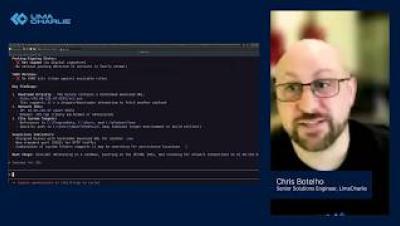
Analyzing real malware with Claude Code and LimaCharlie

Most malware analysis workflows follow the same pattern: run a set of tools, manually review the output, build detection rules from memory, and repeat. It's reliable, but slow, and for MDR and MSSP teams handling volume, delays have a cost. In this workshop, LimaCharlie Senior Solutions Engineer Chris Botelho demonstrates a faster path: using Claude Code with LimaCharlie's reverse engineering environment to triage, analyze, and build detections against a real malware sample pulled from Malware Bazaar.

Disrupting Glassworm: Inside CrowdStrike's Takedown of a Developer-Targeting Botnet

On May 26, 2026, at 14:00 UTC, the CrowdStrike Counter Adversary Operations team executed a coordinated takedown of the Glassworm botnet, a global threat targeting software developers through the open-source supply chain. In collaboration with Google and the Shadowserver Foundation, we struck all four of Glassworm's command-and-control (C2) channels simultaneously, severing the operators from their infected machines and their ability to deliver new malicious payloads.

Ransomware Trends, Attack Methods, and Protection Strategies

Ransomware has moved beyond simple malware attacks. It is now operating under a structured business model that disrupts operations, not just systems. Attackers are not depending on phishing or malicious files to deploy ransomware. They instead use compromised identities and existing tools present within environments to move undetected. By the time encryption starts, the attack has already progressed across systems.

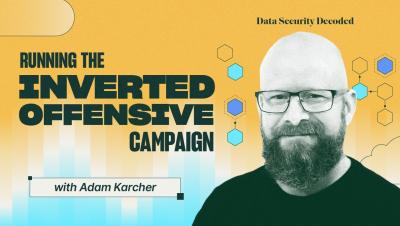
Running the Inverted Offensive Campaign with Adam Karcher

- What happens when the adversary’s dwell time is measured in years, but your defense is measured in tickets? Adam Karcher, FBI Supervisory Special Agent, Cyber Division, and a member of the Bureau’s AI Working Group, joins the show to break down the "convergent evolution" of modern cyber threats. Karcher explains why defenders are often stuck in a cleanup cycle, while threat actors operate in a sophisticated, compartmentalized ecosystem that requires a fundamental shift in defensive strategy.

WantToCry ransomware remotely encrypts files

SophosLabs analysts investigated WantToCry ransomware attacks that involved the threat actors abusing the Server Message Block (SMB) service for initial access and then exfiltrating files to attacker-controlled infrastructure for remote encryption. The detection surface is significantly reduced because WantToCry operates without local malware execution, and there is no post-compromise activity beyond exfiltrating files and rewriting them to disk.

Mini Shai-Hulud Hits @antv: 323 npm Packages Compromised Through the atool Maintainer Account

An active supply chain attack has compromised 323 npm packages published under the atool npm maintainer account. The wave sweeps the entire @antv data-visualization organization alongside standalone libraries with wide independent adoption: echarts-for-react, timeago.js, size-sensor, and canvas-nest.js. With echarts-for-react pulling roughly 1.1 million weekly downloads, any project that auto-updates these packages is in scope.

Protecting the Neglected: Measuring County Cyber Risk with Dr. Ido Sivan Sevilla

- Dr. Ido Sivan Sevilla joins host Caleb Tolin to break down battlefield stories from a massive analysis of over 3,000 local government entities. Dr. Sivan Sevilla, who serves as an Assistant Professor at the UMD College of Information and holds joint positions at the Hebrew University School of Public Policy & Governance and the School of Computer Science and Engineering, brings a multidisciplinary lens to the alarming reality of risk clusters.

Analyzing TAX#TRIDENT: Fake Indian Tax Lures Pivot Across ZIP, VBS, Stego and PHP-Wrapped VBS Delivery

Securonix Threat Research tracks TAX#TRIDENT, an active fake Indian Income Tax-themed campaign that uses three delivery paths to reach Windows endpoints. The campaign starts with fake tax assessment lures and then moves victims toward ZIP files, VBScript downloaders, or PHP-looking web endpoints that actually return script content.

Mini Shai-Hulud Hits AntV: 300+ Malicious npm Packages Published via Compromised Maintainer Account

A supply chain attack affecting the @antv data visualization ecosystem and related npm packages is actively spreading through the npm registry. The attack, attributed to a threat group called TeamPCP and branded as another wave of the Mini Shai-Hulud campaign, published more than 300 malicious package versions across 323 packages in a 22-minute automated burst on May 19, 2026. The packages collectively represent approximately 16 million weekly downloads.

How Hybrid Work and Cloud Adoption Are Changing Enterprise Ransomware Risk

Five years ago, enterprise ransomware risk was mostly a perimeter problem. Today it’s an identity problem, a visibility problem, and a cloud configuration problem, all at once. Hybrid work and cloud adoption didn’t just shift where people work. They fundamentally changed where ransomware attacks begin, how far they reach, and how long they go undetected.

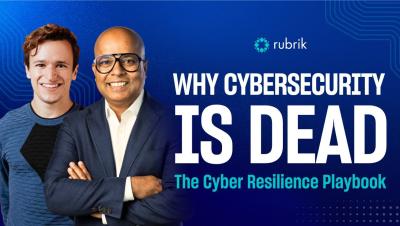
Why Cybersecurity is Dead | The Cyber Resilience Playbook

“The cybersecurity industry as we knew it is dead." Rubrik CEO Bipul Sinha explains why the security industry’s obsession with "walls and detection" has failed. AI-powered attacks have reduced the window between intrusion and breach to zero seconds. The only path forward is a fundamental shift from reactive defense to preemptive recovery, at machine speed.

Why AMOS matters: The macOS malware stealing data at scale

Sophos X-Ops looks at the Atomic macOS Stealer and its capabilities Sophos Managed Detection and Response (MDR) teams recently responded to a customer incident involving an infostealer infection on a macOS host. When we investigated, we found that the infostealer appeared to be a variant of AMOS (Atomic macOS), a well-known malware family we’ve written about before. The attack began with a ClickFix-style ruse, where a user was tricked into running a terminal command.

Mini Shai-Hulud supply chain attack: Why this campaign changes how defenders should think about trusted software

The Mini Shai-Hulud supply chain attack compromised more than 170 packages across npm and PyPI, including packages from TanStack, Mistral AI, and Guardrails AI, by hijacking legitimate CI/CD publishing workflows to distribute malicious versions that still carried apparently valid provenance signals.

Cato CTRL Threat Research: Suspected China-Linked Threat Actor Targets Global Manufacturer with Undocumented TencShell Malware

In April 2026, Cato CTRL identified and blocked an attempted intrusion against a global manufacturing customer involving TencShell, a previously undocumented, Go-based implant derived from the open-source Rshell C2 framework. The activity appeared in traffic associated with a third-party user connected to the customer environment.

Mini Shai-Hulud: The Worm Turning CI/CD Into an Attack Surface

May 19, 2026 What the 2026 Verizon DBIR Reveals About the State of Application Security Read More Natalie Tischler May 14, 2026 How to Manage Risks Within Your Applications Read More Natalie Tischler May 12, 2026 AI Coding Tools Are Creating a Security Gap We Must Close Immediately Read More Natalie Tischler.

Workshop: Analyzing Real Malware with Claude Code and LimaCharlie

In this hands-on workshop we will analyze an unknown binary, quickly extract indicators, and determine the binary’s core functionality. We'll give Claude the LCRE (LimaCharlie Reverse Engineering) tool to accelerate analysis and interpretation by identifying configuration details, key behaviors, and any additional indicators useful for rule building. We'll use this information to craft detection rules for this sample.

Mini Shai-Hulud Is Back: 172 npm and PyPI Packages Compromised in Latest Wave

The Mini Shai-Hulud supply chain campaign has resurfaced with its largest wave yet. Over a 48-hour window on May 11-12, 2026, attackers compromised 172 unique packages across 403 malicious versions on npm and PyPI, including high-profile scopes like @tanstack, @uipath, @mistralai, and @opensearch-project.

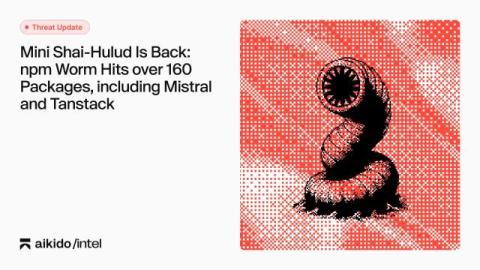
Mini Shai-Hulud Is Back: npm Worm Hits over 160 Packages, including Mistral and Tanstack

Mini Shai-Hulud is back. Like I said before, we were yet to see the full scale of the attack. The npm campaign we covered in April, when it targeted SAP packages, has now turned into a much larger compromise. Our Malware Team detected 373 malicious package-version entries across 169 npm package names. The basic goal is still the same: steal credentials from developer machines and CI/CD runners, then use those credentials to reach more packages. What changed is the scale and the release path.

How to Prevent Ransomware on Networks: Proven Strategies for Protection

Organizations around the world are increasingly vulnerable to ransomware attacks, which have caused over $57 billion in damages globally by 2025, according to a report by Cybersecurity Ventures. These cyberattacks can shut down entire networks, disrupt services, and inflict severe financial and reputational damage. Knowing how to prevent ransomware on networks is essential to staying protected against these threats.

Ransomware: AI changes the writer. It doesn't change the math.

Ransomware: AI changes the writer. It doesn't change the math. Why most endpoint protection still treats ransomware as just another piece of malware, and what changes when you watch the data instead of the attacker. In 2013, CryptoLocker introduced the modern ransomware playbook. It also introduced something most of the industry has still not come to terms with: remote encryption.

The Symbiosis of Residential Proxy Services and Malware Ecosystems

Residential proxy services, also called RESIP, present a persistent operational hurdle for tracking and attributing malicious network activity, as they allow threat actors to mask their true origins behind seemingly benign, geographically diverse IP addresses. While often marketed for legitimate use cases, these networks are aggressively leveraged for fraud, credential abuse, and perimeter evasion.

Donuts and Beagles: Fake Claude site spreads backdoor

A malicious imitation of Anthropic’s Claude site leads to DLL sideloading – and a backdoor As we reported on social media recently, Sophos X-Ops has been investigating reports of a fake Claude AI website distributing malware. Like other researchers, we thought this might be a PlugX-like campaign, given that the attack chain shares several characteristics with observed PlugX attacks.

The Terrorist Designation: A New Red Line for Ransomware with Cynthia Kaiser

In this episode, host ⁠Caleb Tolin⁠ explores the battlefield of enterprise defense, which has moved from simple data theft to ultra heinous crimes that put patient outcomes at risk. Guest ⁠Cynthia Kaiser⁠ shares Battlefield Stories from her time at the FBI and her current work as SVP of the Ransomware Research Center at ⁠Halcyon⁠ (@halcyonsecurity ) illustrating how the industrialization of cybercrime has reached a tipping point. They dive into the alarming reality of modern dwell times, specifically looking at how groups like Akira move from initial access to full encryption in as little as one hour.

Your Backups Know More Than You Think

You may not be aware of how valuable your backups are: they can contain extremely valuable information that leaves a record of what your other security tools may have missed. This is just one of the many interesting tidbits Kyle Fiehler provided on his recent episode of Data Security Decoded. Kyle also explains how threat actors exploit backup blind spots, why identity and recovery are now prime attack surfaces, and how security leaders can rethink MTTR.

VENOMOUS#HELPER: Dual-RMM Phishing Campaign Leveraging JWrapper-Packaged SimpleHelp and ScreenConnect for Silent Remote Access

Phishing campaigns leveraging remote management tools is nothing new. Securonix Threat Research has conducted in-depth dynamic analysis of an ongoing phishing campaign targeting multiple vectors, active since at least April 2025. The campaign has impacted over 80 organizations, predominantly in the United States, spanning multiple sectors. This campaign leverages vendor-signed Remote Monitoring and Management (RMM) software to establish silent, persistent access.

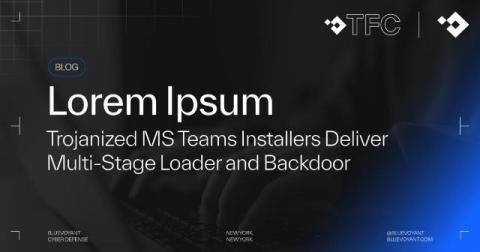
Lorem Ipsum Malware: Trojanized MS Teams Installers Deliver Multi-Stage Loader and Backdoor

BlueVoyant Security Operations Center (SOC) and Threat Fusion Cell (TFC) security researchers have been tracking an emerging, rapidly maturing threat group conducting a global SEO-poisoning campaign that distributes trojanized Microsoft Teams installers. These installers ultimately deploy a multi-stage shellcode loader and backdoor BlueVoyant has designated Lorem Ipsum.

You Wouldn't Download a Shipment - The 443 Podcast - Episode 369

This week on the podcast, we discuss a recent warning from the FBI about hacking leading to stolen shipments. Before that, we cover the Vercel software supply chain incident before discussing the Vect Ransomware-as-a-service turned accidental wiper.