Security | Threat Detection | Cyberattacks | DevSecOps | Compliance

Create Multiple QR Codes at Once: Secure and Efficient with a Bulk QR Code Generator

QR codes are everywhere, from product packaging and restaurant menus to event tickets and access badges. They've become one of the most effective ways to bridge the physical and digital world. But as their popularity grows, so does the need for scale. Creating one QR code is simple. Creating hundreds, or even thousands requires a smarter approach.

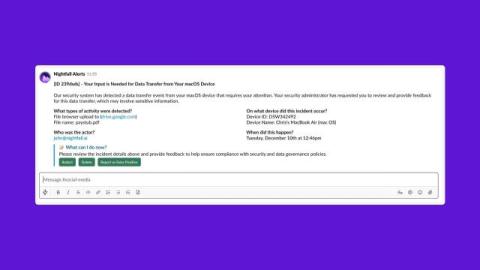
Empower Your Defense With Data Loss Prevention Controls and Automated Alert Remediation

In today's digital world, the stakes of data loss are high, and the cost of cybercrime continues to escalate. In fact, Ponemon Institute estimated that the average cost of a data breach was $4.45 million in 2023, a 15% increase over the previous three years. As a result, organizations are now deploying a combination of detection and remediation controls in addition to Data Loss Prevention (DLP) technologies. Why?

How Business Intelligence Enables Security in Startup Growth

Startups operate in a high-risk environment where security threats, financial vulnerabilities, and operational inefficiencies can severely impact growth. Without a solid foundation of data-driven decision-making, you expose your business to unnecessary risks. Business intelligence (BI) serves as a critical tool in strengthening security, enabling you to make informed decisions, prevent cyber threats, and maintain regulatory compliance.

Safeguarding Classified Information: How to Prevent Insider Data Breaches

Protecting military secrets is critical to national security. It’s not just about securing information; it’s about ensuring our safety and maintaining a strategic advantage. Sweeping legislation, technology, and security protocols are in place to prevent classified information leaks within Defense, which extend down to Defense contractors. However, despite technological advances, humans remain the weakest link when it comes to protecting national secrets.

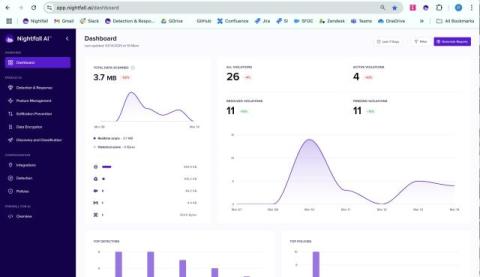
Insider Risk with Nightfall DLP: Episode 2 - Managing Shadow AI

Earlier this year, security researchers found more than 1 million records, including user data and API keys, in an exposed DeepSeek database. This massive exposure event tells us that data exfiltration risk and AI proliferation are forever linked together: as AI tools grow in popularity and complexity, exfiltration risk rises in kind.

The Essential DLP Checklist for Digital Health and Life Sciences

Security leaders in the life sciences and health technology fields know how important it is to safeguard sensitive data like protected health information (PHI), personally identifiable information (PII), and confidential research data. They also know what’s at stake with a security breach or data exfiltration event. But what’s not always clear is how to find the right solution to keep all that data safe.

Cyber Shields Up: Defending Your Data & Identities with Data Security Posture Management

In today’s evolving threat landscape, protecting your data and identities is more critical than ever. In this snippet from an expert-led session, Netwrix specialists Adam Laub and Jeff Warren explore how Data Security Posture Management (DSPM) and a layered defense strategy can strengthen your cybersecurity approach. You’ll learn how to: Whether you're focused on compliance, identity protection, or data exposure mitigation, this webinar offers actionable insights and practical use cases to help you build a more resilient security framework.

Enhance data protection in Microsoft Outlook with Cloudflare One's new DLP Assist

Cloudflare Email Security customers using Microsoft Outlook can now enhance their data protection using our new DLP Assist capability. This application scans emails in real time as users compose them, identifying potential data loss prevention (DLP) violations, such as Social Security or credit card numbers. Administrators can instantly alert users of violations and take action downstream, whether by blocking or encrypting messages, to prevent sensitive information from leaking.

Navigating the EU AI Act: Why Compliance is Key to AI Innovation and Security

The European Union’s AI Act, set to be enforced in 2025, is set to transform how businesses approach artificial intelligence. Designed to regulate AI development and deployment, the Act aims to ensure ethical, safe, and transparent AI usage. However, many organisations still struggle with compliance.

Mastering EU AI Act Compliance: Strategies for Data Governance and Security

Organisations must adopt robust compliance strategies to align with the EU AI Act’s stringent requirements. This involves implementing effective data governance frameworks, ensuring data quality and integrity, and leveraging advanced data security solutions.

Nightfall AI Delivers 95% Detection Precision for API Keys & Passwords

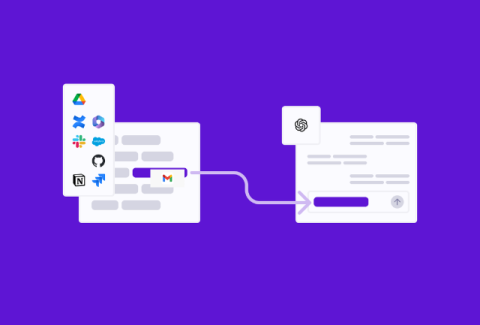
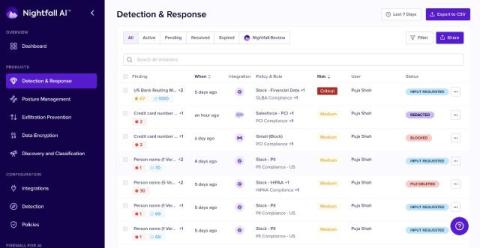
Discover how Nightfall's advanced AI-based detection is transforming the way organizations protect their most valuable digital assets: API keys and passwords. This short demo illustrates where traditional DLP systems fall short and how Nightfall's innovative approach achieves industry-leading precision.

Prevent Insider Risk with Nightfall AI's Automated Upload Blocking

Nightfall AI’s new insider risk feature prevents sensitive data uploads to personal cloud storage. Here’s what you’ll learn in our short demo: Discover how Nightfall's intelligent approach can help your organization pinpoint real threats while minimizing alert fatigue. Our solution offers.

Why the Future of DLP Is Invisible, Invincible, and Inexpensive

Legacy DLP solutions, as well as CASB and app-native DLP solutions, face significant challenges in providing comprehensive coverage across modern SaaS, AI apps, and endpoints. Lack of visibility, clumsy deployments, and expensive implementations are common drawbacks of using these tools — and they leave big gaps in data loss prevention. Even today, we’re still seeing the same problems that have persisted for decades in today’s DLP solutions.

PCI Readiness Survey: Key challenges for 2025

The Payment Card Industry Data Security Standard (PCI DSS) has been a critical framework for protecting cardholder data for the last two decades. It’s also presented a major — and gradually rising — compliance challenge for organizations that handle cardholder data. That challenge is set to ramp up significantly in the coming months, as security standards become even more stringent with PCI DSS 4.0 updates taking full effect in March 2025.

Legacy DLP Solutions vs. Fidelis Network DLP: Overcoming Pain Points in Data Protection

In our modern digital world, sensitive data protection is an essential challenge for organizations of any scale. Data breaches can translate into huge financial losses, loss of customer confidence, and heavy legal fines. Data Loss Prevention (DLP) technology plays a crucial role in protecting information, but not all DLP technologies are capable of addressing the evolving threats. Legacy DLP infrastructure, which was the norm, is no longer good enough, exposing organizations to risks.

Data-Centric Security: Protect Your Most Valuable Asset-Your Data

You’re sitting in your office, staring at a screen filled with data. Customer information, financial records, sensitive business intel – it’s all there, flowing through your systems like digital lifeblood. That data, however, isn’t just sitting behind your firewall anymore. It’s zipping across cloud platforms, being crunched by AI models, and shared with partners across the globe. Welcome to the new reality of data security.

APIs: The Silent Highway for Sensitive Data

Think about how your banking app connects to payment processors or how your healthcare provider’s system shares records securely – APIs have become essential for modern digital interactions, enabling applications to communicate and share data effortlessly. However, this convenience comes at a cost: APIs often handle vast amounts of Personally Identifiable Information (PII), making them prime targets for API data exfiltration.

Insider Risk with Nightfall DLP: Episode 1 - Prevent Personal Cloud Store Uploads

Insider risk is a tricky challenge for security teams: how can you tell the good actors from the bad, or intentional actions from mistakes? Anyone with approved access to endpoints and SaaS systems could expose data to exfiltration risk if those systems are focused solely on preventing outsiders from getting in.

The file and SaaS data perimeter is broken: data security needs data lineage

We are in the midst of a major technological shift. And when shifts happen, new industry-defining companies emerge. The winners aren’t just those with great ideas—they are the ones who adapt and respond to change the fastest.

Implementing DLM for Robust Protection Against Cyber Attacks

Want to strengthen your organization's cyber defenses? By 2025 cybercrime will cost the world $10.5 trillion each year making it essential to defend your devices against cyber attacks. Organizations spend an average of 194 days discovering breaches and then require another 292 days to contain them.

Protecting Software Data: Securing Ways To Export Work Items From Jira

Having your software data is paramount: System administrators, data analysts, auditors, and software security experts face the challenge of securely extracting valuable information from Jira while ensuring efficiency, compliance, and data integrity. Fortunately, counting on reliable solutions to export issues or work items from Jira is a task that can be securely and efficiently covered.
Featured Post

Partnering to Overcome the Skills Gap in Cloud Computing

For organisations that are always trying to leverage the latest technology to gain an edge over their competitors, utilising public cloud computing is at the top of the list for most decision makers. The scalability and cost-effectiveness, along with businesses not needing to invest in traditional infrastructure and having it managed by a third party, offers a myriad benefits for companies in all industries.

Inside a Cyberattack: How Hackers Steal Data

The truth about cybersecurity is that it's almost impossible to keep hackers outside of an organisation, particularly as the cybercrime industry becomes increasingly sophisticated and their technology more advanced. Furthermore, once a hacker has broken through an organisation's defences, it is relatively easy to move within the network and access information without being detected for days and even months. This is a significant concern for Banking and Financial Services organisations, which house valuable sensitive and Personally Identifiable Information (PII).

Data at Risk: 96% of Ransomware Attacks Involve Data Theft

A new report from Arctic Wolf has found that 96% of ransomware attacks now involve data theft as criminals seek to force victims to pay up. “As potential victims implemented more reliable backup and restoration processes, ransomware operators introduced data exfiltration as a means to apply additional pressure and protect their revenue streams,” Arctic Wolf says.

What is PCI DSS?

The Payment Card Industry Data Security Standard (PCI DSS) is a global security framework established by major credit card brands that outlines security requirements for any organization handling cardholder data, including encryption, access control, and network security. PCI DSS is regularly updated, and Version 4.0, effective March 2025, focuses on allowing organizations to tailor security controls to their specific needs.