Security | Threat Detection | Cyberattacks | DevSecOps | Compliance

Understanding the Risks of Multi-Location Internet Connectivity

Modern enterprises rarely live in one building anymore. Branches, stores, plants, and remote teams all depend on fast internet to reach apps and data. That reach is powerful, but it also multiplies the ways attackers can find you. The more doors you add, the more locks and alarms you need.

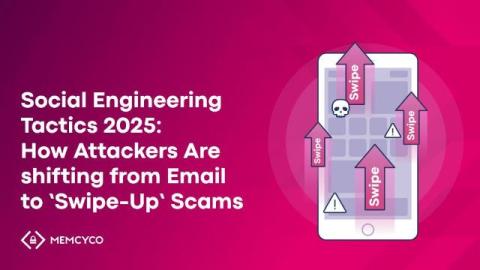
Social Engineering Tactics 2026: How Attackers Are shifting from Email to 'Swipe-Up' Scams

The image of the cyber attacker is changing. For years, the industry focused on email gateways and typo-squatted domains like citi-bank-security.com. But according to Tzoor Cohen, CTI Lead at Memcyco, the battleground has shifted. In 2026, the most dangerous social engineering tactics typically don’t start in an inbox. They start on social media, utilize legitimate infrastructure like Bitly, and exploit the user interface (UI) of mobile devices to hide malicious intent.

How Attackers Maintained Persistence in AWS After Stealing Credentials

Last week’s disclosure from AWS is another reminder that in the cloud, attackers don’t need to break in. They just need a working set of keys. Several AWS customers learned this the hard way when threat actors used compromised IAM credentials to deploy a rapid cryptomining campaign across EC2 and ECS environments. The incident didn’t rely on vulnerabilities or sophisticated exploitation. It relied on valid credentials and overly permissive access.

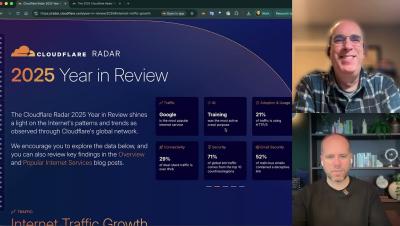
AI, DDoS, and the Internet in 2025 | Cloudflare Radar Year in Review

In this special Year in Review episode of This Week in NET, host João Tomé is joined by David Belson to break down the Cloudflare Radar 2025 Year in Review. Together, they explore what Cloudflare’s global network reveals about how the Internet evolved over the past year — from the rapid rise of AI crawlers and agent traffic, to record-breaking DDoS attacks, the spread of post-quantum encryption, and the growing impact of government-directed shutdowns and outages.

81% of Small Businesses Sustained a Cyber Incident Over the Past Year

Eighty-one percent of small businesses suffered a security or data breach over the past year, and 38% of these businesses were forced to raise their prices as a result, a report from the Identity Theft Resource Center (ITRC) has found. The report notes that external hackers have overtaken malicious insiders as the most common root cause of these incidents. This trend is partially driven by AI-assisted social engineering attacks, which were cited as a root cause by more than 41% of victims.

How PPC Campaign Vulnerabilities Can Lead to Ransomware Attacks

In the US, search ad spend was expected to reach $124.59 billion in 2024. Those big pay-per-click (PPC) advertising budgets are attracting the attention of cybercriminals. Click fraud is a well-known hazard in marketing circles. However, a more insidious threat lurks in the background.

The Future Of Cybersecurity: How AI And Machine Learning Are Transforming Penetration Testing

In today's rapidly evolving digital landscape, the protection of sensitive information and critical infrastructure has become more paramount than ever. Traditional cybersecurity measures are increasingly being augmented with advanced technologies like Artificial Intelligence (AI) and Machine Learning (ML). These innovations are now transforming the realm of penetration testing, offering enhanced capabilities for identifying and mitigating vulnerabilities.

Link11 Identifies Five Cybersecurity Trends Set to Shape European Defense Strategies in 2026

Link11 releases new insights outlining five key cybersecurity developments expected to influence how organizations across Europe prepare for and respond to threats in 2026. The findings are based on analysis of current threat activity, industry research, and insights from the Link11 European Cyber Report, alongside broader market indicators such as PwC's Global Digital Trust Insights 2026.

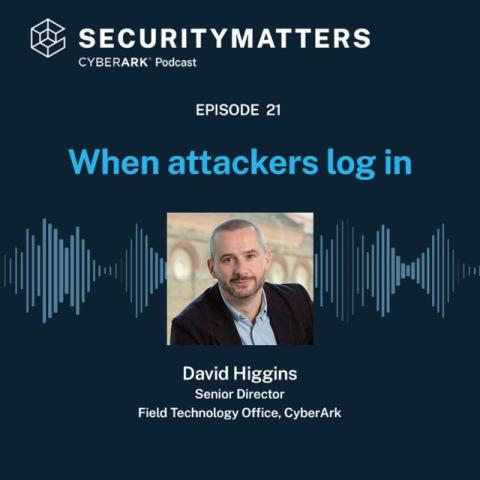
EP 21 - When attackers log in: Pausing for perspective in the age of instant answers

In this episode of Security Matters, host David Puner welcomes back David Higgins, senior director in CyberArk’s Field Technology Office, for a timely conversation about the evolving cyber threat landscape. Higgins explains why today’s attackers aren’t breaking in—they’re logging in—using stolen credentials, AI-powered social engineering, and deepfakes to bypass traditional defenses and exploit trust.

New Attack Technique "ConsentFix" Hijacks OAuth Consent Grants

On December 11, 2025, Push Security published research detailing a newly observed browser-based phishing technique called ConsentFix. The name ConsentFix is derived from its similarity to the previously documented ClickFix technique using fake CAPTCHA pages. ConsentFix, enables threat actors to gain cloud account access without capturing passwords, multifactor authentication (MFA) codes, or other credentials by abusing legitimate OAuth authentication and consent flows.

Are LLMs becoming messengers for attackers? #ai #cybersecurity

AI assistants with broad enterprise access are creating a new attack vector. Chris Luft and Matt Bromiley discuss the Gemini Jack vulnerability, where attackers used prompt injection to turn Google's AI assistant into an unwitting accomplice in data exfiltration. The attack embedded hidden instructions in documents or emails. When employees asked Gemini normal questions like "show me our budgets," the AI retrieved the poisoned document and executed the attacker's commands without anyone clicking anything.

EP 21 - When attackers log in: Pausing for perspective in the age of instant answers

In this episode of Security Matters, host David Puner welcomes back David Higgins, senior director in CyberArk’s Field Technology Office, for a timely conversation about the evolving cyber threat landscape. Higgins explains why today’s attackers aren’t breaking in—they’re logging in—using stolen credentials, AI-powered social engineering, and deepfakes to bypass traditional defenses and exploit trust.

The 2025 Cloudflare Radar Year in Review: The rise of AI, post-quantum, and record-breaking DDoS attacks

The 2025 Cloudflare Radar Year in Review is here: our sixth annual review of the Internet trends and patterns we observed throughout the year, based on Cloudflare’s expansive network view.

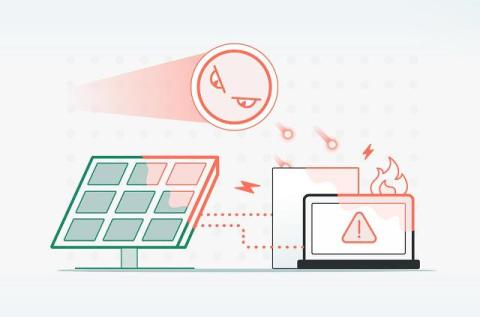
Cyberattack on the Sun: Threat Actors Manipulate Solar Panel Systems; Agentic AI Increases the Risk

Millions of homes, businesses, and hospitals depend on solar power, a clean and cost-effective source of renewable energy. Adoption has accelerated worldwide thanks to major government initiatives such as the Inflation Reduction Act (IRA) in the U.S., the Renewable Energy Directive (RED II) in the EU, the Smart Export Guarantee in the UK, and Australia’s Small-scale Renewable Energy Scheme (SRES). As clean energy infrastructure expands, a new vulnerability is emerging.

Predictions 2026: Surge in Agentic AI for Attacks and Defenses

Over the years, cybersecurity predictions tend to all sound the same. Ransomware attacks will continue, supply-chain incidents will increase, and phishing will remain a problem. However, the tail end of 2025 and 2026 presented the cybersecurity industry with a new concern, Agentic AI. Agentic AI capabilities far exceed the basic AI concerns that were reported in the past. Its ability to make decisions and take actions on its own, without needing a human to approve every step, is a game-changer.

How to Prevent Fileless and In-Memory Attacks with Aurora Endpoint Defense

See how Aurora Endpoint Defense prevents advanced memory and script-based attacks before they disrupt your business. Using Alpha AI, Aurora Endpoint optimizes threat detection and response while reducing analyst workload resulting in stronger protection and less operational strain.

How to Avoid Phishing Attacks: A Complete Guide for Users and IT Teams

Phishing remains one of the most common cyber threats, affecting users across industries and regions. It targets human behavior rather than technology, which makes it more effective than many other attack methods. Now, attackers are using advanced tools, like AI, to make phishing more effective. To know how to avoid phishing attacks, you must understand how they work and the different forms they take.

What Is API Token Hijacking? Steps to Detect and Stop the Attack

An API token is like a small digital key that tells a system that a user or an app is allowed to act in the system. When this key gets stolen, attackers act as real users and misuse the account. It’s called API token hijacking, and this issue has grown in the last few years. Most companies are not able to detect this problem in time. It’s important for IT/security teams to understand token theft to respond quickly and build stronger protection for future attacks.

React2Shell and related RSC vulnerabilities threat brief: early exploitation activity and threat actor techniques

On December 3, 2025, immediately following the public disclosure of the critical, maximum-severity React2Shell vulnerability (CVE-2025-55182), the Cloudforce One Threat Intelligence team began monitoring for early signs of exploitation. Within hours, we observed scanning and active exploitation attempts, including traffic originating from infrastructure associated with Asian-nexus threat groups.

Living off the Land - 2025 MITRE ATT&CK Enterprise Evaluations

The 2025 MITRE ATT&CK Enterprise Evaluations tested detecting malicious living-off-the-land attacks while avoiding false positives on legitimate tools. CrowdStrike delivered 100% detection and protection with zero false positives. Adversaries like Mustang Panda weaponize legitimate tools like PowerShell, WinRAR, and curl.exe while these same tools run legitimately across enterprises daily. You can't block these tools without collapsing operations.

Notorious Cybercrime Group is Now Targeting Zendesk Users

ReliaQuest warns that the cybercriminal collective “Scattered Lapsus$ Hunters” appears to be using social engineering attacks to target organizations’ Zendesk instances. This group was behind a widespread campaign earlier this year that used voice phishing attacks to compromise dozens of companies’ Salesforce portals.

Hackers hijack Google Smart Home #aisecurity #mcpserver

Building AI agents that can think, act, and adapt securely isn't easy. From prompt design to deployment, every stage brings new challenges and new risks. In this session, Bar-El Tayouri, Head of Mend AI at Mend.io, and Yehoshua (Shuki) Cohen, VP of Data and AI Evangelist at AI21 Labs, shared practical strategies for designing and defending agentic systems that actually deliver. Key topics covered: Originally recorded: October 29, 2024.

Malicious AI Tools Assist in Phishing and Ransomware Attacks

Researchers at Palo Alto Networks’ Unit 42 are tracking two new malicious AI tools, WormGPT 4 and KawaiiGPT, that allow threat actors to craft phishing lures and generate ransomware code. These tools are criminal alternatives to mainstream AI tools like ChatGPT, with no safety guardrails to prevent users from using them for malicious activities. The latest version of WormGPT offers lifetime access for $220, or a monthly fee of $50.

Indirect Prompt Injection Attacks: A Lurking Risk to AI Systems

The rapid adoption of AI has introduced a new, semantic attack vector that many organizations are ill-prepared to defend against: prompt injection. While many security teams understand the threat of direct prompt injection attacks against AI agents developed by their organizations, another more subtle threat lurks in the shadows: indirect prompt injection attacks.

Report: Sophisticated Fraud Attacks Are on the Rise

Sophisticated online fraud techniques are growing more accessible to unskilled attackers, driven by AI tools and fraud-as-a-service platforms, according to Sumsub’s latest Identity Fraud Report. “hile the volume of attacks remains staggering, the nature of fraud is shifting,” the researchers write.

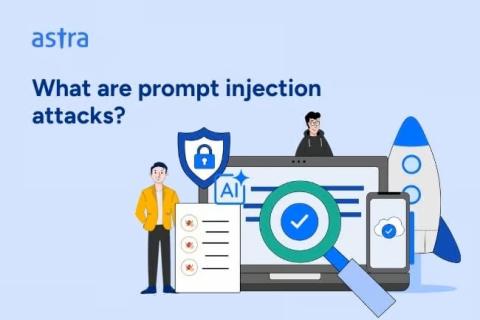
Prompt Injection Attacks in LLMs: Complete Guide for 2026

In February 2023, a Stanford University student conducted a study that turned into one of the most widely followed security tests in AI history. Kevin Liu performed a simple prompt-injection attack, tricking Microsoft Bing Chat into disclosing its internal codename, Sydney, and exposing the entire list of its system prompts. The attack utilized no high-end toolkit, no zero-day, and no privileges, only specially crafted natural language.

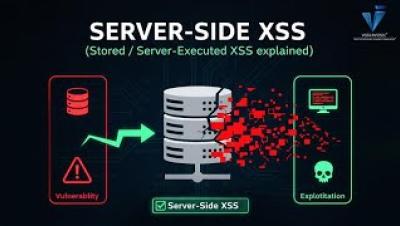
Server Side XSS Explained Simply with Examples

Did you know that over 30% of all web application vulnerabilities reported each year involve Cross Site Scripting (XSS)? And among them, Stored or Server Side XSS is consistently ranked as one of the most dangerous forms, because a single injected payload can silently impact hundreds or even thousands of users without any interaction.

WatchGuard Threat Lab's top six cybersecurity predictions for 2026

WatchGuard has revealed its top six cybersecurity predictions for 2026, forecasting a year where AI-driven threats, regulatory pressures, and the decline of legacy tools will reshape the security landscape. Corey Nachreiner, chief security officer at WatchGuard Technologies, emphasises that organisations must prepare for rapid evolution in both attack methods and defensive strategies.

Defining and Defending Against a Zero Day Attack

Unexpected attacks are the hardest to fend off. In the realm of cyber, Zero Day vulnerabilities are among the greatest risks, as these software flaws are unknown and exploited before a fix is available, potentially compromising the thousands of organizations that are unwittingly using vulnerable software.

Why Account Takeover Is a CX Problem, Not Just a Security One

Account takeover is usually and unsurprisingly approached as a security incident, yet much of the customer impact begins earlier in the journey, long before security teams detect or analyse the event. When users face friction, lockouts, or unexpected changes to their accounts, trust starts to erode. This makes the account takeover impact on customer experience a major determinant of brand trust and loyalty.

Defining and Defending Against a Zero Day Attack

Unexpected attacks are the hardest to fend off. In the realm of cyber, Zero Day vulnerabilities are among the greatest risks, as these software flaws are unknown and exploited before a fix is available, potentially compromising the thousands of organizations that are unwittingly using vulnerable software.