Security | Threat Detection | Cyberattacks | DevSecOps | Compliance

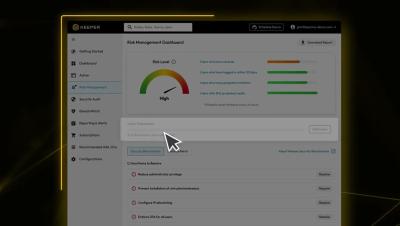
Enforcing the highest level of security in your environment with Keeper's Risk Management Dashboard

The Keeper Risk Management Dashboard is a powerful feature of the Keeper Admin Console that provides comprehensive security posture information covering end-user deployment, utilization, cloud configuration, and event monitoring. This critical data helps administrators ensure that risks are remediated and compliance is enforced effectively. The Risk Management Dashboard monitors key metrics and leverages Keeper Security's Benchmarks to enforce the highest level of security in your environment across all users and devices.
The Massive Existential Opportunity for MSPs and MSSPs in the Age of AI

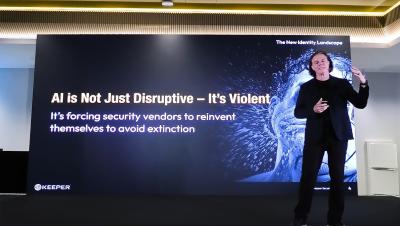
Non-human identities, machines and AI agents are expanding the cyber attack surface, making visibility and governance challenging for managed service providers. This challenge also creates a distinct avenue for MSPs to grow. At the Elovade UK and Ireland Annual Partner Conference, Keeper Security CEO and Co-Founder Darren Guccione spoke on the importance of securing and governing AI agents – and how Keeper Security is built to do just that in a modern, unified platform.

Defender Spotlight Ep. 2: Spotting Suspicious RDP with Corelight Anomaly Detection

When a host suddenly starts serving RDP traffic, it’s time to investigate. See how a Corelight customer used ML-powered anomaly detection to flag unexpected network behavior that could indicate unauthorized remote access or lateral movement.

JumpCloud Workflows from Your AI Client (via MCP Server)

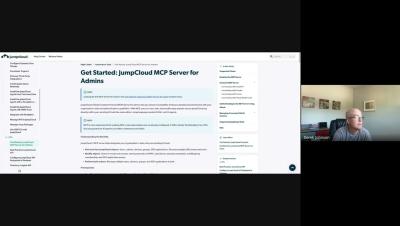
Discover how to run JumpCloud Workflows directly from your AI client using the JumpCloud MCP Server. In this demo, see how IT teams can use natural language to build, manage, troubleshoot, and execute workflows, making IT automation simpler and more accessible. Explore how JumpCloud brings AI-powered automation into your everyday IT operations.

Critical PHP Vulnerabilities (CVE-2026-109618 & CVE-2026-109619)

On October 20, 2026, the PHP security team issued an advance security advisory regarding two critical vulnerabilities, CVE-2026-109618 and CVE-2026-109619, affecting core PHP source code. Both vulnerabilities carry a critical-severity CVSS v4.0 score of 9.2 and could potentially allow unauthenticated remote code execution (RCE) on affected servers. The official patched PHP releases are now available.

CertKit now has 86 built-in deployment templates

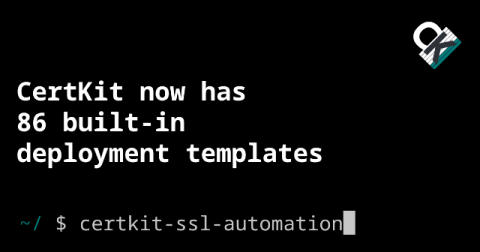
There are lots of ways to get a certificate. Getting it onto your Cisco ISE, IBM i, or WatchGuard VPN is the hard part. We keep making that easier. Since July, CertKit has added 51 new deployment templates, more than doubling the library to 86. Each platform has a built-in deployment template, and most have a deployment guide for the setup details. Setup is just picking a certificate and setting a few variables.

AI Is Calling In Every Risk You've Accepted: Seven Insights From The AI Security Panel: Unfiltered

On October 14th, the afternoon before the AI Security Summit (AISS) flagship event in San Francisco, Snyk hosted The AI Security Panel: Unfiltered. Yahoo Finance's Deirdre Bosa moderated four people who see AI security from very different seats.

How to build a CPS 230-aligned TPRM program

Accelerating security solutions for small businesses‍ Tagore offers strategic services to small businesses. A partnership that can scale‍ Tagore prioritized finding a managed compliance partner with an established product, dedicated support team, and rapid release rate. Standing out from competitors‍ Tagore's partnership with Vanta enhances its strategic focus and deepens client value, creating differentiation in a competitive market.

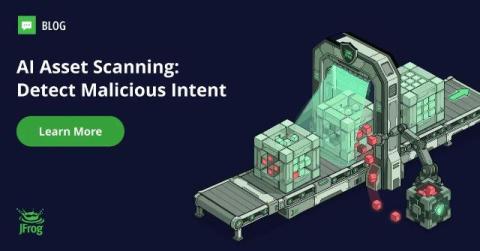
Scanning AI Assets: Catching What SCA and SAST Might Miss

Your standard application security tools are designed to protect your software pipeline by checking third-party components for known vulnerabilities (via SCA), analyzing source code for security flaws (via SAST), and scanning for accidentally exposed credentials (using secret scanners). But if a developer drops a SKILL.md file into their coding agent, installs a plugin from a marketplace, or pulls in an APM manifest, your AppSec scanners may not catch it.

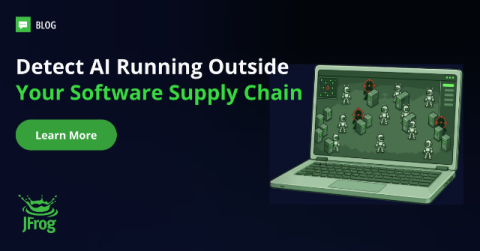
Shadow AI Detection Now Extends to Developer Workstations

ZIP files shared between co-workers containing new agent skills, locally-developed MCP servers passed between developers, and locally stored newly-minted agents are all seemingly harmless files that are commonly used in corporate software development environments. Unfortunately, far from being harmless, these locally stored files can contain AI assets that were never detected or registered as an approved artifact in your applications.

Arctic Wolf Labs: Finding, Prioritizing, and Patching PHP2Shell Exposure

On Tuesday, October 20, threat actors gained advance visibility into two critical PHP vulnerabilities after details leaked ahead of the planned disclosure, accelerating the race between defenders and attackers. The flaws are tracked as Common Vulnerabilities and Exposures (CVE) identifiers CVE-2026-109618 and CVE-2026-109619. Together they’re known as PHP2Shell. Both carry a 9.2 rating on the Common Vulnerability Scoring System (CVSS) version 4.0 scale.