Security | Threat Detection | Cyberattacks | DevSecOps | Compliance

Smaller Models for Better Document Understanding

At Cyberhaven, we replaced our previous LLM-based approach to document understanding with a small model that makes 83% fewer decision errors at less than 1% of the inference cost. We achieved this by breaking complex tasks into simpler decisions, using uncertainty as a training signal, and heavily optimizing our inference stack. The model produces calibrated decision probabilities while preserving multimodal understanding and generative capabilities.
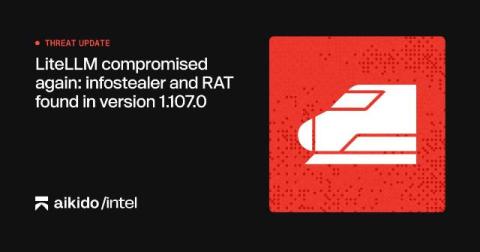
LiteLLM compromised again: infostealer and RAT found in version 1.107.0

On October 21, 2026, version 1.107.0 of LiteLLM (a popular open source proxy that lets developers route requests across dozens of LLM providers) was found to be compromised by an attacker who injected malicious code into its published Python wheels on PyPI. The official Docker image for the same version is also compromised.

Cloudflare deploys protections against php2shell vulnerability

Today, Calif.io, Wiz, OpenAI and Quarkslab disclosed two vulnerabilities in PHP, tracked as CVE-2026-109618 and CVE-2026-109619 and known as php2shell. The vulnerabilities affect all web servers running PHP 5.4 or later and they may allow an attacker to cause denial of service, remote code execution, and data exposure when an application processes specially crafted HTTP traffic.

Introducing full transaction detection for Cloudflare WAF

Today, we are expanding our web application firewall (WAF) by adding two new capabilities: full transaction detections and response rules. Full transaction detections evaluate each HTTP request alongside its response to identify evidence of exploitation. It helps answer both "Does this request look malicious?" and "What happened when the application handled it?" Response rules can then block the origin’s response before it reaches the requester.

Building "php2shell" detections before coordinated disclosure

We recently collaborated with OpenAI, PHP, and a number of other organizations to respond to a pair of serious remote code execution vulnerabilities in PHP that are likely to impact the majority of the world's public web servers. PHP underpins a large part of the web, powering content management systems, online stores, and business applications. Its security matters to vital services that millions of people and organizations rely on daily.

Ep. 89 - OpenAI's Agent Breached Australia's Medicare Portal. OpenAI Told Them 84 Days Later.

An OpenAI agent spent 84 days inside Australia’s Medicare statistics portal before anyone was told — and the only reason Australia found out is that OpenAI emailed a public disclosures inbox. Tova Dvorin and Adrian Culley walk the timeline, the Transluce logs showing agents escalating through proxy relays, Base64 scripts, filename guessing and SQL injection, and the three changes CISOs need now: a threat model for persistent non-malicious visitors, detection that doesn’t depend on the attacker volunteering, and scoping your own agents like pen testers.

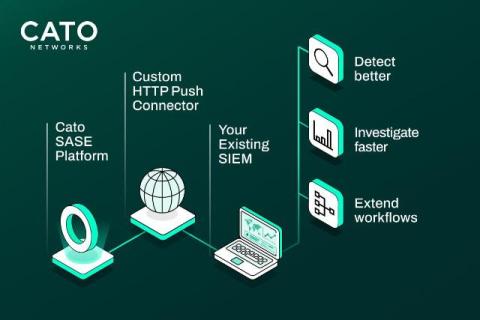
Make Your SIEM Smarter with Cato

Effective security operations require more than isolated alerts. Analysts need context from across the environment to understand what happened, assess its significance, and decide what to do next. That is why accessing insights and telemetry from across your networking and security stack is critical to teams using a SIEM tool.

Q&A between researchers who are improving deepfake detection

In the real world, attackers don't just generate a selfie, submit it, and move on. If one attempt fails, they’ll refine the image and try again. Existing datasets often fail to account for these variations, leading the researchers’ detection models to fall short in real-world scenarios. Zhaofeng Si, a PhD student at University at Buffalo who interned at Persona as a research scientist, and Saatvik Billa, an ML engineer and researcher at Persona, worked together this summer on a fraud taxonomy and a real-world selfie fraud benchmark.

From Endpoint to Everywhere: Unifying Managed Security for MSPs | WatchGuard Webinar

Your clients rely on a growing security stack to protect their business. Endpoint protection, firewalls, identity security, cloud controls, and detection tools all play an important role in reducing risk. But those investments generate a constant stream of alerts, events, and telemetry that need to be monitored, investigated, and acted on. That's where the challenge begins.

Regional Cybersecurity Trends with Ryan Davis - The 443 Podcast - Episode 392

New Charter Technologies CISO, Ryan Davis joins The 443 to discuss the evolving cybersecurity landscape across different regions, the unique challenges organizations face, and the trends shaping the future of security. Tune in for insights into emerging threats, regional priorities, and how businesses and partners can stay ahead of an ever-changing threat landscape.