Security | Threat Detection | Cyberattacks | DevSecOps | Compliance

Unleashing AI 60sec 01

Join us for Day 6 of the Netwrix Innovation Week Podcast Series, part of Cybersecurity Awareness Month. In this episode, Grady Summers, Jordan Violet, Paul Stephens, and Whitney Daily share how innovation at Netwrix is powered by curiosity, collaboration, and accountability. They explore how AI is transforming both our technology and the way we work — from product development to customer experience.


What Technologies Make Online Money Transfers Secure?

A 2022 report by the Bank for International Settlements suggests that about $7.5 trillion is transferred daily around the globe. For context, the U.S. federal government spent $7.01 trillion in its 2025 fiscal year, which ran from October 2024 to September 2025, according to the U.S. Treasury Fiscal Data. Basically, this implies that about 7% more money is traded on the foreign exchange market daily than the U.S federal government spends annually.

Under The Light: ExPRT.AI

n this episode of Under the Light, we take a closer look at ExPRT.AI—CrowdStrike’s approach to vulnerability prioritization that cuts through the noise. You’ll see how ExPRT.AI moves beyond static scoring models like CVSS, EPSS, and KEV by asking a better question: Will this vulnerability actually be exploited? We’ll break down: The three signals attackers rely on—and so does ExPRT.AI What makes a vulnerability worth their time A real-world story from Intermex that shows what this looks like in action And how all of it comes to life inside the Falcon platform.

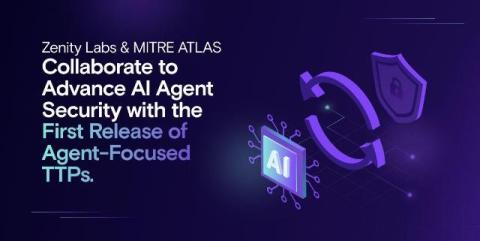
Zenity Labs & MITRE ATLAS Collaborate to Advance AI Agent Security with the First Release of Agent-Focused TTPs

Zenity Labs worked in collaboration with MITRE ATLAS to incorporate the first 14 agent-focused techniques and subtechniques, extending the framework beyond LLM threats to cover the unique risks posed by AI agents.

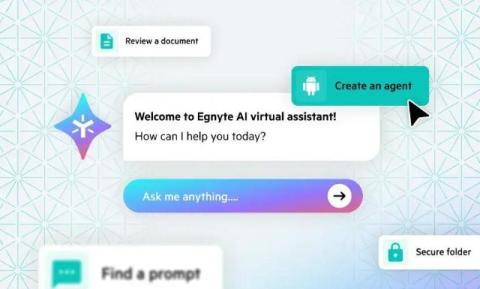
AI at Work: How Egnyte Intelligence Goes Beyond Generic Tools

AI isn’t the future, it’s here. Your CEO’s talking about it in board meetings. Your manager wants to know if it'll save time or just add more work. And you? You're wondering if it's going to make your job easier or just add noise. The excitement is justified. McKinsey says nearly 80% of companies are using AI somewhere in their business. But here's what most people miss: very few have gotten it to work across their entire organization. Why?

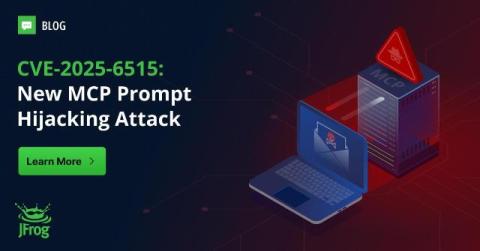
CVE-2025-6515 Prompt Hijacking Attack - How Session Hijacking Affects MCP Ecosystems

JFrog Security Research recently discovered and disclosed multiple CVEs in oatpp-mcp – the Oat++ framework’s implementation of Anthropic’s Model Context Protocol (MCP) standard. Among these, CVE-2025-6515 stood out due to its potential threat of hijacking MCP session IDs. Within the context of MCP we’ve dubbed this new attack technique “Prompt Hijacking“. Your browser does not support the video tag.

Are we only one prompt away from using AI for evil? #cybersecurity #ai #infosec

Are we only one prompt away from using AI for evil? In this week's episode of The Cybersecurity Defenders Podcast, we explore a concerning reality about AI and cybersecurity. As AI becomes more prevalent within the threat actor community, exploits are being developed faster than humans can patch. The tools that help developers debug code can just as easily be used to weaponize vulnerabilities.

AI Privacy and Security: Key Risks & Protection Measures

AI systems learn from vast amounts of data and then generalize. That power is useful and also risky. Sensitive data can slip into prompts. Proprietary datasets can be memorized by models. Attackers can steer models to reveal secrets or corrupt results. Meanwhile, your company is probably experimenting with multiple AI tools at once. That creates hidden data flows and inconsistent controls. “Traditional” app security isn’t enough.

Unlocking AI's full value: CIO and CISO perspectives

AI investment is accelerating across industries. Many organizations have either fully or extensively embedded AI in their business processes today. Yet, 40%* of IT teams still express a lack of trust in AI-generated outcomes. They remain in reactive mode, held back by disconnected systems, manual work, and rigid tools. What’s missing?