Mailchimp
Not subscribed to OpsMatters Newsletter


In 2020, the chances of falling victim to data breaches are increasing. Keeping customers in the loop can be costly, time-consuming but very necessary and important to help prevent loss of personal data and decrease the risk of fraud. Cyber-attacks and data breaches can rarely be kept quiet and if the incident occurs at a high profile organisation, it’s only a matter of time before it makes the news.
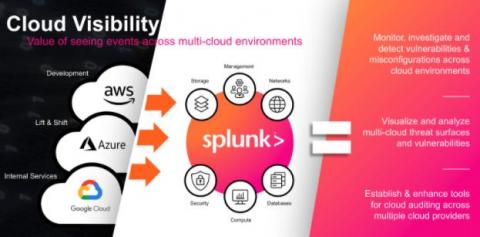
The cloud has become ubiquitous in all we do, and the line between the perimeter and the cloud continues to shrink as most enterprise organizations are looking to shift their cloud strategy to a multi-cloud approach. Moving to the cloud comes with plenty of benefits like performance optimization, improved reliability and overall cost savings, but cloud adoption is not without its risks and challenges.
The COVID-19 crisis has been a test of management and leadership. Recent weeks have seen business leaders grappling with the dramatic upheaval to normal business operations and the corresponding changes to managing people and maintaining productivity. But as companies emerge from shelter-in-place, the question of “what does it take to lead a business through the recovery phase?” is on every leader’s mind.
Wireless networks have become an integral part of how we conduct our businesses. They ease many processes and help us get rid of the clutter caused by hundreds of wires yet keeping wireless networks safe poses some challenges. Wireless technologies offer convenient solutions to our needs. They are practical and fast, moreover they set us free of the clutter caused by wires and cables. On the other hand, it is no secret that wireless networks are more vulnerable to attacks and intruders.
Data security is a term we’re all pretty used to hearing by now, but cybercriminals are only one part of the equation. Did you know that internal employees can also pose a threat to your business? Insider threats are caused by internal staff, employees, or partners who either wish to cause the company harm - or who simply compromise your organization’s data security through carelessness or lack of training.
The initial response to the COVID-19 pandemic put cybersecurity programs to the test. While organizations quickly rolled out business continuity plans to transition workers from the office to the home and to migrate business online to keep customers and supply chains moving, cybersecurity leaders have worked to help keep the business protected from an onslaught of cyber threats designed to prey on the disruption and uncertainty caused by COVID-19.
A well-run security operations center (SOC) stands as the central nervous system of an effective cybersecurity program. SOCs serve as a hub of organization-wide detection and response capabilities for the people tasked with stopping cyber threats within their organization.
It has arrived! Azure Red Hat OpenShift 4 is here and generally available; now, how do you add even more granular security and faster time to repair (MTTR) for your teams? Sysdig, that’s how!
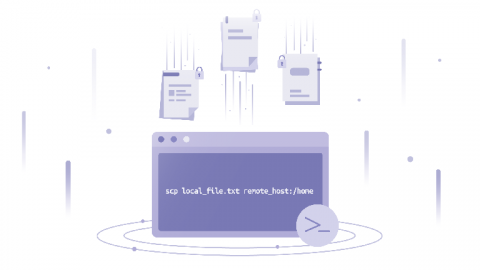
SCP? It’s that handy file-transfer feature of SSH, right? Well, not quite. It’s more of a hack. Or an undocumented, unstandardized mashup of two protocols. Let’s look at the exciting (and scary) details. Secure Copy Protocol (SCP) allows us to move files (and directories) between two computers. Using it is straightforward: This will copy local_file.txt to another computer (usually a server) with domain name remote_host into the /home directory.