Mailchimp
Not subscribed to OpsMatters Newsletter


From the beginning of the computer revolution, there has been a smorgasbord of devices and peripherals, with some DOA and others innovative and groundbreaking. Thumb drives or USB Flash Drives were created in the early 80s, with the first commercially available drive holding 128MG. Cutting-edge USB drives of today hold 20Terabytes and up.
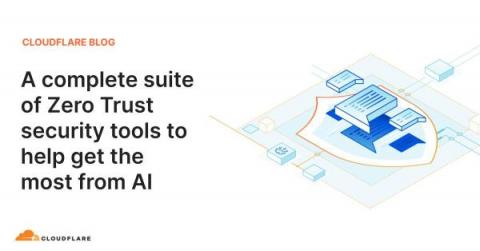
Cloudflare One gives teams of any size the ability to safely use the best tools on the Internet without management headaches or performance challenges. We’re excited to announce Cloudflare One for AI, a new collection of features that help your team build with the latest AI services while still maintaining a Zero Trust security posture.
Breakthrough innovation arises primarily in response to two conditions. One, when new technology emerges that creates new demand by fulfilling needs customers didn’t know they had. Think smartphones. A generation ago, people didn’t know they needed to be tethered to a phone the size of their palm that was also a camera, a bank, an encyclopedia and a shopping mall. Two, when new challenges arise that require innovation to address them.
Privileged Access Management (PAM) is a critical component of any organization's cybersecurity strategy. Privileged accounts provide access to the most sensitive data and systems within an organization. As such, it's essential to manage them carefully to prevent unauthorized access, data breaches and cyberattacks. Here are some best practices for implementing PAM in your organization to ensure that your privileged accounts are secure and protected.
Protection methods for sensitive data have evolved to encompass new forms of thinking to combat constant threat vectors and attacks. Protecting against malware, brute force attacks, and malicious code, data engineers at Cisco, Microsoft, and others craft unique methods to counter the never-ending aggression. Data Masking and data encryption are two similar technologies with different characteristics, purpose, and technique.