Mailchimp
Not subscribed to OpsMatters Newsletter


May is Mental Health Awareness Month, and I want to take this time to reflect on something we don’t often talk openly about in the security community: mental health. Nearly half of CISOs turn over every two years. Almost 100% of CISOs report feeling stressed at work, with about two-thirds saying stress issues are compromising their ability to protect their organization, and 100% saying they felt they needed more resources to adequately cope with current IT and security challenges.
Data breaches are an ever-present risk for organizations of all sizes — and the larger the attack surface, the greater the risk. There is growing awareness of the need to manage the attack surface, and reducing the attack surface is an essential component. However, many companies lack full visibility into their real attack surface, making reduction challenging.
Certera is the modern and affordable certificate authority offering code signing and SSL certificates. It is sub CA is globally trusted CA named Sectigo. Digital certificates called EV (Extended Validation) code signing certificates are used to encrypt and sign code, scripts, and software programs. Users may have a high level of confidence thanks to these certificates that the code being signed is genuine, hasn’t been tampered with, and originates from a reliable source.
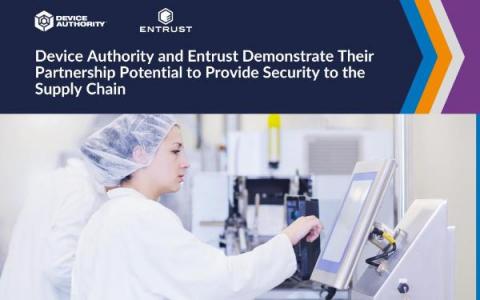
Identified as leaders in IoT (Internet of Things) Device Identity Lifecycle Management by ABI Research, and leaders in IoT IAM according to Quadrant, Device Authority and Entrust have worked together to integrate Device Authority’s KeyScaler® IoT IAM (Identity and Access Management) platform with PKI (Public Key Infrastructure) services from Entrust, extending the existing collaboration for Hardware Security Module (HSM) services, to provide device trust, data trust and automation at IoT sca
Since 2020, CrowdStrike has increasingly observed big game hunting (BGH) threat actors deploying Linux versions of ransomware tools specifically designed to affect VMWare’s ESXi vSphere hypervisor (read Part 1 and Part 2 of this series).
CrowdStrike Falcon® LogScale provides a full range of dashboarding and live query capabilities out of the box. Sometimes, however, you’ll work in an environment where there are other solutions alongside LogScale. For example, let’s say your operations team takes an observability approach that includes metrics scraped by Prometheus, tracing with Tempo and dashboard visualizations with Grafana.
Data search, ID 3010 in the Automation Capability Matrix, is crucial for organizations to swiftly locate and analyze pertinent information. This makes it an essential tool for cybersecurity, IT operations, and compliance teams. Data search involves querying, filtering, and retrieving data from various sources such as SIEM platforms, databases, and other data storage solutions. This process allows organizations to discover valuable insights, identify anomalies, and make data-driven decisions.
Balancing the volume of applications and the increased deployment frequency with the need for security is a struggle for both development and security teams. Recent research indicates that vulnerability management in modern software development has become more complex, with 69% of CISOs acknowledging this challenge. Consequently, many applications are not adequately covered by security scans.