Security | Threat Detection | Cyberattacks | DevSecOps | Compliance

Rubrik AI + Identity Resilience Summit | Recap

AI is reshaping how we build and how we're attacked, often at the same time. If an agent can touch the data that runs your business, that data has to be recoverable. The Rubrik AI + Identity Resilience Summit brought together security leaders to answer one question: what does resilience look like when agents operate on both sides of the perimeter? From identity recovery to securing the agents inside your environment, every session is now available on demand.
Falcon Next-Gen Identity Security: Stopping Lateral Movement from Internet-Facing Devices

When attackers compromise internet-facing devices, they may use them to access internal services and move laterally through the environment. Falcon Next-Gen Identity Security helps identify and stop this activity with dedicated detection and prevention for connections originating from classified internet-facing devices. With conditional access and automated response, organizations can block suspicious access, disable compromised users, and contain threats before they spread.

Connect and Validate Third-Party Data with Falcon Next-Gen SIEM

See how the Falcon Next-Gen SIEM Data Onboarding Agent simplifies the process of connecting and validating third-party security data. Using natural language, teams can identify the right connector, understand setup requirements, configure credentials, and create connections through a guided workflow.

Ep. 85 - FortiBleed: The Campaign With No CVE That Locks You Out of Your Own Firewall

The FBI and US Secret Service just dropped joint advisory JCSA 2026-1601 on FortiBleed—and there is no CVE to patch. Tova Dvorin and Adrian Culley walk the full chain: credential stuffing against internet-facing FortiGate SSL VPNs, legacy SHA-256 admin hashes cracked on rented GPUs, fake vendor-style admin accounts, and attackers deleting your accounts to lock you out of your own firewall. Plus the INC/Lynx ransomware link, what the 86,000 figure really means, and the question that matters: would a new admin on your edge device at 3am fire anything?

One Identity: Governing Every Identity - Human, Machine, and AI

Every enterprise runs on identity — and machines and AI agents now outnumber people in many environments. This 2-minute overview covers why identity has become a board-level priority, and how One Identity governs every identity — human, machine, and AI agent — on one unified platform. Validated by Omdia: 150% ROI, go-live in as little as one day, zero-touch onboarding.

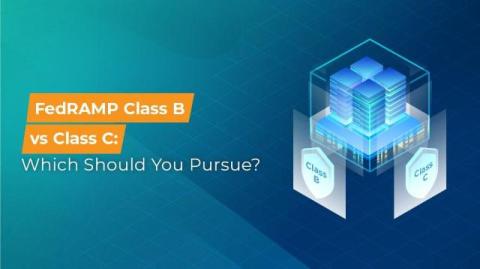
FedRAMP Class B vs Class C: Which Should You Pursue?

In the past, FedRAMP has used impact levels as a sort of classification system for cloud services that wish to work with the government in some capacity. The impact levels evaluate a cloud service provider (CSP) based on the sort of information they would be handling and the service they would provide to the government. They are classified across three axes: confidentiality, integrity, and availability.

How Much Does An MSP Cost? A Real Breakdown Of Outsourced IT Support Costs

When you are comparing managed service providers (MSPs), a monthly price per user is a useful starting point, but it rarely tells the whole story. If you take for example, a standard SME business with 25 employees, they could be charged anywhere between £9000-45,000 per year for outsourced IT support, before a single extra is added. That’s the varied range most MSPs will quote for per-user fees and on its own, tells you less than it seems to.

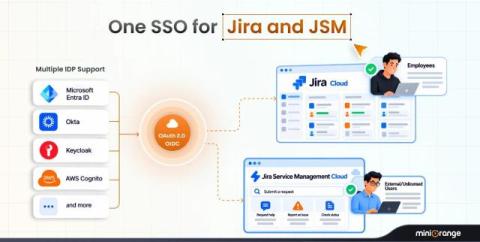
Why OAuth SSO Matters for Both Jira Cloud and Jira Service Management

Jira is rarely used by just one type of user. Primarily, teams use Jira Cloud for project management. At the same time, support teams work inside Jira Service Management (JSM), while internal employees and external users such as customers, vendors, and partners may access the JSM portal. They are all accessing the same Atlassian ecosystem, but they do not necessarily log in the same way. This is where organizations can run into a problem.

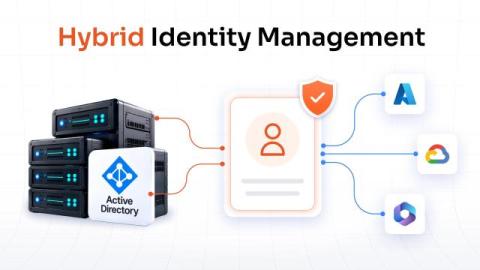
Hybrid Identity Management: Secure Access Across Cloud and On-Premises

Hybrid identity management is the practice of managing user identities and access across on-premises and cloud environments through a connected identity framework. Most organizations today operate across both. Active Directory may still manage identities for internal applications, while cloud platforms and SaaS applications handle other parts of the business. This creates a simple challenge: how do you give users consistent access when their applications and identities exist in different environments?

Not All Lineage Is the Same

Data lineage is fast becoming one of the most important ways to understand data exfiltration, for both human and agentic workflows. More and more vendors now market data lineage, each claiming their approach is superior. That makes us proud parents: what was once an esoteric technology is finally going mainstream. Cyberhaven pioneered data lineage in data security and has spent years perfecting it.