Security | Threat Detection | Cyberattacks | DevSecOps | Compliance

SANS 2022 Multicloud Survey Exploring the World of Multicloud

SANS research has shown that more organizations are using multiple cloud providers. Multicloud adoption can be driven by a variety of factors, such as competitive differentiation, mergers and acquisitions, and more. This event explores various results from the SANS 2022 Multicloud Survey, including multicloud adoption trends, how adoption decisions are made, and—most importantly—what cybersecurity teams are doing to cope with the onslaught of challenges brought about by so much change, complexity, and variation in the cloud services marketplace.


Elastic + Tidal making MITRE ATT&CK easier

Security vendors seem to have a complicated relationship with the MITRE ATT&CK(™) matrix. With one hand, they hold it high as a powerful resource, and with the other, they criticize some aspect of it. But regardless of your viewpoint on any given day, ATT&CK is one of the most important resources for improving your understanding of threat capabilities and aligning those to technical controls, countermeasures, or mitigations.

Using LDAP Ping to Enumerate Active Directory Users

LDAP Nom Nom is a recently discovered brute-force technique for enumerating valid usernames in Active Directory — anonymously and without leaving any log entries behind. It abuses LDAP Ping, a little-known mechanism in Active Directory normally used by computers to check whether a domain controller is alive. This blog post explains how LDAP Ping works and how adversaries can abuse it with LDAP Nom Nom.

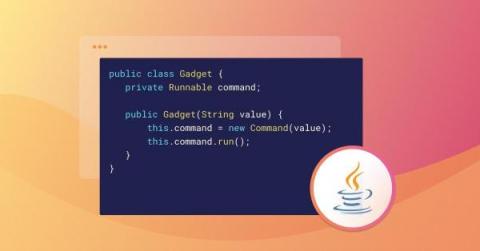
Unsafe deserialization vulnerability in SnakeYaml (CVE-2022-1471)

SnakeYaml is a well-known YAML 1.1 parser and emitter for Java. Recently, a vulnerability — CVE-2022-1471 — was reported for this package. This vulnerability can lead to arbitrary code execution. The org.yaml:snakeyaml package is widely used in the Java ecosystem, in part because it is packaged by default with Spring Boot in the spring-boot-starter.

CrowdStrike Services Helps Organizations Prioritize Patching Vulnerabilities with CrowdStrike Falcon Spotlight

When the CrowdStrike Services team conducts a proactive security engagement, such as a Cybersecurity Maturity Assessment or Tabletop Exercise, it often uses CrowdStrike Falcon® Spotlight to identify what vulnerabilities exist in the environment. Unfortunately, this can be a disheartening experience, as many organizations we see have millions, even tens of millions, of unpatched vulnerabilities. It’s typical to see at least a quarter of those listed with a CVSS rating of Critical.

Cloud Threats Memo: Understanding the Dead Drop Resolver Technique

If I asked you what the common ways to exploit a cloud app for malicious purposes are, I bet your answer would probably be either to use it to distribute malicious content (such as malware or phishing pages), or to host the command and control (C2) infrastructure. In reality another frequent technique is the dead drop resolver, where a legitimate service is abused by threat actors to host the information related to the C2 infrastructure rather than the C2 infrastructure itself.