Security | Threat Detection | Cyberattacks | DevSecOps | Compliance

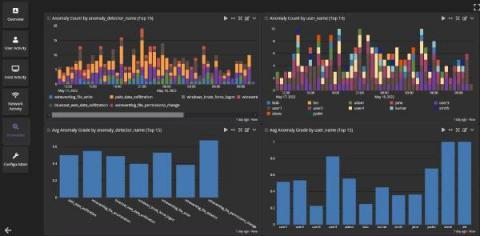
The unfair life of an admin: How to make your users appreciate you

It's natural for tension between the cybersecurity team and internal stakeholders to exist. As the administrator, you play a crucial role in ensuring the network's security, protecting against unauthorized access, and troubleshooting any access issues. But trying to keep people both secure and productive can be challenging. Ultimately, you want to protect critical data without making your colleagues' jobs more difficult.

How to Write Your First Rules in Rego, the Policy Language for OPA

Rego is the purpose-built declarative policy language that supports Open Policy Agent (OPA). It’s used to write policy that is easy to read and easy to write. Fundamentally, Rego inspects and transforms data in structured documents, allowing OPA to make policy decisions. Rego was originally inspired by Datalog, a common query language with a decades-long history, but extends its capabilities to support structured document models like JSON.

Cybersecurity Sessions #8: MFA is better than passwords... Right?

We’re told that multi-factor authentication is more secure than passwords, but in truth most MFA is susceptible to the same old threats, such as phishing and man-in-the-middle attacks. In fact, the widely championed advice to “use MFA, any MFA” could lead to a false sense of security and even more data breaches.

MFA is better than passwords... Right? | Cybersecurity Sessions #8 with Roger Grimes

We’re told that multi-factor authentication is more secure than passwords, but in truth most MFA is susceptible to the same old threats, such as phishing and man-in-the-middle attacks. In fact, the widely championed advice to “use MFA, any MFA” could lead to a false sense of security and even more data breaches. In this episode, Andy sits down with Roger Grimes (Data-Driven Defense Evangelist, KnowBe4) to find out why MFA is vulnerable to exploitation, whether some MFAs are better than others, and what the future of secure authentication might look like.

The Pack Looks Back At RSAC 2022

After a two-year hiatus, we couldn’t have been happier to spend the week in the Bay area with our customers, partners, and peers at the RSA Conference. The opportunity to showcase our latest solutions and technologies while connecting with some of the smartest people in the industry is something we’ve missed dearly, and meeting with our customers in person has made the 2022 conference sweeter than ever before.

Navigating Cybersecurity with NERC CIP as the North Star

Working in the Electric Utility sector of critical infrastructure gives a person a very unique perspective on how many of the pieces of the puzzle fit together to provide uninterrupted services to a broad population. My personal experience as a software engineer in the electrical industry introduced me to the nuances that the average person doesn’t consider when they flip on a light switch. When I moved into the cybersecurity space, an entirely new realm was opened up.

What Constitutes a Data Breach?

A data breach occurs when sensitive data is copied, transmitted, viewed, stolen, or accessed by an unauthorized individual. For a security incident to constitute a data breach, the exposure of sensitive data must be intentional. The presence of intent differentiates a data breach from a data leak, where exposure is accidental. A data leak occurs when data is accidentally exposed through a vulnerability, such as weak passwords.

Denial of Service Vulnerability in Envoy Proxy - CVE-2022-29225

The JFrog Security Research team is constantly looking for new and previously unknown software vulnerabilities in popular open-source projects to help improve their security posture. As part of this effort, we recently discovered a denial of service (DoS) vulnerability in Envoy Proxy, a widely used open-source edge and service proxy server, designed for cloud-native applications and high traffic websites.

Hello CISO - Episode 5: Enterprise Two-Factor Authentication

Is Multi-Factor Authentication (MFA) always a good idea? What type of threat does it protect against? Can IT leverage MFA to tighten security without negatively affecting productivity? In this episode of Hello CISO, Troy is talking MFA in the enterprise: what it is and, perhaps more importantly, what it isn't.