Security | Threat Detection | Cyberattacks | DevSecOps | Compliance

The hidden cost of Git repository bloat

Git repository growth often looks harmless at first. A few large assets, generated files, dependency folders, old branches, release archives, test datasets, or binary files may not cause immediate problems. Developers can still commit, pipelines still run, and the repository appears manageable. Over time, however, unnecessary data accumulates in Git history and becomes a backup and recovery challenge.

Acronis named a Champion in the Omdia Cybersecurity MSP Ecosystems Leadership Matrix 2026

Analyst firm Omdia has recognized Acronis as a Champion in the Omdia Cybersecurity MSP Ecosystems Leadership Matrix 2026. This distinction is the highest placement in one of the industry’s most closely watched evaluations of cybersecurity vendors serving managed service providers (MSPs). The recognition highlights Acronis’ continued investment in cybersecurity innovation, partner profitability and MSP-focused platform development.

CloudCasa DR for HPE Alletra with Red Hat OpenShift - PART 2: Failback

CloudCasa completes the disaster recovery cycle by failing a file server application back from Site B (HPE Alletra MP B10000) to its original primary on Site A (HPE Alletra 9060), both running Red Hat OpenShift. In this demo, we create a reverse DR plan, scale down the workload for a clean shutdown, and let CloudCasa orchestrate the two-phase failback: an HPE recover/restore operation that reverses replication at the storage layer, followed by progressive Kubernetes resource restoration, before the file server comes back online on Site A with its data intact.

CloudCasa DR for HPE Alletra with Red Hat OpenShift - PART 1: Failover

CloudCasa orchestrates disaster recovery failover for stateful workloads across two HPE Alletra arrays running Red Hat OpenShift. In this demo, we fail over a file server application from Site A (HPE Alletra 9060) to Site B (HPE Alletra MP B10000), with CloudCasa installing its agent via a single kubectl apply, discovering both clusters and storage systems, mapping the pre-configured HPE replication relationship, and triggering consistency group failover so the workload comes back up on Site B with all data intact.

Acronis Cyber Frame

Learn how service providers can capitalize on VMware migration, hyperscaler repatriation, and sovereign cloud opportunities with Acronis Cyber Frame. Explore a secure HCI and IaaS platform built for MSPs and CSPs, featuring integrated backup, DR, security, and RMM to help deliver profitable infrastructure services with greater control and flexibility. Like, comment, and subscribe for more Acronis tutorials!

VMware ESXi USB Passthrough Explained | Configure USB Devices in Virtual Machines Step-by-Step

VMware ESXi USB Passthrough Overview and Configuration Need to connect a physical USB device directly to a VMware virtual machine? In this video, we explain how USB Passthrough works in VMware ESXi and provide a step-by-step guide to configuring USB devices for your VMs. You'll learn about the key components that make USB passthrough possible, including the USB Arbitrator Service, USB Controllers, and physical USB devices. We also cover USB 3.0 requirements, vMotion compatibility, common limitations, and troubleshooting tips.

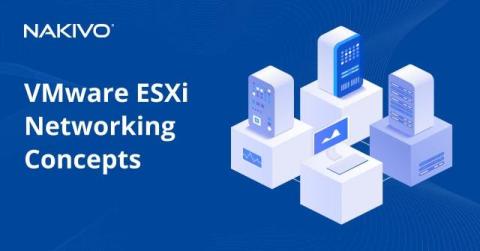
VMware ESXi Networking Concepts

For connecting physical servers and computers to a network, you need physical network adapters, switches, and routers. With virtual machines, virtual network concepts are used for communication between the different components of an infrastructure. The proper configuration of ESXi networking on a host is critically important to the configuration of any ESXi environment. Generally, ESXi host networks include storage, vMotion, VM, and management networks.

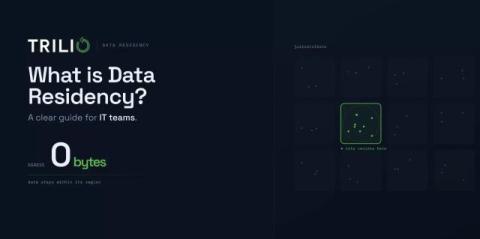
What is Data Residency? A Clear Guide for IT Teams

Every piece of data your organization stores lives in a specific server, facility, and country. Data residency refers to where that data physically sits, and governments increasingly care about the answer. The EU, India, Brazil, and dozens of other jurisdictions now enforce strict rules about storage locations. Get it wrong, and you’re looking at regulatory fines, lost contracts, or both.

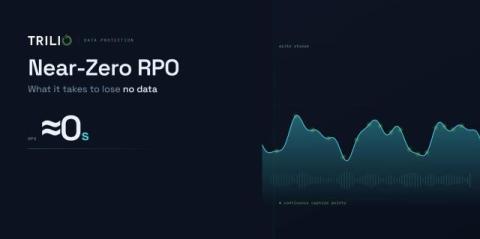
Near-Zero RPO: What It Takes to Lose No Data

The gap between your last backup and a failure defines exactly how much data disappears. That gap is your recovery point objective (RPO), and teams running production workloads on OpenShift and KubeVirt find that most traditional DR tools simply don’t understand the environment well enough to close it. Near-zero RPO requires synchronous replication at the block level. Data must hit both your primary and DR site simultaneously.